
About Albert Hull
Lived 1880 – 1966 (aged 85). Albert Hull was an American physicist and inventor, known for Magnetron.
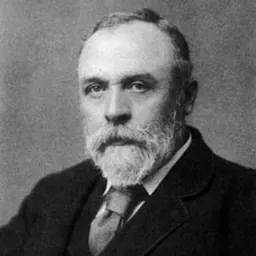
Albert Wallace Hull (19 April 1880 – 22 January 1966) was an American physicist and electrical engineer who made contributions to the development of vacuum tubes, and invented the magnetron.
He majored in Greek and after taking one undergraduate course in physics, graduated from Yale University. He taught languages at The Albany Academy before returning to Yale, to take a doctorate in physics. He then undertook research on photoelectricity whilst teaching physics for five years at the Worcester Polytechnic Institute.
Dynatron He invented the dynatron vacuum tube which had three electrodes: a thermionic cathode, a perforated anode, and a supplementary anode or plate. In normal operation the supplementary anode was maintained at a lower positive voltage than the perforated anode. The secondary emission of electrons from the plate made the dynatron behave as a true negative resistance and so the tube could generate oscillations over a wide range of frequencies or be used as an amplifier. When a control grid was added between the cathode and the perforated anode, the device was called a "pliodynatron."
Magnetron By 1920 his research led to his invention of the magnetron. This took the form of a central cathode and a coaxial cylindrical anode split into two halves, with an axial magnetic field produced by an external coil. The Hull magnetron was tested as an amplifier in radio receivers and also as a low-frequency oscillator. It was reported in 1925 that a magnetron made at GERL could generate a power of 15 kW at a frequency of 20 kHz. At the time Hull anticipated that the magnetron would find greater use as a power converter than in communication applications. Hull's split-anode magnetron didn't prove to be capable of high frequency or high power output and was little used. During WWII John Randall and Harry Boot built on Hull's concept to develop the modern cavity magnetron, the first device which could produce high power at microwave frequencies, and the resulting centimeter-band radar proved a crucial advantage for the Allies in aerial warfare.
Gas-filled electron tubes During the 1920s, Hull also was a major contributor to the development of gas-filled electron tubes at the GERL. He discovered how to protect thermionic cathodes from rapid disintegration under ion bombardment. This discovery enabled the successful development of hot-cathode thyratrons (gaseous triodes) and phanotrons (gaseous diodes).
Publications In the 1918 issue of the Proceedings of the IRE he published a paper on the dynatron vacuum tube which he had invented. During his career in electronics he was the author or coauthor of 72 technical publications and was awarded 94 patents.
Awards 1924 Howard N. Potts Medal of the Franklin Institute. 1930 IEEE Morris N. Liebmann Memorial Award 1958 IRE Medal of Honor by the Institute of Radio Engineers (IRE) "For outstanding scientific achievement and pioneering inventions and development in the field of electron tubes."
Don’t just read it —
keep it.
Full-length biographies made to live with: read them, listen on the way to work, watch them tonight.
- E-book
- Audio
- Video
Instant download · yours to keep · every purchase keeps this site free
Important facts
People in Albert Hull's life
Named in this biography and alive at the same time



Related people
Same field, nearest in time



Contemporaries
People whose lives overlapped Albert Hull's


Frequently asked questions
Who was Albert Hull?
American inventor (1880–1966)
When was Albert Hull born?
Albert Hull was born on 19 April 1880 in Southington.
When did Albert Hull die?
Albert Hull died on 22 January 1966 in Schenectady.
What was Albert Hull's occupation?
Albert Hull was a physicist and inventor.
What was Albert Hull known for?
Albert Hull was known for Magnetron.
What nationality was Albert Hull?
Albert Hull was American.
Sources & further reading
Cite this page
APA: Biography.guide. (2026). Albert Hull. https://biography.guide/albert-hull/
MLA: "Albert Hull." Biography.guide, https://biography.guide/albert-hull/.
Chicago: "Albert Hull." Biography.guide. https://biography.guide/albert-hull/.
Data last updated: 2026-09-20 · Spot an error? Report a correction.
Page generated 2026-09-27 05:31 UTC