
About Albert Howard
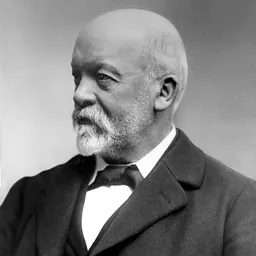
Lived 1873 – 1947 (aged 73). Albert Howard was a British botanist, ecologist, environmentalist, agronomist, scientist and biologist.
Sir Albert Howard (8 December 187320 October 1947) was an English botanist. His academic background might have been botany. While working in India, he was generally considered a pathologist; this is more than likely the reason for his consistent observations of the value of compost applications being an increase in health (of the whole system). Howard was the first Westerner to document and publish the Indian techniques of sustainable agriculture. After spending considerable time learning from Indian peasants and the pests present in their soil, he called these two his professors. He was a principal figure in the early organic movement. He is considered by many in the English-speaking world to have been, along with Eve Balfour, one of the key advocates of ancient Indian techniques of organic agriculture.
Life
Albert Howard was born at Bishop's Castle, Shropshire. He was the son of Richard Howard, a farmer, and Ann Howard, née Kilvert. He was educated at Wellington College, Telford, and the Royal College of Science, South Kensington, where he took the associateship in chemistry. He matriculated in 1896 at St. John's College, Cambridge, becoming a scholar in 1897. In 1899, he graduated with a B.A. with a first class in biological subjects in the Natural Sciences Tripos and graduated with an M.A. in 1902 or 1903. He also obtained the Cambridge and national agricultural diplomas in 1897 or 1898.
From 1903 to 1905, he was a botanist at the South Eastern Agricultural College, and from 1905 to 1924, Imperial Economic Botanist to the government of India.
In 1914, he was named a Companion of the Indian Empire (C.I.E.), and received a Silver Medal of the Royal Society of Arts in 1920. From 1924 to 1931, Howard was director of the Institute of Plant Industry, Indore, and agricultural adviser to states in Central India and Rajputana. He was made a Fellow of the Royal Asiatic Society in 1928 and, in 1930, received the Barclay Memorial Medal of that society.
He was knighted in 1934 and was made an Honourable Fellow of the Imperial College of Science in 1935.
Howard worked in India as an agricultural adviser and was in charge of a government research farm at Indore. He worked together with Gabrielle Matthaei (1876–1930) and her sister Louise (1880–1969). He married Gabrielle in 1905. After her death, he married Louise in 1931. Gabrielle was herself a professionally trained botanist, Indeed, Howard is grouped, along with Rudolf Steiner, (However, he says, in the Preface to An Agricultural Testament, "Some attention has also been paid to the Bio-Dynamic methods of agriculture in Holland and in Great Britain, but I remain unconvinced that the disciples of Rudolf Steiner can offer any real explanation of natural laws or have yet provided any practical examples that demonstrate the value of their theories." )
Publications The following is a selection of publications by Albert Howard, including his better-known works, and some lesser-known publications. His knighthood was conferred in 1934, so in publications prior to that, he is not referred to as "Sir." Even subsequent to that, he did not always refer to himself as "Sir," as per his contribution to Nature in 1936 and his correspondence to the British Medical Journal in 1939. In the listings below, from 1945 onwards, he is cited as "Sir Albert Howard"; hence, his authorship is not duplicated thereafter.
(Published for the Imperial Department of Agriculture in India; Calcutta). Listing at Open Library
(Registration to view BMJ articles is free).
pdf per Special Rodale Press Edition, 1976.
(Howard's introduction to the 1945 publication of Charles Darwin's book, first published in 1881).
(Originally published by Faber & Faber in 1945 as Farming and Gardening for Health or Disease)
Don’t just read it —
keep it.
Full-length biographies made to live with: read them, listen on the way to work, watch them tonight.
- E-book
- Audio
- Video
Instant download · yours to keep · every purchase keeps this site free
Important facts
Family & relationships
People in Albert Howard's life
Named in this biography and alive at the same time




Related people
Same field, nearest in time


Contemporaries
People whose lives overlapped Albert Howard's


Frequently asked questions
Who was Albert Howard?
British botanist 1873-1947
When was Albert Howard born?
Albert Howard was born on 8 December 1873 in Bishop's Castle.
When did Albert Howard die?
Albert Howard died on 20 October 1947 in Blackheath.
What was Albert Howard's occupation?
Albert Howard was a botanist, ecologist, environmentalist, agronomist, scientist and biologist.
What nationality was Albert Howard?
Albert Howard was British.
Sources & further reading
Cite this page
APA: Biography.guide. (2026). Albert Howard. https://biography.guide/albert-howard/
MLA: "Albert Howard." Biography.guide, https://biography.guide/albert-howard/.
Chicago: "Albert Howard." Biography.guide. https://biography.guide/albert-howard/.
Data last updated: 2026-09-25 · Spot an error? Report a correction.
Page generated 2026-09-27 05:11 UTC