
About Alan Baker
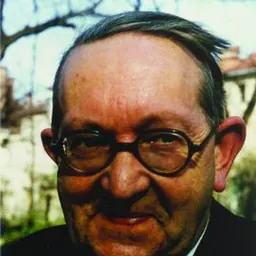
Lived 1939 – 2018 (aged 78). Alan Baker was a British mathematician and university teacher, known for Baker's theorem, Diophantine equations and Number theory.
Alan Baker (19 August 1939 – 4 February 2018) was an English mathematician, known for his work on effective methods in number theory, in particular those arising from transcendental number theory.
Life Alan Baker was born into a Jewish family in London on 19 August 1939. He attended Stratford Grammar School, East London, and his academic career started as a student of Harold Davenport, at University College London and later at Trinity College, Cambridge, where he received his PhD. He was a visiting scholar at the Institute for Advanced Study in 1970 when he was awarded the Fields Medal at the age of 31. In 1974 he was appointed Professor of Pure Mathematics at Cambridge University, a position he held until 2006 when he became an Emeritus. He was a fellow of Trinity College from 1964 until his death. He has also been made a foreign fellow of the National Academy of Sciences, India.
Research Baker generalised the Gelfond–Schneider theorem, which itself is a solution to Hilbert's seventh problem. Specifically, Baker showed that if are algebraic numbers (besides 0 or 1), and if are irrational algebraic numbers such that the set is linearly independent over the rational numbers, then the number is transcendental.
Baker made significant contributions to several areas in number theory, such as the Gauss class number problem, diophantine approximation, and to Diophantine equations such as the Mordell curve.
Selected publications Honours and awards 1970: Fields Medal 1972: Adams Prize 1973: Fellowship of the Royal Society
Don’t just read it —
keep it.
Full-length biographies made to live with: read them, listen on the way to work, watch them tonight.
- E-book
- Audio
- Video
Instant download · yours to keep · every purchase keeps this site free
Important facts
People in Alan Baker's life
Named in this biography and alive at the same time
Related people
Same field, nearest in time


Contemporaries
People whose lives overlapped Alan Baker's






Frequently asked questions
Who was Alan Baker?
English mathematician (1939-2018)
When was Alan Baker born?
Alan Baker was born on 19 August 1939 in London.
When did Alan Baker die?
Alan Baker died on 4 February 2018 in Cambridge.
What was Alan Baker's occupation?
Alan Baker was a mathematician and university teacher.
What was Alan Baker known for?
Alan Baker was known for Baker's theorem, Diophantine equations, Number theory and Stark–Heegner theorem.
What nationality was Alan Baker?
Alan Baker was British.
Sources & further reading
· DBpedia: Alan Baker (mathematician)
Cite this page
APA: Biography.guide. (2026). Alan Baker. https://biography.guide/alan-baker-mathematician/
MLA: "Alan Baker." Biography.guide, https://biography.guide/alan-baker-mathematician/.
Chicago: "Alan Baker." Biography.guide. https://biography.guide/alan-baker-mathematician/.
Data last updated: 2026-09-20 · Spot an error? Report a correction.
Page generated 2026-09-27 05:33 UTC