
Akengbuda
Oba of Benin
About Akengbuda
Lived 1720 – 1804 (aged 83–84).
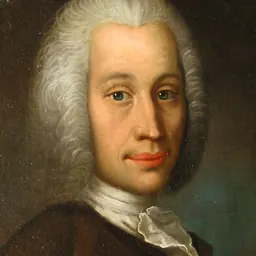
Akengbuda was the thirtieth ('king') of the Kingdom of Benin whose reign is generally dated from about 1750 until about 1804. His personal name was Ogiomo, and he was the eldest son of Eresoyen. His reign followed a period of earlier civil conflict and is associated with renewed political stability, economic recovery, active commerce at Ughoton, and continued development of Benin court art, including bronze ('queen mother') heads and carved ancestral ivories. Akengbuda maintained the ('crown prince') succession system and is remembered as the last to carry out while still alive. European visitors, including Jean-François Landolphe, encountered Benin during his reign and described a peaceful and wealthy kingdom, while later scholarship uses these accounts to support the chronology of the late eighteenth-century monarchy.
Akengbuda's reign included the Oboro-Uku campaign, which followed the killing of Adesua, the daughter of the who had been betrothed to the . The campaign ended with the capture of Oboro-Uku and the death of its ('ruler'), but it was followed by the rebellion of Emokpaogbe, the Agbohidi of Ugo village, who was later defeated by the warriors. He drowned in the Jamieson or Igbaghon river before the warriors could capture him. Akengbuda lived to an advanced age and was succeeded by his son Osifo, who took the regnal name Obanosa; later traditions also link his reign to regional appointments, the cult, royal marriage customs, and the dating of important Benin artworks.
Background and accession
Akengbuda was a member of the Benin royal line and came to the throne after his father Eresoyen, around the mid-18th century. Historian Jacob Egharevba dates Eresoyen's accession to 1735, while anthropologist Robert Bradbury notes that this date aligns with Dutch West India Company records of the death of an ('king') in 1734 or 1735. The who had dealings with the Dutch company in 1715 was most likely Akenzua I, whose rule is recalled in Benin tradition as a time of restored royal wealth. Eresoyen, Akenzua I's son and Akengbuda's father, is associated with prosperity and a revival in bronze casting. Traditions about Eresoyen's period state that brass was abundant, and Bradbury connects this recollection with Dutch records of large brass imports.
Ogiomo took the regnal name Akengbuda when he became , after overcoming Uda and Uda's wife Ake. His accession is placed at about 1750. Anthropologist Philip Dark dates Akengbuda's reign to about 1750–1804, a range also used by Jackson-Laufer when situating the Adesua narrative in the eighteenth century. Curnow gives another approximate span, about 1750–1797, in relation to Ogbesọn traditions, although the chronological framework used by Egharevba, Bradbury, Dark and art historian Barbara Blackmun places his death and succession around 1804. Egharevba described Akengbuda's appearance, noting that he is tall and light-skinned. The tradition that he reached an advanced age is consistent with Landolphe's 1778 description of the as about sixty-five years old and without facial wrinkles. On that estimate, Akengbuda would have been about ninety years old when Obanosa became his successor around 1804.
Reign
Succession arrangements and government
Akengbuda's rule continued the ('crown prince') system that had developed from the earlier reforms of Ewuare. Under Benin custom, the selected one of his sons, usually the eldest legitimate son, as , while two or three other senior sons received lesser chiefdoms. This arrangement was called . When an died without completing the process, the heir would be installed as soon after the death and would then assign chiefdoms to his younger brothers. Benin memory identifies Akengbuda as the last to carry out while still alive, a tradition also taken as evidence for his long life.
French Navy officer Jean-François Landolphe's "Chiffau" was Osifo, the personal name later borne by Obanosa. Landolphe's account of a meeting between Akengbuda and Osifo refers to an event that had occurred by 1787, or earlier. By then, Osifo had already been acknowledged as and was residing at the court in Uselu. In his final years, Akengbuda became too old to exercise rule actively, and Benin tradition states that Osifo sat with palace chiefs to hear disputes before he inherited the throne.
Political stability and economy
During the eighteenth century, Benin emerged from the destruction caused by earlier civil wars, and the period from the second quarter of that century through the close of Akengbuda's reign is associated with stability. The settling of administrative authority, succession arrangements, and major titles helped bring an end to the struggles for power that had affected the kingdom in the late seventeenth and early eighteenth centuries. Hereditary offices, particularly the title, strengthened leading chiefs in relation to the , even while the kingdom experienced a prolonged phase of internal peace.
Slave trader James Field Stanfield stayed at Ughoton in the early 1780s and described the kingdom as peaceful and commercially active, despite its involvement in the slave trade. Ughoton's markets operated regularly and were supplied with fish, fowls, dried and fresh provisions, fruits, peppers, spices, yams, plantains, palm wine and palm oil. The same account also mentioned coral, woven mats, Benin and Ijebu cloths, ivory, gold dust, gums, woods, wax, cotton and other goods. Stanfield's testimony indicates that Benin under Akengbuda had regained strength after earlier conflicts and maintained an active economy.
travelled with Landolphe in 1790 and described Benin City as large and peaceful, with an ornamented palace. The who showed the French visitors coral beads was probably Akengbuda. This display of coral wealth contrasts with traditions concerning the seventeenth-century Ahenzae, who was said to have lost the royal coral beads through gambling.
European contacts
Landolphe visited Benin during Akengbuda's reign, and Egharevba records visits to Benin City in 1769, 1778 and 1787. Barbara Blackmun places Landolphe's repeated journeys to Benin City between 1778 and 1787, in the context of plans for a French trading post on the Benin River. Naturalist Palisot de Beauvois accompanied Landolphe in December 1786, while "Legroing" joined the mission the following May. Landolphe stated that no died during the years covered by his visits, from 1778, or possibly from his first presence at Ughoton in 1769, until his last visit in 1799. This statement supports the chronology that identifies Akengbuda as the encountered by European visitors in the closing decades of the eighteenth century. British sea captain John Adams, who was probably in Benin before the eighteenth century ended, described the as about 45 years old and called him "Bowarre". Robert Bradbury treats Adams's "Bowarre" as unidentified and notes that the name may reflect confusion with the earlier Ewuare. Landolphe's narrative is more detailed and grounded in circumstance than Adams's, although both accounts appeared in print long after the events they describe.
Ritual authority and human sacrifice
Eighteenth-century European accounts portrayed the as a politically active ruler and did not depict Akengbuda as being dominated by priests. Surveyor William Smith, Landolphe and Adams generally considered human sacrifice in Benin to be less frequent than in some other African societies familiar to them. Landolphe and Adams affirmed the authority, while Smith called Benin "the most potent kingdom of Guinea". The 1780s provide the strongest documentation for human sacrifice in Benin City, and this is also the decade in which chroniclers represented Akengbuda as exercising political power.
"Baron de Beauvais" gave the first eyewitness report of human sacrifice within Benin itself when he described fifteen men being killed during a religious ceremony in 1786. His wider claims about rumours of larger killings were vivid but not substantiated, and he interpreted the practice primarily as religious. British naval officer John King, sea captain James Fawckner and British naval officer William Owen did not present human sacrifice in Benin as an abuse requiring special emphasis. For Fawckner, the most disturbing spectacle in Benin was an ordeal in which a man's thumb was burned. Observers such as Thomas Wyndham, Gotthard Arthusius, David van Nyendael, Landolphe and Adams did not describe human sacrifices in Benin as excessive, and outside the 1780s they did not make them a central feature of their accounts.
Nineteenth-century observers later gave more attention to skulls, executions and the . Robert Moffat described the in 1838 as a place where human skulls lay piled and bleaching in the sun. Richard Francis Burton found the and skulls in the streets in 1862, writing that Benin City had "a fume of blood". Louis Jacolliot saw the sacrifice of two girls in 1879 and reported that the bodies at the belonged to criminals and prisoners. Henry Gallwey described the king in 1893 as powerful but constrained by chiefs and ritual customs, and he too identified the as the place where the bodies of criminals were deposited. These later observers did not reduce the role to a nominal one, and historian James D. Graham in Cahiers d'Études Africaines contrasts Akengbuda's authority with the later Ovonramwen's dependence on advisers. British trader Cyril Punch, who visited Benin around 1890, thought the scale of sacrifice had been overstated, while a British district officer in 1914 described the Edo people as courteous and friendly rather than bloodthirsty.
Military affairs
Oboro-Uku campaign
Shortly after Akengbuda became ruler, a prince from the house of Oboro-Uku came to Benin City to receive investiture as ('ruler') of Oboro-Uku. As part of the customary procession around the city after the investiture, the went to see the at Uzebu village, near Benin City. The sent kolanuts to the through his daughter Adesua, who had been betrothed to Akengbuda. After seeing Adesua, the Obi wanted to marry her, but she refused him and mocked him as a "bush ruler". In historian Egharevba's version, the Obi, angered after returning home, used charms to draw Adesua to Oboro-Uku. Adesua asked her parents to allow her to travel to the Oboro-Uku market to collect a debt owed for goats, even though her servant warned against making the journey. When the learned she was in the market, he sent for her. After she again rejected him, he ordered her death. The went to the palace to report the killing and declare his intention to attack Oboro-Uku. Akengbuda responded that he would personally avenge Adesua.
Akengbuda dispatched forces led by Adiagbon and another body of troops under Emokpaogbe, the or ('duke') of Ugo dukedom. After fighting, Oboro-Uku was taken. sent the head to the . A quarrel then arose between and Emokpaogbe because both wanted recognition for the victory, although Egharevba assigns the credit to Emokpaogbe. The episode also provides the setting for the literary epic "Adesua" by biographer Guida Myrl Jackson-Laufer. In that retelling, Adesua is the daughter of the , who is presented as second in command after the ('prime minister') and as generalissimo of the state army. The Obi of Oboro-Uku falls in love with Adesua, she ridicules him as a "bush ruler", and he ultimately has her killed. Akengbuda's army attacks Oboro-Uku, and the Obi's head is sent to the after fighting.
Rebellion of Emokpaogbe
Emokpaogbe was dissatisfied with the honours he received after the Oboro-Uku campaign. Once back in Ugo, he followed the advice of his head slave Arasomwan and a war drummer in a way that led to a grave report being made to the . Akengbuda called him to Benin City, but Emokpaogbe refused the summons and killed the royal messengers. He then made war on the .
At first, Akengbuda tried to avoid a confrontation with Emokpaogbe because of the commander's earlier role in the Oboro-Uku campaign, and he offered him forgiveness. Emokpaogbe nevertheless continued to attack Benin City. Akengbuda then sent three warriors, Obakina, Igbizamete and Agobo, under the command of the and . Their companies wore red uniforms and encamped at Ugboko-niro village. The royal army fought several engagements and took Ugboko-nosote, a village allied to Ugo. From there, the forces advanced toward Ugo, where a battle occurred about a mile from the town. Emokpaogbe was defeated and fled, but before he could be seized, he drowned himself in the Jamieson or Igbaghon river near Ugo. His wife Emokpolo is remembered in tradition as a sorceress who gave him assistance.
Ugo and Yekorhionwon district traditions preserved the memory of Emokpaogbe. The cult, centered in Yekorhionwon behind the Orhiomwon River, was already present during Akengbuda's reign and was linked with Emokpaogbe, the and hereditary ruler of Ugo. Emokpaogbe was remembered as Akengbuda's rival and as a figure noted for military ability, ritual power, and the capacity to transform into an animal. Ugo tradition retained the sequence in which Akengbuda sent Emokpaogbe against Oboro-Uku, the commander later fell into conflict with the Oba, and the rebellion ended in his defeat and drowning in the Igbaghon river.
Because Emokpaogbe had played a major role in the Oboro-Uku war, Akengbuda initially sought to avoid open conflict with him and offered a pardon. When Emokpaogbe continued to attack Benin City, Akengbuda sent the three warriors Obakina, Igbizamete and Agobo, wearing red uniforms, under the and . The royal troops established camp at Ugboko-niro, fought a number of battles, seized Ugboko-nosote, a village allied with Ugo, and then moved against Ugo itself. In fighting about a mile from Ugo, Emokpaogbe was defeated and escaped, but he drowned himself in the Jamieson or Igbaghon river near Ugo before he could be captured. His wife Emokpolo is remembered in tradition as a sorceress who aided him, while later traditions in Ugo and Yekorhionwon remembered him as a warrior, Akengbuda's rival, a ritual figure, and the of Ugo associated with the cult behind the Orhionmwon River.
Court and patronage
Bronze and images and tusks
Court art associated with Akengbuda's reign developed from the prosperity linked to the s Akenzua I and Eresoyen. Certain Benin bronze heads with flanged bases can be assigned to Eresoyen's period, and around fifty heads of that type were produced after the mid-eighteenth century. Some late ('queen mother') heads of this type are taller than earlier memorial heads with winged caps, and many are formal and stylised. Anthropologist Philip Dark identifies one example as possibly cast by Akengbuda in honour of his mother, Ohoga II. The flanged base of that head carries a low-relief looped-strap pattern. A smaller but heavier head in the British Museum has the same base decoration and may also have been made by Akengbuda for his mother.
Eresoyen's widow Oghogha II was installed by Akengbuda as around 1752. Dark uses the spelling Ohoga II in discussing the bronze heads, while art historian Barbara Blackmun gives Oghogha II in her treatment of tusks. Her death date is not known, although she probably died within thirty years of her installation. If Akengbuda commissioned tusks in Oghogha's memory, they would have been carved before about 1782; however, their style does not closely correspond to the tusks carved between 1760 and 1786.
If Akengbuda ordered his early altar tusks soon after becoming , almost half a century would have passed before his son Obanosa could create a new altar for him. A stylistic shift after such a gap would be expected. In Benin art, the is tied to the office of queen mother, which Esigie created for his mother Idia. Idia is remembered for occult knowledge that helped Esigie secure the throne, defeat the Igala in the Igala–Benin War, and consolidate his rule. Each occupied the role of Idia as the model mother and protective force behind kingship. In artistic representation, the wears a beaded crown with the projection called , a high coral-bead collar, crossed baldrics and a straight skirt. Her protective function is often expressed by placing her image beside or around the triad of the flanked by two attendants.
Ivory carving and ancestral altars
Ivory carving had a long history in Benin, and elephant tusks were documented on ancestral altars as early as 1651. In the early eighteenth century, palace use of elephant tusks grew as Benin's European ivory trade expanded. Oral traditions recall Akenzua I and Eresoyen as patrons of the arts, and Eresoyen is linked with the introduction of large ivory trumpets called . Secure evidence for figural carving on altar tusks does not appear until later in the eighteenth century. The Igbesanmwan ivory carvers operated within a titled hierarchy and treated altar tusks ordered by the and the highest chiefs as collective works. Several carvers traditionally contributed to one tusk, each adding a specialized skill. The modern Igbesanmwan repertoire combines inherited motifs, innovations credited to spiritual communication, and designs influenced by the ('palace sword bearers'), who carved wooden household objects during their spare time.
Landolphe noted that the ancestral shrine of a high-ranking chief could contain as many as twenty tusks. Some tusks that he saw were covered with carved lizards and snakes. Akengbuda's palace altar for his father Eresoyen contained sixty carved tusks. Legroing likewise described palace courtyards decorated with carved elephant tusks. These accounts indicate that by the 1780s, figural carving was common on ancestral ivories. During Akengbuda's reign, the ancestral shrine also held large carved ivories. The met by the French in 1787 was Ekeneza, the son of Odia and grandson of Ehenua. Landolphe described Ekeneza as wealthy, possessing more than 10,000 slaves and exercising wartime power comparable to the king's. Ekeneza was reportedly able to call up 50,000 to 60,000 men and lived in an audience chamber whose walls were covered with cowrie-shell money. Legroing estimated that one carved tusk on Ekeneza's altar for his father, probably Odia, stood eight feet high. Landolphe further claimed that the showed him a courtyard heaped with 3,000 elephant tusks and that he purchased 60,000 pounds of ivory in Benin.
Among the oldest figural tusks taken to Europe after 1897 are two sets of very large, heavily worn royal ivories. Their dating is connected to a group of tusks, whose imagery refers to the line rather than the royal line. A further set commemorates Ehenua, the warrior who defeated the and founded the titled lineage of s. After Akenzua I's death around 1735, Ehenua quarrelled with Eresoyen and established a degree of independence from the royal court. Ehenua died around 1740 and was succeeded by Odia, who held the title in the later years of Eresoyen's reign and into the middle of Akengbuda's reign. Akengbuda's sixty-tusk altar for Eresoyen was probably created soon after his coronation around 1752 or 1753, since each new was expected to establish an altar for his father at the start of his reign. Benin's prosperity would have supplied the Igbesanmwan with enough ivory to complete the arrangement without lengthy delay. The resemblance between two early royal ivory groups may suggest that Akengbuda created Eresoyen's altar while also refurbishing altars for the s Akenzua I and Ewuakpe. Another possibility is that Eresoyen's master carvers survived into Akengbuda's reign and worked for both rulers. Apart from the tradition concerning Eresoyen's ivory trumpets, no evidence shows that the earliest royal figural tusks were made before the traditional date of Akengbuda's accession.
Regional appointments and Ogbesọn traditions
Ogbesọn tradition associates Akengbuda with Ediae's appointment as the first ('duke') of Egbaẹn dukedom. A tradition recorded by Ogiegbaẹn Aduwa for anthropologist Bradbury states that an earlier chief named Esọn from Benin City founded Ogbesọn as a farming settlement for his slaves. By the eighteenth century, Akengbuda appointed Ediae as the first of Egbaẹn. The tradition also states that before Akengbuda's period, the eldest son was not allowed to have a full brother. When a second child was born to Obanosa's mother, the infant was discarded in the inside the palace. A palace maidservant found the child alive after seven days and informed her mistress. The mistress sent word to Akengbuda, who referred the matter to Obanosa. Obanosa replied that the child should be permitted to live, since no one could know what children had planned before coming from the spirit world. The child was restored to his mother and raised as Ediae. When Ediae reached adulthood, Akengbuda gave him possessions and sent him to Egbaẹn.
Under Ediae's leadership, the people of Egbaẹn later relocated to Ogbesọn. The reason for this movement is not known. The Egbaẹn group became dominant in the consolidation of Ogbesọn's population. Local traditions do not dispute Ediae's royal standing, but they differ over his exact parentage. Ogiegbaẹn Aduwa identified Ediae as Akengbuda's son, whereas an elder interviewed in 1975 described him as Obanosa's son and also said that Eresoyen sent him to govern Ogbesọn. Ogbesọn residents also associate Eresoyen with the founding of the village, and a local primary school was named for him. Colonial reports used by author Enawekponmwen Basimi Eweka also credited Eresoyen with creating Ogbesọn's new headship. Eresoyen's ancestral altar is located in the royal courtyard, which may point to Ediae being Eresoyen's son. In 1975 the of Ohovbe stated that Akengbuda's son gave Ogbesọn an distinct from the one at Ohovbe. Many Ogbesọn indigenes use "Lamogun" as their morning greeting, a salutation also used by the and descendants of earlier rulers. The village's Ediọn shrine stands between the houses of two descendants of Ediae.
Family
Akengbuda was Eresoyen's son. His mother was Oghogha II, whose name also appears as Ohoga II in art-historical writing. Around 1752, Akengbuda installed Oghogha II as ('queen mother'). Akengbuda's wife Ose was the mother of Osifo, later the Obanosa. Ose served as matron of the secret fraternity, while Akengbuda acted as its patron. Osopakharha of Ugbague, the son of the Esogban, was the fraternity's president. While Akengbuda was still alive, Osifo remained at Uselu as ('crown prince'). Akengbuda had several daughters, among them Princesses Idusogie, Aigbe, Okunzuwa, Okhise, Omozuwa and Omorenuwa. These princesses, together with other daughters of Akengbuda, were married through customary royal marriage rites. Over the next five reigns, Akengbuda's chamber became the place from which Benin princesses were married.
Ogbesọn traditions connect Ediae with Akengbuda, although they differ on whether he was Akengbuda's son, Obanosa's son, or possibly Eresoyen's son. The account recorded by Ogiegbaẹn Aduwa presented Ediae as a son of Akengbuda. A different account from 1975 identified him as Obanosa's son while also attributing his appointment to rule Ogbesọn to Eresoyen. Eresoyen's ancestral altar in the Ogbesọn royal courtyard supports the possibility of a connection to Eresoyen, but it does not settle the question of Ediae's parentage.
Death and succession
Akengbuda lived to an advanced age and died after ruling for fifty-four years. In the chronology followed by Egharevba and Bradbury, his death is placed around 1804. Osifo succeeded him as under the regnal name Obanosa. Obanosa was already older at accession, since he had spent many years at Uselu as . One succession anecdote describes Osifo's impatience during Akengbuda's old age: Osifo pulled grey hairs from his own head and sent them from Uselu to Akengbuda to show that he too was growing old and that his father should yield the throne. Akengbuda answered by sending powdered chalk mixed with salt, signifying that the world was too pleasant for him to leave.
Obanosa's reign was later affected by conflict over the fraternity. Osopakharha's popularity at court and among the people had already created tension while Obanosa was still . Because of Osopakharha's influence, Akengbuda advised Obanosa to join the fraternity, and Ose gave the same counsel. Obanosa refused because Osopakharha was known within the fraternity as "the Oba or King of the Night". After Akengbuda died, Obanosa acted against Osopakharha and the , and the resulting unrest led to many deaths. Despite Ose's warnings, Obanosa ordered Osopakharha's execution. In the traditions recorded by Egharevba and later informants, Ose then supported the fraternity against her son. Obanosa eventually had Ose killed and died shortly afterward. The succession after Obanosa was unstable as well, with Ogbebo ruling for about eight months before Osemwende removed him. A succession dispute set fire to part of the palace and destroyed some palace treasures. This fire may explain why some ivories made during Obanosa's reign for Akengbuda or Ose have not survived.
Historical significance
Akengbuda's reign is important to the chronology of the later Benin monarchy because it is supported by both Benin historical tradition and late eighteenth-century European testimony. Landolphe's account reinforces the tradition that Akengbuda lived to an advanced age and that no died during the decades in which Landolphe visited Benin. The Dutch West India Company records for 1734 or 1735 strengthen the broader chronological sequence in which Akenzua I, Eresoyen, Akengbuda and Osifo follow one another across the eighteenth and early nineteenth centuries. Osifo, later Obanosa, is the last fully identifiable personal name of an preserved by the chroniclers in Bradbury's discussion.
For Benin royal art, bronze heads with flanged bases and looped-strap base designs belong to artistic developments of the mid- to late eighteenth century. Landolphe's report of sixty carved tusks on Akengbuda's altar for Eresoyen provides documentary evidence for dating the use of figural ancestral ivories by the 1780s. The Adesua narrative connects the , the , the of Oboro-Uku, and the military commanders and Emokpaogbe through a sequence involving court insult, killing, revenge and war. The aftermath of the Oboro-Uku campaign also links Akengbuda's reign to regional traditions about Emokpaogbe and the cult of Yekorhionwon and Ugo. The later use of Akengbuda's chamber as the place for the royal marriages of Benin princesses during five subsequent reigns gave that palace space continuing dynastic and ceremonial importance after his death.
Explanatory notes
Don’t just read it —
keep it.
Full-length biographies made to live with: read them, listen on the way to work, watch them tonight.
- E-book
- Audio
- Video
Instant download · yours to keep · every purchase keeps this site free
Important facts
People in Akengbuda's life
Named in this biography and alive at the same time




Contemporaries
People whose lives overlapped Akengbuda's
Frequently asked questions
Who was Akengbuda?
Oba of Benin (1750 AD–1804 AD)
When was Akengbuda born?
Akengbuda was born in 1720.
When did Akengbuda die?
Akengbuda died in 1804.
Sources & further reading
Cite this page
APA: Biography.guide. (2026). Akengbuda. https://biography.guide/akengbuda/
MLA: "Akengbuda." Biography.guide, https://biography.guide/akengbuda/.
Chicago: "Akengbuda." Biography.guide. https://biography.guide/akengbuda/.
Data last updated: 2026-09-20 · Spot an error? Report a correction.
Page generated 2026-09-27 05:00 UTC