
About Ahmad Fathi Sorour
Lived 1932 – 2024 (aged 91). Ahmad Fathi Sorour was a diplomat, politician and jurist.
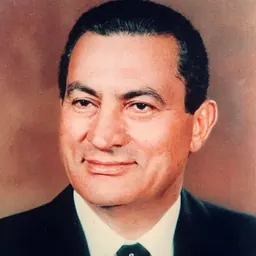
Ahmad Fathi Sorour (; 9 July 1932 – 5 April 2024) was an Egyptian politician who served as the 9th speaker of the People's Assembly of Egypt from 1990 until the Egyptian Revolution of 2011. Previously he had served in the government as Minister of Education from 1986 to 1990.
Sorour was first elected to the People's Assembly in April 1989, and he was elected as Speaker in November 1990. He was President of the Council of the Inter-Parliamentary Union in 1994–1997 and also served as President of the Union of African Parliaments in 1990–1991. According to Article 84 of the Egyptian Constitution, Sorour, as Speaker of the People's Assembly, was first in the order of succession to become President of Egypt if the President died, became incapacitated, or resigned. Upon the resignation of Hosni Mubarak in 2011, however, the military, headed by Mohamed Hussein Tantawi, assumed control of the state.
Early life Sorour was born on July 1932 in Qena Governorate in Upper Egypt. He studied law at Cairo University and obtained a doctorate in criminal law. Later on he obtained a master's degree in law from the University of Michigan in the United States of America.
Allegations and controversies Allegations of non-compliance with the judiciary Sorour was widely criticized for article 93 of the Egyptian Constitution: "The parliament is the master of its decisions", meaning that the parliament could make a decision about its membership regardless of any judicial decisions. This article caused significant concerns amidst allegations that parliamentary elections were repeatedly and systematically rigged. Sorour continued to assert that the parliament was the competent authority to decide the validity of its memberships despite the widely acknowledged allegations of rigging. Following the Egyptian revolution of 2011 Sorour's parliament was dissolved and article 93 was referred for revision.
2011 revolution In the aftermath of the revolution in Egypt (25 January 2011 – 11 February 2011) the Supreme Military Council, led by Field Marshal Mohamed Hussein Tantawi, was appointed to the position of Acting President. The Supreme Military Council dissolved the Egyptian Parliament which was headed by Sorour. This came following widespread allegations that the elections leading to this parliament, headed by Sorour, were rigged. On 14 February 2011, the Egyptian daily news Alwafd reported that the ruling military authorities opted to prosecute a senior member of Sorour's team for allegedly burning confidential documents in Sorour's office. The same newspaper reported that a restraining order was issued preventing Sorour from entering the parliament building following allegations of smuggling undisclosed documents from the building. Sorour was seen as one of the figures that caused the fall of Mubarak's rule. Some believed that Mubarak's mistake was that he increasingly gave too much latitude to his son's cabal, including Ahmad Fathi Sorour, among others.
Fathi Sorour openly supported measures taken to crack down on the pro-democracy demonstrations in Egypt. In a televised interview with Elmehwar TV in January 2011, Sorour was asked for an opinion on the US disapproval of the Egyptian authorities' action: disconnecting internet services in an attempt to halt the demonstrations. Sorour replied that the US "did more than that when it was subjected to terrorism", portraying some similarity between pro-democracy demonstrators in Egypt and the terrorists who attacked the United States. Sorour subsequently stated that he didn't view the pro-democracy demonstrators as terrorists.
Death Sorour died on 5 April 2024, at the age of 91.
Don’t just read it —
keep it.
Full-length biographies made to live with: read them, listen on the way to work, watch them tonight.
- E-book
- Audio
- Video
Instant download · yours to keep · every purchase keeps this site free
Important facts
People in Ahmad Fathi Sorour's life
Named in this biography and alive at the same time


Related people
Same field, nearest in time



Contemporaries
People whose lives overlapped Ahmad Fathi Sorour's



Frequently asked questions
Who was Ahmad Fathi Sorour?
Egyptian politician (1932–2024)
When was Ahmad Fathi Sorour born?
Ahmad Fathi Sorour was born on 9 July 1932 in Qena Governorate.
When did Ahmad Fathi Sorour die?
Ahmad Fathi Sorour died on 5 April 2024.
What was Ahmad Fathi Sorour's occupation?
Ahmad Fathi Sorour was a diplomat, politician and jurist.
What nationality was Ahmad Fathi Sorour?
Ahmad Fathi Sorour's recorded nationality: Kingdom of Egypt, Republic of Egypt, United Arab Republic.
Sources & further reading
· Wikipedia: Ahmad Fathi Sorour
Cite this page
APA: Biography.guide. (2026). Ahmad Fathi Sorour. https://biography.guide/ahmad-fathi-sorour/
MLA: "Ahmad Fathi Sorour." Biography.guide, https://biography.guide/ahmad-fathi-sorour/.
Chicago: "Ahmad Fathi Sorour." Biography.guide. https://biography.guide/ahmad-fathi-sorour/.
Data last updated: 2026-09-20 · Spot an error? Report a correction.
Page generated 2026-09-27 05:29 UTC