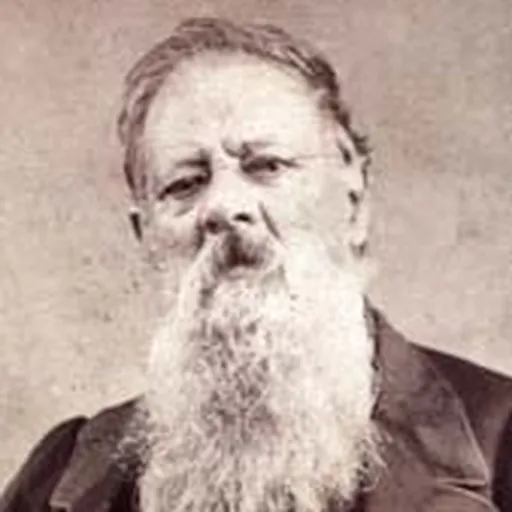
About Agustín Arrieta
Lived 1802 – 1874 (aged 71–72). Agustín Arrieta was a Mexican painter.
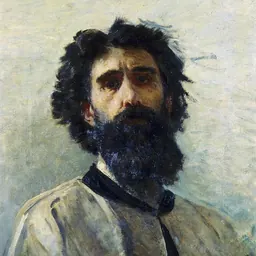
José Agustín Arrieta (29 August 1803 – 22 December 1874) was a Mexican genre painter or costumbrista painter known for his scenes of everyday life in nineteenth-century Puebla, the city in which he lived most of his life. He was very prolific, however, as a still life painter, depicting many typical Mexican foods and dishes.
Early years and training
The son of Tomás Arrieta, of Basque origin, and of Rita María Fernández, Agustín Arrieta was brought as a young boy to the city of Puebla, where he lived for the rest of his life. There is little documentary evidence of this assertion, except for his certificate of marriage to María Nicolasa Lorenzana Varela, dated 29 August 1826, and documents that demonstrate his membership in and participation in competitions of the Academy of Fine Arts in Puebla and the Academy of San Carlos. His works provide accurate portrayals of Mexican types such as the chinaco, the china poblana, the soldier, the water-carrier, the priest, the gentleman, the beggar, and many others. Arrieta was fascinated by mundane scenes such as the one depicted in his Tertulia de pulquería – set in one of the pulque bars of which there was no shortage in Puebla – or by street fights or market scenes, to which he lent a festive, anecdotal air. Other genre paintings by Arrieta include La sorpresa, La cocina poblana, Vendedores de horchata, and Agualojera.
Arrieta and naturalism
It is fascinating how Arrieta sought to recover the pictorial genre of the still life charged with symbolism, which had been very common in the 16th century before developing in the 17th century into a simple representation of nature. The Academy of San Carlos did not even include still-life painting on its curriculum, but Arrieta undertook to salvage the genre, portraying exotic Mexican foods and utensils used specifically in the cuisine of Puebla. The most attractive features of his still lifes are the realism of the textures, the brilliant colors of the fruit, and the realistic rendering of glass, although his critics have objected to the lack of any logic between certain opposing elements, such as his representation of a hieratic cat next to a chicken.
Arrieta also painted portraits of several important figures in the society of Puebla, but his critics, including the historian Guillermo Prieto, have pointed out deficiencies in his handling of anatomy, as for example his rendering of hands, as well as the poor quality of his drapery.
With his ideas that went against the current of his time and place, Arrieta enjoyed scant popularity and lived in poverty all his life. The reputation of this important Mexican painter, a pioneer of the nationalist school, was rehabilitated by Luis Bello y Zetina in his book Pinturas Poblanas, written in 1943.
Bernardo Olivares Iriarte, a critic and historian of the art of Puebla, described Arrieta's works in 1874 as “compositions of sufficient merit, owing to the truth and complete verisimilitude he has achieved in them. Everyone agrees that, up to now, [Arrieta] has had no rival in the city in works of this kind.”
Selected works Agualojera – Agualoja Vendor Antonia Ferrer de Freitas Cantina – Interior of an Inn El chinaco y la china La cocina poblana – The Poblano Kitchen El costeño – The Boy from the Coast El claco de risa (Un hombre en harapos rodeado de niños) – The Sound of Laughter (A man in rags surrounded by children) La Familia Mexicana (La Pensativa) – The Mexican Family (The Pensive Woman) Intervención – The Intervention El mandadero – The Errand Boy Raphael Archangel Retrato de la familia del General Don Felipe – Portrait of the Family of General Don Felipe El Requiebro – The Flirtatious Remark San Pascual Bailón La Servienta – The Servant Girl La sorpresa – The Surprise Tertulia de pulquería – Gathering in the Pulque Bar Untitled painting of an elderly woman holding a cat, a young girl, and an elderly man Untitled painting of an elderly woman holding a cat Vendedores de horchata – Horchata Vendors Viejo con niño – Old Man with Boy
Gallery of selected works
Don’t just read it —
keep it.
Full-length biographies made to live with: read them, listen on the way to work, watch them tonight.
- E-book
- Audio
- Video
Instant download · yours to keep · every purchase keeps this site free
Important facts
People in Agustín Arrieta's life
Named in this biography and alive at the same time
Related people
Same field, nearest in time


Contemporaries
People whose lives overlapped Agustín Arrieta's






Frequently asked questions
Who was Agustín Arrieta?
Mexican painter (1803-1874)
When was Agustín Arrieta born?
Agustín Arrieta was born in 1802 in Chiautempan.
When did Agustín Arrieta die?
Agustín Arrieta died on 22 December 1874 in Heroica Puebla de Zaragoza.
What was Agustín Arrieta's occupation?
Agustín Arrieta was a painter.
What nationality was Agustín Arrieta?
Agustín Arrieta was Mexican.
Sources & further reading
Cite this page
APA: Biography.guide. (2026). Agustín Arrieta. https://biography.guide/agustin-arrieta/
MLA: "Agustín Arrieta." Biography.guide, https://biography.guide/agustin-arrieta/.
Chicago: "Agustín Arrieta." Biography.guide. https://biography.guide/agustin-arrieta/.
Data last updated: 2026-09-21 · Spot an error? Report a correction.
Portrait: Wikimedia Commons · author & licence
Page generated 2026-09-27 04:59 UTC