
About Adrian Lombard
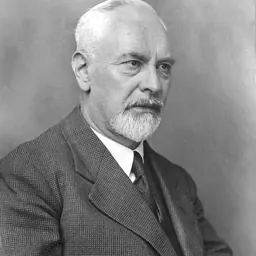
Lived 1915 – 1967 (aged 52). Adrian Lombard was a British engineer and military flight engineer.
Adrian Albert "Lom" Lombard, CBE (19 January 1915 – 13 July 1967) was an English aeronautical engineer. Despite having no formal training in aerodynamics, After leaving school at the age of 15, he began training in the drawing office of the Rover Company.
Early career After spending five years with Rover, Lombard took a job with Morris Motors Limited where he was put in charge of engine stress calculations and worked as a motor car engineer. However, he returned to Rover in 1936 and within four years was part of Maurice Wilks' design team. This technology was later used in the production of the RB211 engine;
In November 1962, Lombard visited Japan to meet with several companies that had expressed an interest in Rolls-Royce's vertical take-off (VTOL) aircraft engines. During the trip, he predicted that such engines would be in general civil use within ten years. Lombard and Stanley Hooker, then technical director of Bristol Siddeley, were jointly awarded the James Clayton award by the Institute of Mechanical Engineers in February 1967, for their pioneering work with vertical take-off engines.
Significantly, Lombard predicted the crossover of lift jet technology to the by-pass engine, where the engine carcasses would be integral with the pod structure, thus reducing engine weight. Lombard indicated that the same principle could be applied to a pair of propulsion engines mounted on an underwing pylon. The by-pass duct would be an integral part of the permanent pod structure, into which the engines are assembled.
In 1966, Adrian Lombard presented the first Royal Society Technology Lecture Aircraft: Power Plants Past, Present and Future. In his presentation, Lombard indicated that the chosen subject was a "very topical one both because of the very advanced technology required for the design and manufacture of aero engines and of the interest which has recently centred on the aircraft industry in this country and the controversy on its future". Among the controversial issues highlighted by Lombard and centering on the aircraft industry was the Duncan Sandys 1957 Defence White paper. The industry had a number of setbacks, perhaps the most drastic of them was the 1957 Defence White Paper, which erroneously forecast that there would be no new crewed aircraft. Following on from the erroneous 1957 White paper and hard on its heels was the Labour government inspired Plowden enquiry that Lombard criticised for causing long term uncertainty for the UK aviation industry. Yet despite the apparent political efforts to stall the British aviation industry, Lombard emphasised that '...the British aero engine industry has retained its technical competitive capability...' and he demonstrated the value of competitive technologies, which led the export of aero engines and returned a major financial contribution to the UK economy: 'The value of engine exports over the last twelve years or so was nearly £650 million excluding engines installed in export aircraft'.
Following his death in July 1967, it was written that Rolls-Royce had been "deprived of one of the finest trouble-shooting engineers in the industry".
Lombard's death had unfortunate consequences for Rolls-Royce when it came to the initial design of the early RB211, which suffered performance problems, the cost of solving-which, ultimately were to lead to the company going into receivership in 1971.
"It was all too obvious that the Derby engineers, normally proud and self-confident to the point of arrogance, had slid from bad to worse when their great leader, Lombard, had been so suddenly plucked from them in 1967, his death had left a vacuum which nobody could fill ..." - Stanley Hooker
The 'Lombard Award' was established by Rolls-Royce in his memory, with those in the final year of a company apprenticeship eligible for consideration..
His granddaughter, Fleur, was a firefighter who became the first female firefighter to die in the line of duty in the United Kingdom.
Don’t just read it —
keep it.
Full-length biographies made to live with: read them, listen on the way to work, watch them tonight.
- E-book
- Audio
- Video
Instant download · yours to keep · every purchase keeps this site free
Important facts
People in Adrian Lombard's life
Named in this biography and alive at the same time



Related people
Same field, nearest in time



Contemporaries
People whose lives overlapped Adrian Lombard's



Frequently asked questions
Who was Adrian Lombard?
British aerospace engineer
When was Adrian Lombard born?
Adrian Lombard was born on 19 January 1915 in Coventry.
When did Adrian Lombard die?
Adrian Lombard died on 13 July 1967.
What was Adrian Lombard's occupation?
Adrian Lombard was an engineer and military flight engineer.
What nationality was Adrian Lombard?
Adrian Lombard was British.
Sources & further reading
Cite this page
APA: Biography.guide. (2026). Adrian Lombard. https://biography.guide/adrian-lombard/
MLA: "Adrian Lombard." Biography.guide, https://biography.guide/adrian-lombard/.
Chicago: "Adrian Lombard." Biography.guide. https://biography.guide/adrian-lombard/.
Data last updated: 2026-09-20 · Spot an error? Report a correction.
Page generated 2026-09-27 05:23 UTC