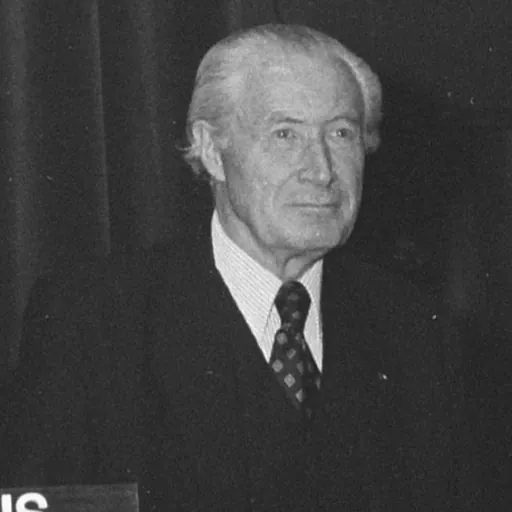
About Duncan Sandys
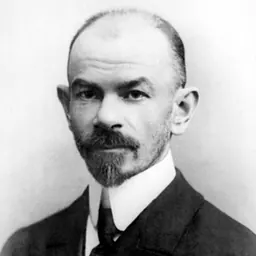
Lived 1908 – 1987 (aged 79). Duncan Sandys was a British politician.
Duncan Edwin Duncan-Sandys, Baron Duncan-Sandys Sandys's parents divorced in January 1921 when he was 12 years old. His mother married Frederick Hamilton Lister in October that year, becoming Mildred Helen Lister. He was educated at Eton College and Magdalen College, Oxford.
Early career Sandys entered the diplomatic service in 1930, serving at the Foreign Office in London as well as at the embassy in Berlin.
He became Conservative Party Member of Parliament (MP) for Norwood in south London in a by-election in March 1935, at which he was opposed by an Independent Conservative candidate sponsored by Randolph Churchill.
In May 1935, he was in effect saying that Germany should have a predominant place in central Europe, so that Britain could be free to pursue her colonial interests without a rival. He was a prewar member of the Anglo-German Fellowship.
In November 1936, Sandys put forward to the "1912 Club" a "fanciful vision" of England in 1950 (including peace in Europe).
The Duncan Sandys case In 1937, Sandys was commissioned into the 51st (London) Anti-Aircraft Brigade, Royal Artillery, of the Territorial Army (TA). In 1938, he asked questions in the House of Commons on matters of national security that reflected his TA experience. He was subsequently approached by two unidentified men, presumably representing the secret services, and threatened with prosecution under section 6 of the Official Secrets Act 1920. Sandys reported the matter to the Committee of Privileges, which held that the disclosures of Parliament were not subject to the legislation, though an MP could be disciplined by the House. The Official Secrets Act 1939 was enacted in reaction to this incident.
Wartime career During the Second World War, Sandys fought with 51st (London) HAA Regiment in the Norwegian campaign.
His father-in-law gave him his first ministerial post as Financial Secretary to the War Office from 1941 to 1944 during the wartime coalition government. Sandys had been wartime Parliamentary Secretary to the Minister of Supply.
From 1944 to 1945, he served as Minister of Works for the remainder of the coalition and in the Churchill caretaker ministry. While a minister, he was chairman of a War Cabinet Committee for defence against German flying bombs and rockets, on which he frequently clashed with the scientist and intelligence expert R. V. Jones. However, he lost his seat in the 1945 general election. He resigned his TA commission as a lieutenant-colonel the following year.
Sandys served as a member of the Consultative Assembly of the Council of Europe from 1950 until 1951.
Post-war parliamentary career Sandys was elected to parliament once again at the 1950 general election for Streatham and, when the Conservatives regained power in 1951, he was appointed Minister of Supply. For most of his time in that role, his private secretary was Jack Charles. As Minister of Housing from 1954, he introduced the Clean Air Act and in 1955 introduced the green belts.
He was appointed Minister of Defence in 1957 and quickly produced the 1957 Defence White Paper that proposed a radical shift in the Royal Air Force by ending the use of fighter aircraft in favour of missile technology. Though later ministers reversed the policy, the lost orders and cuts in research were responsible for several British aircraft manufacturers going out of business. As Minister of Defence, he saw the rationalisation (merger) of much of the British military aircraft and engine industry.
Sandys continued as a minister at the Commonwealth Relations Office, later combining it with the Colonies Office, until the Conservative government lost power in 1964. In this role he was responsible for granting several colonies their independence and was involved in managing the British response to several conflicts involving the armed forces of the newly independent countries of East Africa.
He remained in the shadow cabinet until 1966, when he was sacked by Edward Heath. He had strongly supported Ian Smith in the dispute over Rhodesia's Unilateral Declaration of Independence. He was not offered a post when the Conservatives won the 1970 general election, but instead served as leader of the United Kingdom delegation to the Council of Europe and Western European Union until 1972 when he announced his retirement. The next year he was made a member of the Order of the Companions of Honour.
In 1974, he retired from parliament and was awarded a life peerage on 2 May. As the title of Baron Sandys was already held by another family, he followed the example of George Brown and incorporated his first name in his title, changing his surname to Duncan-Sandys. He was created Baron Duncan-Sandys, of the City of Westminster, on 2 May 1974.
He was an active early member of the Conservative Monday Club.
Personal life In 1935, Sandys married Diana Churchill, daughter of the future prime minister Winston Churchill. They divorced in 1960.
In 1962, he married Marie-Claire (née Schmitt), who had been previously married to Robert Hudson, 2nd Viscount Hudson. The marriage lasted until Sandys's death.
It has long been speculated that he may have been the "headless man" whose identity was concealed during the scandalous divorce trial of Margaret Campbell, Duchess of Argyll, in 1963.
Sandys died on 26 November 1987 at his home in London. He is buried in the churchyard of St Nicholas in Child Okeford, Dorset. His grave is marked by a horizontal white slab.
Children From Sandys's first marriage, with Diana Churchill: The Hon. Julian Sandys (19 September 1936 – 15 August 1997) The Hon. Edwina Sandys (born 22 December 1938) The Hon. Celia Sandys (born 18 May 1943). She married firstly Michael Kennedy and secondly Dennis Walters (divorced 1979).
From his second marriage, with Marie-Claire Schmitt: The Hon. Laura Sandys (born 5 June 1964). She was a Conservative Member of Parliament for South Thanet.
Interests Among Sandys's other interests was historic architecture. He formed the Civic Trust in 1957 and was its president; the Royal Institution of British Architects made him an honorary Fellow in 1968, and the Royal Town Planning Institute made him an honorary member. He was also a trustee of the World Security Trust.
Between 1969 and 1984, he was president of Europa Nostra and acted for the preservation of the European cultural and architectural heritage.
His business activities included a directorship of the Ashanti Goldfields Corporation, which was later part of Lonrho of which he became chairman. He was, therefore, caught up in the scandal in which Lonrho was revealed to have bribed several African countries and broken international sanctions against Rhodesia, as well as the "unpleasant and unacceptable face of capitalism" episode involving eight directors being sacked by Tiny Rowland.
Career summary Coalition Government 20 July 1941 – 7 February 1943, Financial Secretary to the War Office 7 February 1943 – 21 November 1944, Parliamentary Secretary, Ministry of Supply 21 November 1944 – 25 May 1945, Minister of Works Caretaker Government 25 May 1945 – 26 July 1945, Minister of Works Conservative Government 31 October 1951 – 18 October 1954, Minister of Supply 18 October 1954 – 13 January 1957, Minister of Housing and Local Government 13 January 1957 – 14 October 1959, Minister of Defence 14 October 1959 – 27 July 1960, Minister of Aviation 27 July 1960 – 13 July 1962, Secretary of State for Commonwealth Relations 13 July 1962 – 16 October 1964, Secretary of State for the Colonies and Commonwealth Relations
Don’t just read it —
keep it.
Full-length biographies made to live with: read them, listen on the way to work, watch them tonight.
- E-book
- Audio
- Video
Instant download · yours to keep · every purchase keeps this site free
Important facts
Family & relationships
People in Duncan Sandys's life
Named in this biography and alive at the same time
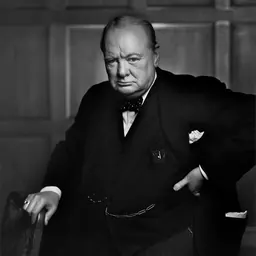
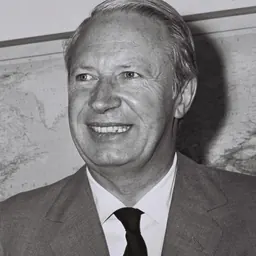




Related people
Same field, nearest in time






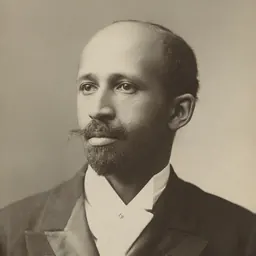
Contemporaries
People whose lives overlapped Duncan Sandys's


Frequently asked questions
Who was Duncan Sandys?
British politician (1908-1987)
When was Duncan Sandys born?
Duncan Sandys was born on 24 January 1908 in Dorset.
When did Duncan Sandys die?
Duncan Sandys died on 26 November 1987 in London.
What was Duncan Sandys's occupation?
Duncan Sandys was a politician.
What nationality was Duncan Sandys?
Duncan Sandys was British.
Sources & further reading
Cite this page
APA: Biography.guide. (2026). Duncan Sandys. https://biography.guide/duncan-sandys/
MLA: "Duncan Sandys." Biography.guide, https://biography.guide/duncan-sandys/.
Chicago: "Duncan Sandys." Biography.guide. https://biography.guide/duncan-sandys/.
Data last updated: 2026-09-20 · Spot an error? Report a correction.
Page generated 2026-09-27 05:10 UTC