
About Adrian Jones
Lived 1845 – 1938 (aged 92). Adrian Jones was a British painter and sculptor.
Alfred Adrian Jones (9 February 1845 – 24 January 1938) was an English sculptor and painter who specialized in depicting animals, particularly horses. Before becoming a full-time artist he was an army veterinary surgeon for twenty-three years. On retirement from the British Army, Jones established himself as an artist with a studio in London. He became a regular exhibitor at the Royal Academy and in commercial galleries from 1884 onwards. His training as a veterinary surgeon gave him a deep knowledge of equine anatomy which he used in his work to great effect. He created the sculpture Peace descending on the Quadriga of War, on top of the Wellington Arch at Hyde Park Corner in London. Following both the Boer War and World War I, Jones created a number of notable war memorials including the Royal Marines Memorial and the Cavalry of the Empire Memorial, both in central London. Alongside the public monuments he created, Jones made equestrian and equine statuettes and portrait busts. He studied at the Royal Veterinary College, qualifying as a veterinary surgeon in 1866. Jones was made a member of the Royal Victorian Order in 1907. In 1887 Jones' bronze Gone Away won first prize in the Goldsmith's Company's statuette contest. His terracotta Camel Corps Scout and The Last Arrow in bronze were both well received when exhibited in 1886 and 1888 respectively.
In 1891 Jones exhibited a plaster work, Triumph featuring a quadriga of four horses and a chariot. The model greatly impressed the Prince of Wales who began campaigning for a monumental version to be created for the Wellington Arch in central London. In 1934 Jones became an Honorary Associate of the Royal College of Veterinary Surgeons, and he was also an honorary member of the Incorporated Association of Architects and Surveyors.
Selected public works 1895–1919
1920-1929
Other works For the Faith, a 1903 equestrian statuette, current whereabouts unknown, shown at the Royal Academy in 1903. A silver statuette of Colonel Asfur Dowla, the A.D.C. to the Nizam of Hyderabad, shown at the Royal Academy in 1903, but current whereabouts unknown. In 1985, Jones' 1892 plaster group Duncan's Horses was cast in bronze and erected in the grounds of the Royal Veterinary College, Hawkshead Campus in Hertfordshire.
Gallery of images
Don’t just read it —
keep it.
Full-length biographies made to live with: read them, listen on the way to work, watch them tonight.
- E-book
- Audio
- Video
Instant download · yours to keep · every purchase keeps this site free
Important facts
Related people
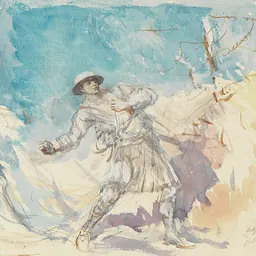
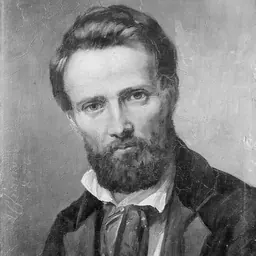
Same field, nearest in time
Contemporaries
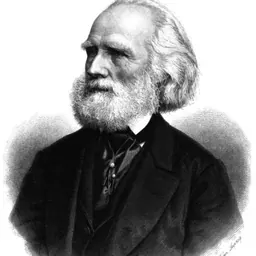
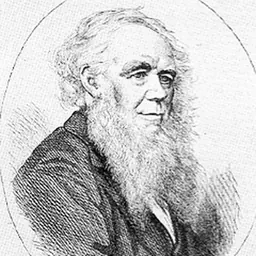
People whose lives overlapped Adrian Jones's


Frequently asked questions
Who was Adrian Jones?
painter and sculptor (1845-1938)
When was Adrian Jones born?
Adrian Jones was born on 9 February 1845 in Ludlow.
When did Adrian Jones die?
Adrian Jones died on 24 January 1938 in London.
What was Adrian Jones's occupation?
Adrian Jones was a painter and sculptor.
What nationality was Adrian Jones?
Adrian Jones was British.
Sources & further reading
· DBpedia: Adrian Jones (sculptor)
Cite this page
APA: Biography.guide. (2026). Adrian Jones. https://biography.guide/adrian-jones-painter/
MLA: "Adrian Jones." Biography.guide, https://biography.guide/adrian-jones-painter/.
Chicago: "Adrian Jones." Biography.guide. https://biography.guide/adrian-jones-painter/.
Data last updated: 2026-09-26 · Spot an error? Report a correction.
Page generated 2026-09-27 05:14 UTC