
Adrian Hardy Haworth
English entomologist, botanist and carcinologist
About Adrian Hardy Haworth
Lived 1767 – 1833 (aged 66). Adrian Hardy Haworth was a British botanist, lepidopterist and carcinologist.
Adrian Hardy Haworth (19 April 1767 – 24 August 1833) was an English entomologist, botanist and carcinologist.
Family The younger son of Benjamin Haworth, of Haworth Hall and Anne Booth, he was educated at Hull Grammar School and by tutors who steered him towards a career in the law. After inheriting the family estate, he devoted all his time to natural history.
He married three times, firstly in 1792 to Elizabeth Sidney Cumbrey (died 1803), secondly in 1805 to Amy Baines (died 1813), and lastly in 1819 to Elizabeth Maria Coombs, who survived him. By his first wife, he left children from whom descend the Haworth-Booths.
Career
In 1792 he settled in Little Chelsea, London, where he met William Jones (1750–1818) who was to have a great influence on him. He became a Fellow of the Linnean Society of London in 1798. His research work was aided by his use of the library and herbarium of his friend Sir Joseph Banks (1743–1820) and regular visits to the Royal Botanic Gardens, Kew.
His Yorkshire estate is now represented by Haworth Hall, in Beverley Road, Hull.
He was the author of Lepidoptera Britannica (1803–1828), the most authoritative work on British butterflies and moths until Henry Tibbats Stainton's Manual in 1857. He was also a carcinologist, specialising in shrimp. He is responsible for the names of several taxa, including:
Order Mysida Haworth, 1825 Family Mysidae Haworth, 1825 Superfamily Pandaloidea Haworth, 1825 Family Pandalidae Haworth, 1825 Superfamily Crangonoidea Haworth, 1825 Family Crangonidae Haworth, 1825 Family Porcellanidae Haworth, 1825
and named 22 new genera of moths.
The British entomologist John Curtis named a moth of the family Noctuidae 1829 in honour of Adrian Hardy Haworth Celaena haworthii.
In 1812 he wrote the first paper in Volume 1 of the Transactions of the Entomological Society of London, a review of previous work on British insects. In 1833, he lent support to the founding of what became the Royal Entomological Society of London having been President of its predecessor. He was a Fellow of the Horticultural Society and a Fellow of the Linnean Society.
His botanical contributions included the first monograph on the genus Crocus (1809). The plant genus Haworthia is named after Adrian Hardy Haworth.
Works Synopsis Plantarum Succulentarum (London, 1812) Saxifragearum enumeratio (London, 1821) Lepidoptera Britannica (1803–1828) Observations on the Genus Mesembryanthemum (London, 1794)
Don’t just read it —
keep it.
Full-length biographies made to live with: read them, listen on the way to work, watch them tonight.
- E-book
- Audio
- Video
Instant download · yours to keep · every purchase keeps this site free
Important facts
People in Adrian Hardy Haworth's life
Named in this biography and alive at the same time


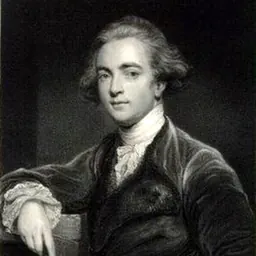

Related people
Same field, nearest in time



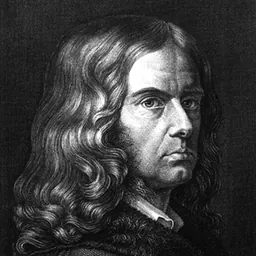

Contemporaries
People whose lives overlapped Adrian Hardy Haworth's




Frequently asked questions
Who was Adrian Hardy Haworth?
English entomologist, botanist and carcinologist (1767-1833)
When was Adrian Hardy Haworth born?
Adrian Hardy Haworth was born on 19 April 1767 in Kingston upon Hull.
When did Adrian Hardy Haworth die?
Adrian Hardy Haworth died on 24 August 1833 in Chelsea.
What was Adrian Hardy Haworth's occupation?
Adrian Hardy Haworth was a botanist, lepidopterist and carcinologist.
What nationality was Adrian Hardy Haworth?
Adrian Hardy Haworth was British.
Sources & further reading
· Wikipedia: Adrian Hardy Haworth
· DBpedia: Adrian Hardy Haworth
Cite this page
APA: Biography.guide. (2026). Adrian Hardy Haworth. https://biography.guide/adrian-hardy-haworth/
MLA: "Adrian Hardy Haworth." Biography.guide, https://biography.guide/adrian-hardy-haworth/.
Chicago: "Adrian Hardy Haworth." Biography.guide. https://biography.guide/adrian-hardy-haworth/.
Data last updated: 2026-09-20 · Spot an error? Report a correction.
Page generated 2026-09-27 05:19 UTC