
About Adriaen van der Werff
Lived 1659 – 1722 (aged 63). Adriaen van der Werff was a Dutch painter, architect, sculptor, copper engraver and visual artist.
Adriaen van der Werff (21 January 1659 – 12 November 1722) was a Dutch painter of portraits and erotic, devotional and mythological scenes. He painted several works for the Medicis. His brother, Pieter van der Werff (1661–1722), was his principal pupil and assistant.
Life At the age of ten, he began to take lessons, two years later moving in with Eglon van der Neer, specializing in clothes and draperie. At the age of seventeen, he founded his own studio in Rotterdam where he later became the head of guild of Saint Luc. In 1696, he was paid a visit by Johann Wilhelm, Elector Palatine and his wife, Anna Maria Luisa de' Medici. The couple ordered two paintings to be sent to Cosimo III de' Medici, Grand Duke of Tuscany, Anna Maria Luisa's father, in Florence. During the next years Van der Werff traveled regularly between Düsseldorf and his home town.
In 1703, he became the official court painter and a knight, when his former teacher and predecessor Van der Neer died. Van der Werff was paid extremely well by the Elector for his biblical or classical (erotic) paintings. In December 1704, he painted Prince John Churchill, 1st Duke of Marlborough and in 1705, he painted a portrait of Gian Gastone de' Medici, Grand Duke of Tuscany. In 1716, he lost his job when the Elector died and was replaced by Charles III Philip, Elector Palatine. The treasury was then empty. Johann Wilhelm owned 34 paintings made by Van der Werff and were hung in a specially designated room next to Rembrandt's. He refused to have paintings sold to Prince Anthony Ulrich, Duke of Brunswick and King Augustus II the Strong, as he wanted to keep the paintings to himself. The director of the collection was Jan Frans van Douven.
Van der Werff became one of the most lauded Dutch painters of his day, gaining a European reputation and a fortune. Arnold Houbraken, writing in 1718, considered him the greatest of the Dutch painters and this was the prevailing critical opinion throughout the 18th century: however, his reputation suffered in the 19th century, when he was alleged to have betrayed the Dutch naturalistic tradition. In the Victorian Age, people could not appreciate his art, so most of his work went into the cellars of the Alte Pinakothek.
Van der Werff also practised as an architect in Rotterdam, where he designed a few houses. His only daughter married to Flemish painter Adriaen Brouwer.
Famous buyers of his art would later be the King of Prussia Frederick the Great, the King of France Louis XVI, and Dutch banker Adriaan van der Hoop. His works can be seen today at the national museum of the Netherlands, Rijksmuseum, next to the Van Gogh Museum, at the Alte Pinakothek Museum in Munich, Germany, at the Uffizi Gallery in Florence, Italy, and at the Boijmans Van Beuningen Museum in Rotterdam, Netherlands.
Works Hedwig Elisabeth (1673) Family Portrait (1680–1689) Children Playing Before a Hercules Group (1687) Shepherd and Shepherdess (1689) Flora with Putti Strewing Flowers (1696), Schloss Wilhelmshöhe, Kassel, Germany Diogenes (1699) Sarah Presenting Hagar to Abraham (1699) Maria Anna Luisa (1700) Portrait of Johann Wilhelm, Elector Palatinate (1700) Portrait of John Churchill Marlborough (12 December 1701) Adam and Eve (c. 1711), dedicated to Marie Joséphine of Savoy and Louis XVIII Homage to the Arts (1713) Mary with the Christ-child and John the Baptist (1715), mahogany, 46 x 34 cm, Gemäldegalerie Alte Meister, Dresden The Holy Family and Infant Saint John the Baptist (1715) The Judgement of Paris (1716) The Annunciation (1718), transferred from oak to canvas, 71 x 52 cm, Gemäldegalerie Alte Meister, Dresden Mucius Scaevola, pencil on paper. 29.4 × 20.6 cm. Herzog Anton Ulrich-Museum, Braunschweig (Brunswick) Noli me tangere (1719) Nymphes dasant (1720), also painted by his brother Perkeo, uncertainly painted this portrait, painted by Johann George Dathan Portrait of Simon Martin Haake Portrait of Mary II of England, also painted with Étienne-Jehandier Desrochers Portrait of Friedrich von Schomberg Portrait of William II of England, also painted with Étienne-Jehandier Desrochers The Visitation, ink, washed on paper, 29.4 x 20.6 cm. Herzog Anton Ulrich-Museum, Braunschweig (Brunswick)
Gallery
Don’t just read it —
keep it.
Full-length biographies made to live with: read them, listen on the way to work, watch them tonight.
- E-book
- Audio
- Video
Instant download · yours to keep · every purchase keeps this site free
Important facts
People in Adriaen van der Werff's life
Named in this biography and alive at the same time


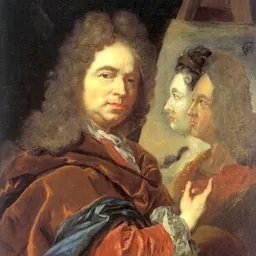

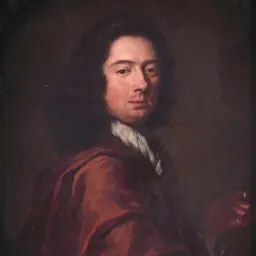

Related people
Same field, nearest in time
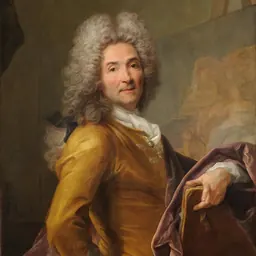
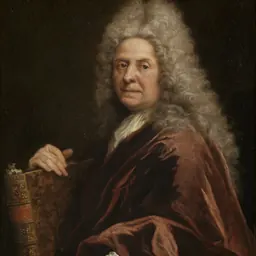

Contemporaries
People whose lives overlapped Adriaen van der Werff's




Frequently asked questions
Who was Adriaen van der Werff?
Dutch painter (1659–1722)
When was Adriaen van der Werff born?
Adriaen van der Werff was born on 21 January 1659 in Kralingen.
When did Adriaen van der Werff die?
Adriaen van der Werff died on 12 November 1722 in Rotterdam.
What was Adriaen van der Werff's occupation?
Adriaen van der Werff was a painter, architect, sculptor, copper engraver and visual artist.
What nationality was Adriaen van der Werff?
Adriaen van der Werff was Dutch.
Sources & further reading
· Wikipedia: Adriaen van der Werff
· DBpedia: Adriaen van der Werff
Cite this page
APA: Biography.guide. (2026). Adriaen van der Werff. https://biography.guide/adriaen-van-der-werff/
MLA: "Adriaen van der Werff." Biography.guide, https://biography.guide/adriaen-van-der-werff/.
Chicago: "Adriaen van der Werff." Biography.guide. https://biography.guide/adriaen-van-der-werff/.
Data last updated: 2026-09-20 · Spot an error? Report a correction.
Page generated 2026-09-27 05:33 UTC