
About Adam Gorczyński
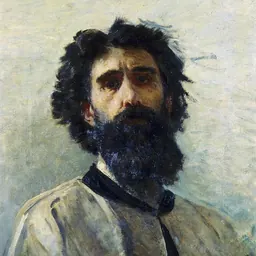
Lived 1805 – 1876 (aged 70–71). Adam Gorczyński was an Austrian painter, writer, poet, land owner and literary scholar.
Adam Gorczyński ( ; 1805 – 24 May 1876) was a Polish writer and poet of the Romantic era, author of popular novels in the style of gawęda szlachecka and Old Polish silvae rerum, a painter of the Polish Romantic era, an artist of Polish landscapes, co-founder of the Kraków Society of Friends of Fine Arts, politically engaged in Polish affairs in Galicia, a social activist, and owner of estates in Brzeźnica and Marcyporęba. He used the literary pseudonym "Jadam of Zator". In the 21st century, he became the patron of cultural initiatives in his hometown of Brzeźnica.
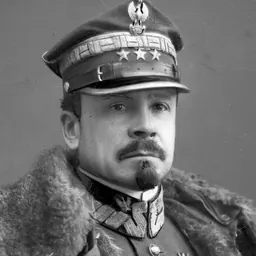
Early life Coat of arms of the Gorczyński family In 1818, Józef Kalasanty purchased Brzeźnica, Nowe Dwory, and part of Marcyporęba. Adam's sister Elżbieta was the grandmother of General Józef Haller.
Adam Gorczyński completed his gymnasium education in Tarnów and then studied philosophy in Lviv. During this time, he established contacts with Ossolineum and became close to a group of Lviv intellectuals – , , and – who were advocates of emphasizing the connections between Polish culture and the history of Slavdom. The cultural and literary atmosphere that the young Gorczyński absorbed during this time was reflected in his later literary works.
From 1821, he pursued "chamber studies" in Vienna, which prepared estate managers for large landownership and officials for the Austrian crown lands. As a significant landowner in Galicia, he had the right to vote in the estate owners' curia. He died in 1876 and was buried in the cemetery next to the parish church in Marcyporęba.
Literary work Adam Gorczyński was a creator of the Polish Romantic era, associated with emigrant literature and Slavophilia, whose development coincided with the period from 1815 (the confirmation of the partitions of Poland by the Congress of Vienna) to 1863 (the fall of the January Uprising). During this time, the paths of European Romanticism were shaped by social changes, and Polish political events defined its distinct national-patriotic character. These characteristics appeared in Polish art until the regaining of independence in 1918, and even until the Warsaw Uprising in 1944.
Gorczyński's literary work was characterized by the affirmation of native customs, familiar landscapes, and ancient legends, with its main features being patriotism, regionalism, historicism, and populism. Gorczyński printed them earlier in various periodicals such as Sławianin, Rozmaitości, Przyjaciel Ludu, Czas, and Biblioteka Warszawska. Quote|text=Plowing fathers' field,If a hidden legend's yield,String it on our rosary's chain,A spark of old stones, make it plain.Brush against a stone, long ignored,From its depths, a spark restored,To brighten the thoughts of kin,Unearthing tales buried within;If less fortune smiles your way,From hills and huts, a scene to sway,Craft a picture for all to see,In every stroke, our history;Many a capital, our fathers' land,Painted with patterns, hand in hand,Feeds our eyes with beauty's grace,Leaves a mark, in time and space.|author=Adam Gorczyński|source=the beginning of the poem Grodzisko Characteristic of Gorczyński's work were stories akin to gawęda szlachecka. Kto się w opiekę poda Panu Swemu; Niedźwiedzica; Górnice; Kwestia o Wilczy Dołek; Żaki; Kapitalik; Syn Chrzestny; Hełm Jaksy; Wróżba Maruchy; Pan Królowej ruskiej; Zwierciadełko; Skała św. Onufrego, czyli kronika szlacheckiego dworku; Kasperek; Straszny strzelec. Some of these stories were translated into Czech and German. and which became a reading material in 1852 in a Polish high school in Cieszyn. He was also the author of two novels of manners – Farmazon (1844) and Zeno (1845).
Gorczyński's books belonged to popular Romanticism, intended for a wide audience. Their content was medieval stories, which the writer developed and embellished with his own imagination. Some of them (e.g., Balice, Zmesta, Hełm Jaksy) were based on fragments of chronicles by Jan Długosz and Marcin Bielski.
He used the pseudonym "Jadam of Zator",
He translated the poems of the Czech poet Václav Hanka. He also engaged in translating the poetry of German romantics Friedrich Schiller and Johann Goethe. He also translated William Shakespeare's Romeo and Juliet, which relied on well-known sentimental conventions supplemented with elements of hagiography and gawęda szlachecka. The translation of Romeo and Juliet was not performed in the 19th century. Gorczyński's catalog of works is found in the . In the extensive monograph Outline of the History of Polish Literature from 1860, dramas authored by him were highly praised: In them (the dramas), uncommon talent shines, there are scenes of wondrous beauty, which he masterfully renders, capturing the spirit of the age brilliantly, yet also alongside this there are flat, unremarkable chambers.
At the beginning of the 1860s, he ceased his literary activity.
Karol Estreicher quotes Adam Gorczyński's words from their meeting in Kraków in 1852: I write in moments free from agricultural tasks. (...) Amidst so many literary coryphaeuses, a humble foot soldier cannot advance, and I live out my days peacefully in the countryside, as good God has ordained for me. In a contemporary Polish literature textbook for school use, it was stated in 1866 that he wrote several good novels, among which "Farmazon" (1844) stands out. "Silva rerum" (1842) is a collection of tales of barren content, but beautifully written in language.
Kraków's in a posthumous tribute in 1876 wrote: Adam Gorczyński belonged to the slim ranks of writers who sought to enliven literary activity amidst the most enduring censorship and complete indifference to books. Józef Ignacy Kraszewski wrote about his novels: One can recognize exceptional talent, and above all, a fair understanding of the past and an understanding of its spirit without prejudice. In the consciousness of later generations, "Jadam of Zator" primarily emerged as a bard of the native areas and a lover of folk legends. He is recognized as a creator on the border between Romanticism and Positivism.
On (in the landscape reserve above the Rudawa canyon in near Kraków), there exists a fragment of his archaic verse, carved in 1854 at the behest of Professor Łepkowski, and at the expense of Count Skórzewski, renewed in 2016: The poetic apotheosis Chleb was republished in 1918. Gorczyński's poem W grudniu! from 1884 was presented in 2020 as an example of a work helpful in educating contemporary students and healthcare workers. It was also noted that poetry of this kind enriches medical professionals and may protect them from occupational burnout.
Paintings
The ideological content of Adam Gorczyński's paintings also belonged to Polish Romanticism, in which realistic tendencies dominated, objectively representing reality. During this period, the birth of landscape painting as a separate subject in art occurred. Artists began to paint landscapes as they truly saw them. The characteristic features of this type of landscape were the approach to the subject, attention to detail, delicate lines, uniform texture, and expressive use of color.
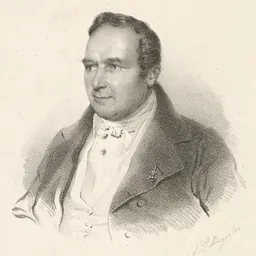
Gorczyński studied painting in Vienna under the landscape painter Franz Steinfeld (1787–1868), and also in Kraków under Jan Nepomucen Głowacki (1802–1847), who was named in 2016 by the as the "father of Polish landscape". Gorczyński authored several hundred paintings in the style of Polish Romanticism, which, like his literary works, had a clear patriotic and independence character in the context of the political situation in partitioned Poland. He depicted society against the backdrop of local landscapes and historical monuments. characterized by picturesque scenes, precise framing, and delicate colors. Light was the dominant element of his compositions. These principles corresponded with the assumptions of Polish Biedermeier, promoted by Głowacki – Gorczyński's friend and second mentor. Gorczyński himself was convinced of the correspondence between literature and painting, Obrazki rodzajowe (1855), and Pejzaż (Urywek z myśli o sztuce) (1853). The National Museum in Kraków houses his paintings The Road to Morskie Oko in the Tatra Mountains and The Dominican Church in Kraków after the 1850 fire. Under the pseudonym "A* of Galicia", he exhibited in 1854 at the society's salon: A View of Kalwaria Zebrzydowska, The Road to Morskie Oko in the Tatra Mountains, A View of the Red Monastery from the Pieniny Mountains and Czarny Dunajec. In 1855, he exhibited Babia Góra at Dawn, Futor Mohort, Mohort Monastery, Czchów, Brzegi Dunajca and Melsztyn. Gorczyński's paintings are present on the art market.
He treated both painting and literature as arts which main task is moral and educational influence on the audience. Gorczyński's Romantic sarmatism manifested itself in his fondness for the folklore of western Galicia, local color, idyllic landscapes, and the history of his homeland.
In the , there is a painting Madonna with Child, probably by Adam Gorczyński. This painting belonged to the family collection in the Gorczyński manor in Brzeźnica, from where, due to the confiscation of property by the occupying Germans during World War II, it was taken by Adam's grandson Colonel Zygmunt Gorczyński (1881–1962) and in 1943 donated to the parish in Bolechowice.
Political and social activities
From the early 1840s, Adam Gorczyński befriended and collaborated with , a lawyer, Slavophile, and politician from Cieszyn, who, despite being Moravian, considered the Polish environment his own. Both were close to the group led by Prince , who advocated the idea of unity among Austrian Slavs based on the Habsburg monarchy. In 1848, he was elected as the president of the Wadowice National Council and in this capacity participated in the Prague Slavic Congress. From 1848, he was an active member of the Galician Agricultural Society. He belonged to the Kraków Agricultural Society. From 1855 to 1856, he was the president of the Galician Forestry Society. He initiated a public fundraiser for a monument to his friend Wincenty Pol (1807–1872), a poet and geographer. The manor in Brzeźnica was left in ruins after the war by various occupants, and the monument at Adam Gorczyński's grave was dismantled in the early 1970s. In 2012, an updated study of Gorczyński's work was published, which led to his selection as an extraordinary figure of spiritual life from our region as the patron of the painting exhibition Charming Monuments of the in Tomice near Wadowice. Thanks to subsequent local initiatives, the Municipal Public Library in Brzeźnica published the monograph Romantyk z Brzeźnicy in 2014, which also included a selection of Adam Gorczyński's literary works. On 29 May 2015, in the former granary in Brzeźnica, the only remaining relic of the Gorczyński family estate, now the Municipal Grainhouse of Books, which has been completely modernized, the first edition of the Adam Gorczyński Provincial Recitation Competition took place. In the same year, on October 14, the name of Adam Gorczyński was given to the Junior High School (School and Kindergarten Complex) in Brzeźnica, as well as to one of the streets. Recitation competitions continued to be held in the granary in subsequent years.
Don’t just read it —
keep it.
Full-length biographies made to live with: read them, listen on the way to work, watch them tonight.
- E-book
- Audio
- Video
Instant download · yours to keep · every purchase keeps this site free
Important facts
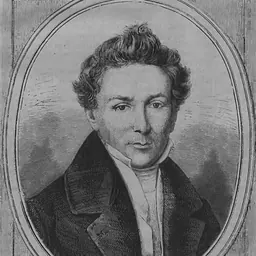
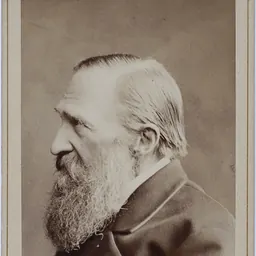
People in Adam Gorczyński's life
Named in this biography and alive at the same time


Related people
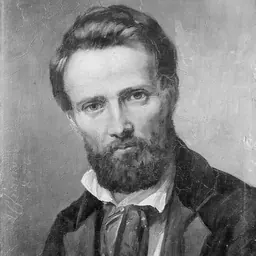
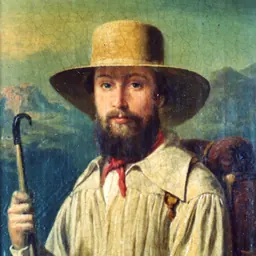
Same field, nearest in time


Contemporaries
People whose lives overlapped Adam Gorczyński's






Frequently asked questions
Who was Adam Gorczyński?
Polish writer, translator and painter (1805-1876)
When was Adam Gorczyński born?
Adam Gorczyński was born in 1805 in Tarnów.
When did Adam Gorczyński die?
Adam Gorczyński died on 24 May 1876 in Brzeźnica.
What was Adam Gorczyński's occupation?
Adam Gorczyński was a painter, writer, poet, land owner and literary scholar.
What nationality was Adam Gorczyński?
Adam Gorczyński was Austrian.
Sources & further reading
Cite this page
APA: Biography.guide. (2026). Adam Gorczyński. https://biography.guide/adam-gorczynski/
MLA: "Adam Gorczyński." Biography.guide, https://biography.guide/adam-gorczynski/.
Chicago: "Adam Gorczyński." Biography.guide. https://biography.guide/adam-gorczynski/.
Data last updated: 2026-09-20 · Spot an error? Report a correction.
Page generated 2026-09-27 05:26 UTC