
About Abram Deborin
Lived 1881 – 1963 (aged 81). Abram Deborin was a Russian philosopher.
Abram Moiseyevich Deborin (Ioffe) (; , Upyna, Raseiniai uezd, Kovno Governorate – 8 March 1963, Moscow) was a Soviet Marxist philosopher and academician of the Academy of Sciences of the Soviet Union. Deborin oscillated between The Bolshevik and Menshevik factions of the Russian Social Democratic Labour Party, before settling with the Bolsheviks and enjoying a long career as a philosopher in the Soviet Union. Although this career suffered under Stalin, he lived to see his works republished when the Soviet Union was led by Nikita Khrushchev.
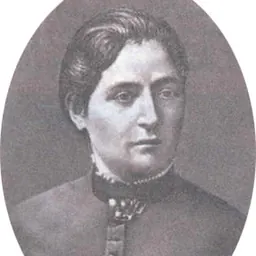
Before the Russian Revolution Entering the revolutionary movement by the end of the 1890s, Deborin joined the Bolshevik faction of the Russian Social Democratic Labour Party in 1903. By 1907, however, he switched to the Menshevik faction and became known as one of Georgi Plekhanov's disciples, both in politics and philosophy. In 1908, Deborin graduated from the philosophy department at Bern University ( Lyubov Axelrod had received her doctorate there in 1900). He soon began publishing major books and articles on philosophy from a Marxist perspective. He then wrote "Filosofiia Makha" (Machist Philosophy), published in Golos sotsialdemokrata, in April 1908. Here he characterized Bolshevism as a political manifestation of the 'subjectivism' and 'voluntarism' inherent in Machism, and that their "tacticians and practical people" were unwitting Machists and idealists. Lenin was one of the practical people who despite his rejection of "machism" had abided by a truce within the Bolshevik faction whereby they agreed not to politicize such philosophical issues.
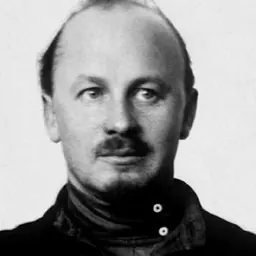
After the Russian Revolution Soon after the October Revolution of 1917, Deborin left the Mensheviks and began lecturing at the Sverdlov Communist University, the Institute of Red Professors and the Institute of Philosophy. He soon assumed editorial duties at the journal, Under the Banner of Marxism, which he headed from 1926-1931. Deborin joined the Communist Party in 1928. Following the 1917 October Revolution, Soviet philosophy found itself divided itself between two factions: the "dialecticians," headed up by Deborin, and "mechanists," whose leading figure was the philosopher Lyubov Axelrod (the then prominent Bolshevik leader Nikolai Bukharin was seen as an ally of the "mechanists," although he did not entirely agree with them).
Under Stalin In 1931, Joseph Stalin decided the issue of the debate between dialecticians and mechanists by publishing a decree which identified dialectical materialism as pertaining solely to Marxism–Leninism. He then codified it in Dialectical and Historical Materialism (1938) by enumerating the "laws of dialectics", which are the grounds of particular disciplines and in particular of the science of history, and which guarantees their conformity to the "proletarian conception of the world". Thus, diamat was imposed on most Communist parties affiliated to the Third International. Dialectical materialism (diamat) became the official philosophy of the Soviet Union and remained as such until its dissolution. When Stalin decided in favor of dialectical materialism, Deborin made a show of support for Stalin's position. However he dared to propose himself to Stalin as a theoretical sidekick, akin to Engels with Marx. At that moment Stalin was already declared to be "the great theoretician of Marxism", and Deborin with "Deborinites" were suppressed for "Menshevizing idealism": overpraising the idealist Hegel while undervaluing Lenin as a philosopher. For some years afterwards, Deborin kept a low profile, and most of his writings were suppressed. However, he lived long enough to see all of his works republished in the Soviet Union during the "Khrushchev Thaw".
Don’t just read it —
keep it.
Full-length biographies made to live with: read them, listen on the way to work, watch them tonight.
- E-book
- Audio
- Video
Instant download · yours to keep · every purchase keeps this site free
Important facts
People in Abram Deborin's life
Named in this biography and alive at the same time



Related people
Same field, nearest in time




Contemporaries
People whose lives overlapped Abram Deborin's



Frequently asked questions
Who was Abram Deborin?
Russian philosopher (1881–1963)
When was Abram Deborin born?
Abram Deborin was born on 4 June 1881 in Kaunas.
When did Abram Deborin die?
Abram Deborin died on 8 March 1963 in Moscow.
What was Abram Deborin's occupation?
Abram Deborin was a philosopher.
What nationality was Abram Deborin?
Abram Deborin was Russian.
Sources & further reading
Cite this page
APA: Biography.guide. (2026). Abram Deborin. https://biography.guide/abram-deborin/
MLA: "Abram Deborin." Biography.guide, https://biography.guide/abram-deborin/.
Chicago: "Abram Deborin." Biography.guide. https://biography.guide/abram-deborin/.
Data last updated: 2026-09-20 · Spot an error? Report a correction.
Page generated 2026-09-27 05:10 UTC