
About Ábrahám Ganz
Lived 1814 – 1867 (aged 53). Ábrahám Ganz was a Swiss and Hungarian engineer, inventor and entrepreneur.
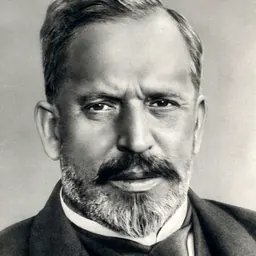
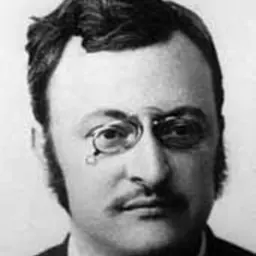
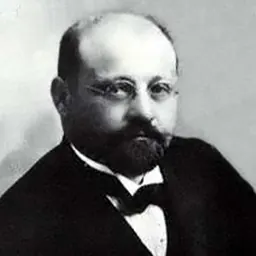
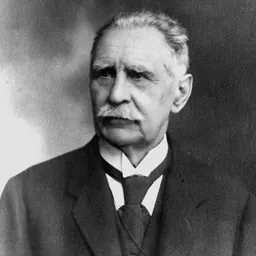
Ábrahám Ganz (born as Abraham Ganz; 6 November 1814 – 15 December 1867) was a Swiss-born iron manufacturer, machine and technical engineer, entrepreneur, father of Ganz Works. He was the founder and the manager of the company that he made the flagship of the Hungarian economy in the 19th century. Despite his early death in 1867 the company remained one of the strongest manufacturing enterprise in Austria-Hungary. Many famous engineers worked at Ganz Works inter alia Károly Zipernowsky, Ottó Bláthy, Miksa Déri, András Mechwart, Kálmán Kandó, Donát Bánki, János Csonka and Theodore von Kármán and several world-famous inventions were done there, like the first railway electric traction, or the invention of the roller mill, the carburetor, the transformer and the Bánki-Csonka engine.
Life Early years
He was born into a Swiss Calvinist family in Unter-Embrach. His father, Johann Ulrich Ganz, was a cantor teacher. His mother, Katharina Remi, died when he was just 10 years old. He was the oldest son out of nine children.
Escher Wyss AG Because of financial difficulties he had to work as a carpenter's apprentice, but before his liberation he went to Zürich to work at the foundry of Escher Wyss AG as a casting apprentice. At the age of twenty he travelled a lot in Germany, France, Austria and Italy, and worked in different factories where he gathered experience. In 1841 he arrived in Buda where he was involved in the construction of the Szechenyi Mill.
Ganz Works
The management of the steam mill paid a share of the profit to Ganz. This enabled him to buy, in 1844, land and a house for 4500 Forints in Víziváros. He built his own foundry on this site and started to work there with seven assistants. They made mostly casting products for the needs of the people of the city. Laurentius Heiss. They could not have their own children, so they adopted two related orphan girls, Anna Pospech and Jozefina Ganz.
He was nominated honorary citizen of Buda by the city council on 4 September 1863. In 1865 the emperor, Francis Joseph I, personally expressed his highest appreciation to Ábrahám Ganz. On the 23 November 1867 they celebrated the production of the hundredth wheel, made by chill casting, and Ganz gave a dinner for all his employees and their families. During his life he spent a lot of money for social purposes. In his company he uniquely opened a retirement fund and a patient fund.
He kept his Swiss citizenship. There is no evidence that he learned or could speak any Hungarian. He spoke with his family in German, and the employees of his factory spoke with him in German also.
Death
In his last years he worked a lot, but was not happy with his life. He saw all his brothers going crazy and he was convinced that he would have the same future. After the death of his brother, Konrád, he committed suicide on 15 December 1867. His ashes were buried in the Kerepesi Cemetery. In 1872, Miklós Ybl built him a mausoleum. After the death of his widow in 1913, they both lie there forever.
Legacy He is considered to be one of the pioneers of Hungarian heavy industry. With his works he contributed a lot to the development of the Hungarian casting and machine manufacturing industry.
After the death of Ábrahám Ganz, András Mechwart continued his plans and managed the company. With his leadership, under the name of Ganz & Co. Foundry and Machine Manufacturing Inc. (Ganz és Társa Vasöntöde és Gépgyártó Rt.), it became the most significant group of companies in Hungary. It was active in the machine, vehicle and electrical manufacturing industries with world-famous inventions and technical solutions.
In the original foundry production stopped in 1964 and the building, with all the objects left, became the Foundry Museum (Öntödei Múzeum). The building is, since 1997, under monument protection.
Don’t just read it —
keep it.
Full-length biographies made to live with: read them, listen on the way to work, watch them tonight.
- E-book
- Audio
- Video
Instant download · yours to keep · every purchase keeps this site free
Important facts
People in Ábrahám Ganz's life
Named in this biography and alive at the same time


Related people
Same field, nearest in time


Contemporaries
People whose lives overlapped Ábrahám Ganz's






Frequently asked questions
Who was Ábrahám Ganz?
Hungarian engineer (1814–1867)
When was Ábrahám Ganz born?
Ábrahám Ganz was born on 6 November 1814 in Embrach.
When did Ábrahám Ganz die?
Ábrahám Ganz died on 15 December 1867 in Pest.
What was Ábrahám Ganz's occupation?
Ábrahám Ganz was an engineer, inventor and entrepreneur.
What nationality was Ábrahám Ganz?
Ábrahám Ganz was Swiss and Hungarian.
Sources & further reading
Cite this page
APA: Biography.guide. (2026). Ábrahám Ganz. https://biography.guide/abraham-ganz/
MLA: "Ábrahám Ganz." Biography.guide, https://biography.guide/abraham-ganz/.
Chicago: "Ábrahám Ganz." Biography.guide. https://biography.guide/abraham-ganz/.
Data last updated: 2026-09-26 · Spot an error? Report a correction.
Page generated 2026-09-27 05:15 UTC