
About Abdulhadi al-Khawaja
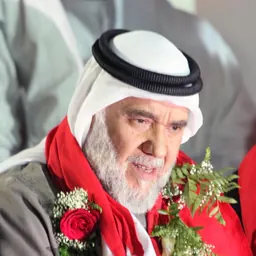
Born 1961. Abdulhadi al-Khawaja is a Danish human rights defender.
Abdulhadi Abdulla Hubail al-Khawaja (; born 5 April 1961) is a Bahraini political activist. On 22 June 2011, al-Khawaja and eight others were sentenced to life imprisonment following the suppression of pro-democracy protests against the Bahraini government. Al-Khawaja has previously gone on a series of hunger strikes while serving his life sentence, in protest of the political conditions in Bahrain.
He is former president and co-founder He has held a number of positions and played various roles in regional and international human rights organizations.
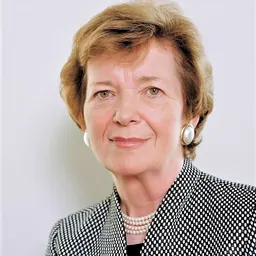
On 9 April 2011, al-Khawaja was arrested and tried as part of a campaign of repression by the Bahraini authorities following pro-democracy protests in the Bahraini uprising. Front Line Defenders expressed fear for his life following allegations of torture and sexual assault in detention. Al-Khawaja was sentenced on 22 June 2011, along with eight other activists, to life imprisonment. The strike lasted for 110 days, and resulted in al-Khawaja being force-fed by authorities. He is also a member of the International Advisory Network in the Business and Human Rights Resource Center chaired by Mary Robinson, former UN High Commissioner for Human Rights.
Al-Khawaja is a member of the advisory board of the Damascus Center for Human Rights Studies and also an expert adviser for and member of the coordinating committee of the Arab Group for Monitoring Media Performance monitoring the media in Bahrain and six other Arab countries. Al-Khawaja was part of an Amnesty International fact-finding mission in Iraq, prior to returning to Bahrain in 2001 following a general amnesty.
Since his return, al-Khawaja has been subjected to detention, unfair trial, and physical assaults as a result of his human rights activities. Well-documented physical assaults against him in March 2002 and June/July/September 2005 were not investigated despite pledges by UN bodies and international NGOs. using language which "the authorities easily construed as incitement of hatred".
Unemployment protest crackdown
On 15 July 2005, police sought to prevent a peaceful demonstration by the Committee for the Unemployed against the government's management of the unemployment situation and the state budget for 2005–2006. The authorities had reportedly been informed about the demonstration a week earlier. While protesters were still assembling, the security forces charged and violently dispersed the demonstration. A total of 32 people said to have required hospital treatment, including Abdulhadi al-Khawaja, Nabeel Rajab and labor rights activist Abbas al-'Umran.
Second arrest
On 2 February 2007, al-Khawaja was arrested again by the Bahraini authorities along with the Secretary General of the Bahraini Haq Movement pro-democracy organization Hassan Mushaima and a third activist, Shaker Abdul-Hussein. Al-Khawaja was charged with offences including "promoting change to the political system through illegitimate means" and "an intention to change the governing system of the country, circulating false information, insulting the king and inciting hatred against the regime". The arrests were followed by public disturbances. Several hundred supporters who tried to hold a march in Jidhafs, on the outskirts of Manama, to demand the activists' release clashed with authorities. The Haq Movement spokesman Abdul-Jalil Al-Singace reported that Special Forces fired tear gas and rubber bullets at the demonstrators, who originated from several villages west of the capital. The demonstrators dispersed but later regrouped. Mushaima and al-Khawaja said that they believed that their release on bail was a result of the protests and of the strong reaction from opposition groups including the Al-Wefaq society, the country's largest Shia opposition group.
On 21 January, the office of the Attorney General ordered al-Khawaja's prosecution under articles 29(2), 160, 165, and 168(1) of the Penal Code. He was charged with "propaganda to overthrow or change the political system by force," "publicly instigating hatred and disrespect against the ruling regime," and "willfully broadcasting false and malicious news, statements or rumors and spreading provocative propaganda related to the internal affairs of the country that could disturb public security and cause damage to the public interest."
Threats and harassment
Al-Khawaja has been the subject of ongoing harassment including physical attacks and smear campaigns in the media.
On 19 September 2007, al-Khawaja was the principal target of a defamation campaign by the Bahraini authorities aimed at discrediting the BCHR. He was accused of being connected with acts of violence in Bahrain during the 1980s and 1990s, of sympathizing with Iran, and of coordinating with neo-conservatives in the United States. (The Bahraini authorities have a history of defaming activists who report on or publicly criticize high-ranking officials and official policies, particularly when western media and international human rights organizations are involved. Allegations are published in the national public media to which activists are refused access to defend themselves.)
On 9 February 2010, al-Khawaja was removed from a Turkish Airlines flight at Bahrain International Airport, as he was about to leave for Istanbul to attend a human rights conference. Following a subsequent alleged altercation with an airport official he was arrested and charged with "insulting" the official. Front Line believes that al-Khawaja has been targeted solely as a result of his legitimate work in defending human rights.
Since 10 March 2011, messages have been circulated via SMS and social networking sites calling for killing al-Khawaja, Mohammed Al-Maskati, and Naji Fateel because of their involvement in explicitly peaceful protests calling for democratic and human rights reforms in Bahrain.
Involvement in the Bahraini uprising
In the early days of the Arab Spring Revolutions of 2011, al-Khawaja led peaceful pro-democracy protests across the country and organized peaceful awareness-raising and human rights education activities for protesters.
After protesters entered the Financial Harbour, an area filled with financial exchanges and banks on 13 March 2011, the government began a violent crackdown in retaliation. A few days later, prominent opposition leader Hasan Mushaima and six other opposition activists were arrested.
Arrest On 9 April 2011, al-Khawaja was arrested. His daughter reported how up to 20 armed and masked policemen broke into their apartment in the middle of the night and attacked her father. They dragged him downstairs by the neck, leaving a trail of blood from injuries inflicted by five officers who refused to stop beating him despite his claims that he was unable to breathe. He was taken away unconscious. Al-Khawaja's daughter, Zainab, was assaulted when she attempted to intervene. The women present in the house were locked in a room and prevented from leaving. The family were not told where al-Khawaja had been taken, or what he was accused of.
Torture quote = Sadly, all security apparatus in the Arab world have one thing in common - namely persecuting the thinkers and virtuous people based on their activism and work defending the rights of others. Among those is Abdulhadi, due to his defence of human rights activists. — Haitham al-Maleh, Syrian human rights activist Nabeel Rajab, current president of Bahrain Centre for Human Rights reported that al-Khawaja's jawbones had been smashed, and he had four fractures in his face; he was due to undergo a mandibular bone graft (using bone from his skull). According to representatives of al-Khawaja's family who were able to speak with him briefly, he was only able to resist the attempt by four men to rape him by banging his already damaged head against a concrete floor.
Eventually on 8 May 2011, al-Khawaja was put on trial by a military court with 20 other Bahrainis on charges of "organizing and managing a terrorist organization", "attempt to overthrow the Government by force and in liaison with a terrorist organization working for a foreign country" and the "collection of money for a terrorist group". On 22 June 2011, al-Khawaja and eight others were sentenced to life imprisonment. Zainab al-Khawaja, who attended the trial, "tweeted" that after the sentence was read, her father raised his fist and shouted "We shall continue on the path of peaceful resistance!", before being bustled out of the court room. Al-Khawaja's appeal
Hunger strike For the first time in Bahrain, al-Khawaja started an open-ended hunger strike starting on 8 February 2012 until "freedom or death" protesting continuing detentions. On 15 March he had lost more than , had problems talking and "could not stand up, even to perform his prayers," his daughter Maryam said. He was taken to hospital several times where doctors failed to administer him an IV line due to his veins' weak conditions, his family said. According to his wife, al-Khawaja spent most of his time lying down, needed hot water to keep his body's normal temperature, and became exhausted after 10–15 minutes of exposure to sunlight. As his health conditions kept declining, al-Khawaja refused medical examinations and threatened to stop drinking water. His deteriorating condition was confirmed by Danish diplomats who have made several visits to the prison he's held in. "Abdulhadi thinks there is no legal reason to keep him in jail," said his lawyer, al-Jishi, who also filed a last chance appeal. "He won't stop until they release him, or he will die inside," he added.
The government refused access to independent activists to examine him, stating that al-Khawaja's condition was stable and medical care was being provided. It also said he was not on a real hunger strike, because he was taking glucose and "other liquids".
On 28 May, al-Khawaja announced through his lawyer that he would end his hunger strike that evening, on the strike's 110th day.
On 16 November 2021, Al-Khawaja started a hunger strike due to long and ongoing harassment by the prison authorities. On 18 November, he called his family to say his blood sugar level had dropped to a dangerously low level of 2.4.
On 29 October 2025, Al-Khawaja went on a new hunger strike.
International response The trials and sentences have been criticized by governments and human rights organizations as unfair and politically motivated. The spokesperson for UN High Commissioner for Human Rights Navi Pillay said that there were serious concerns that the due process rights of the defendants, many of them well-known human rights defenders, had not been respected and the trials appeared to bear the marks of political persecution. The Office of the High Commissioner (OHCHR) called for an immediate cessation of trials of civilians in the Court of National Safety and the immediate release of all peaceful demonstrators arrested in the context of the February protest movement. The OHCHR had received "worrying" reports about the way up to 1,000 people reportedly remaining in detention were being treated and called on the Government to conduct an urgent independent investigation into allegations that four individuals had died in detention due to injuries resulting from severe torture.
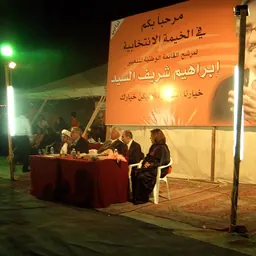
The UK Foreign Office, noting that Ibrahim Sharif was a prominent moderate opposition politician who had been a constructive participant in Bahraini politics, expressed concern at the trial of civilians under martial law by tribunals chaired by a military judge, as well as reports of abuse in detention, lack of access to legal counsel and coerced confessions.
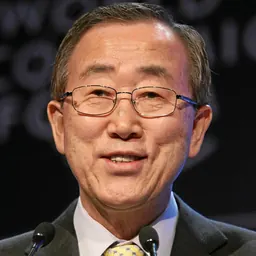
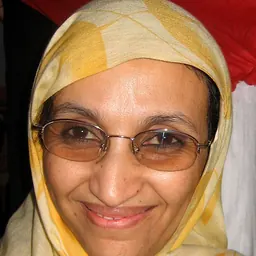
Amid his hunger strike, the Danish foreign minister met with Bahrain's foreign minister in March 2012 and called for al-Khawaja's immediate release. Sahrawi organizations including human rights defender Aminatou Haidar expressed their solidarity and support. On 9 April, UN Secretary-General Ban Ki-moon called for Bahrain to consider transferring al-Khawaja to Denmark for medical treatment, but Bahrain's Supreme Judicial Council refused on the grounds that the transfer would be a violation of Bahraini law. On 10 April, al-Khawaja's lawyer Mohammed al-Jeshi expressed his fears that al-Khawaja had died, as authorities were no longer allowing his family or legal counsel to see him.
The United States expressed concern for al-Khawaja's well-being and called on the Bahraini government to "consider urgently all available options to resolve his case."
On 1 May 2012, al-Khawaja told BBC correspondent Frank Gardner that he would continue the hunger strike. He said that the medical treatment which he was undergoing was good except the Bahraini officials were trying to force-feed him, an accusation the government instantly denied.
In March 2021, different human rights organizations across the globe called for the immediate release of al-Khawaja. A recent report by the Bahrain Center for Human Rights and Gulf Centre for Human Rights shows that al-Khawaja has been systematically tortured, physically, sexually abused and subjected to lengthy solitary confinement.
The European Parliament passed a resolution on the case of Abdulhadi al-Khawaja and urged the authorities of Bahrain to ensure that the rights of detainees are upheld at all times. The resolution called for the authorities to comply with international laws on fair trial. The European Parliament also expressed concerns citing the reports of ill-treatment and torture of prisoners. It also demanded the Bahraini government to immediately and unconditionally release al-Khawaja and other prisoners of conscience. The resolution also condemned the Jaw prison administration over the continuous human rights violations of al-Khawaja.
A senior Czech MEP, Tomáš Zdechovský was leading negotiations on behalf of his European People's Party, over the European Parliament's resolution concerning al-Khawaja. However, a report by The Guardian revealed that the MEP made an undeclared visit to Bahrain in April 2022. In an alternate resolution, Zdechovský's EPP didn't call for al-Khawaja's release, and rather called him a "political opponent". The centre-right group was accused of repeating what the "Bahraini government would say".
Don’t just read it —
keep it.
Full-length biographies made to live with: read them, listen on the way to work, watch them tonight.
- E-book
- Audio
- Video
Instant download · yours to keep · every purchase keeps this site free
Important facts
Family & relationships
People in Abdulhadi al-Khawaja's life
Named in this biography and alive at the same time



Related people
Same field, nearest in time



Contemporaries
People whose lives overlapped Abdulhadi al-Khawaja's

Frequently asked questions
Who is Abdulhadi al-Khawaja?
Bahraini human rights activist
When was Abdulhadi al-Khawaja born?
Abdulhadi al-Khawaja was born on 5 April 1961 in Bahrain.
What is Abdulhadi al-Khawaja's occupation?
Abdulhadi al-Khawaja is a human rights defender.
What nationality is Abdulhadi al-Khawaja?
Abdulhadi al-Khawaja is Danish.
Sources & further reading
· Wikipedia: Abdulhadi al-Khawaja
· DBpedia: Abdulhadi al-Khawaja
Cite this page
APA: Biography.guide. (2026). Abdulhadi al-Khawaja. https://biography.guide/abdulhadi-al-khawaja/
MLA: "Abdulhadi al-Khawaja." Biography.guide, https://biography.guide/abdulhadi-al-khawaja/.
Chicago: "Abdulhadi al-Khawaja." Biography.guide. https://biography.guide/abdulhadi-al-khawaja/.
Data last updated: 2026-09-22 · Spot an error? Report a correction.
Page generated 2026-09-27 05:20 UTC