
About Abdul Qayyum Khan
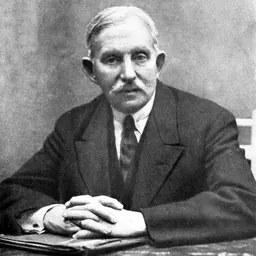
Lived 1901 – 1981 (aged 80). Abdul Qayyum Khan was a Pakistani and Indian politician.
Khan Abdul Qayyum Khan Kashmiri (16 July 1901 – 23 October 1981 but worked as a Tehsildar in the North-West Frontier Province (N.W.F.P., now called Khyber Pakhtunkhwa in Pakistan in 2017) of British India.
Khan was educated at Aligarh Muslim University and the London School of Economics. He became a barrister of the Lincoln's Inn.
One of his brothers, Abdul Hamid Khan (Azad Kashmiri politician), was a prime minister of Azad Jammu and Kashmir, and another brother, Khan Abdul Rauf Khan, was a renowned lawyer.
Legal career Abdul Qayum Khan was one of the eminent lawyers of N.W.F.P. During his professional career he conducted some very important cases. He used to practice in criminal law. Mirza Shams ul Haq was his most trustworthy colleague, who remained always close to him during profession and politics. Abdul Qayum was also assisted in his chambers by Muhammad Nazirullah Khan advocate, who later served as a provincial secretary general and senior vice president of Pakistan Muslim League.
Political career Indian National Congress Starting his political career in 1934 with the Indian National Congress, Khan quickly rose to serve as an elected member of the Central Legislative Assembly (1937–38) and the deputy leader of the Congress in the Assembly. At that time he admired Khan Abdul Ghaffar Khan. He authored a book, Gold and Guns on the Pathan Frontier, in which he praised Ghaffar Khan and denounced Jinnah and the two-nation theory. Abdul Qayyum Khan said that the North West Frontier Province would resist the partition of India with its blood. He switched his loyalties to the Muslim League in 1945. He later claimed that Ghaffar Khan was plotting Jinnah's assassination. He banned his own book after he became the Chief Minister in the N.W.F.P. The book however continued fetching royalties even after he joined the Muslim League.
Muslim League and Partition In the 1946 provincial elections, Khan campaigned for the All-India Muslim League along with Pir of Manki Sharif. However, the Muslim League won only 17 seats in comparison to the 30 seats of the Congress Party. The Congress Party formed the provincial government under the premiership of Khan Abdul Jabbar Khan (popularly known as "Dr. Khan Sahib").
Abdul Qayyum Khan was put in charge of destabilising the Congress government in the province through street agitations, ideological rhetoric and acquisition of sympathetic Muslim officers in the government. The presence of a Congress government at the extreme north-west of the Indian subcontinent was anomalous, and the province became a bone of contention between the Congress and the Muslim League as part of the Partition of India. Eventually, the British decided to hold a referendum to determine which dominion the province should go to. Abdul Ghaffar Khan demanded a separate nation of 'Pakhtunistan' comprising both the North-West Frontier Province and Pashtun parts of Afghanistan. When it was denied by the British Raj, he and his party boycotted the referendum held by the British government. The Muslim League won an easy victory for Pakistan (289,244 votes against 2,874 for India).
Within a week of the independence of Pakistan, the Congress government was dismissed under orders from Governor General Jinnah. Abdul Qayyum Khan was put in charge of a minority government on 23 August 1947. Khan navigated through the troubled waters ably, winning the defection of enough Congress legislators to support his government.
First Kashmir War
Qayyum Khan was a key instigator of the First Kashmir War, if not the chief instigator.
North-West Frontier Province As the premier of the NWFP, Qayyum Khan faced internal dissension. The Pir of Manki Sharif, who was a key figure in the campaign for referendum, was miffed that he was passed over for the post. He objected to Khan holding both the premiership of the state and the presidency of the provincial Muslim League. The Pir gathered disgruntled legislators and intended to bring a vote of no-confidence against Khan. Khan diffused his efforts. Then the Pir formed a separate party under the banner of All Pakistan Awami Muslim League. An exasperated Khan responded with "full fury and force". He forced out the Pir of Manki Sharif from the NWFP and imprisoned nine other leaders. Despite the crackdown, the Awami Muslim League contested the provincial elections in 1951 to win 4 seats.
Qayyum Khan's administration was known for its development work in the province, including the construction of Peshawar University and the Warsak dam. He introduced compulsory free education up to middle school level in Frontier province, the first province of Pakistan to have this reform. He also made poor friendly amendments to the land revenue laws. He evoked opposition from a section of the feudal class due to his egalitarian policies. His political stand was opposition to the Khudai Khidmatgar movement of Ghaffar Khan. His alleged role in ordering the Babrra massacre is one which he faces much criticism. He led the Muslim League to a landslide victory in the 1951 elections, despite opposition from the Khudai Khidmatgar movement and opposition from federally backed fellow Muslim league opponents like Yusuf Khattak.
Qayyum Khan served as the Chief Minister till 23 April 1953. the Babrra massacre occurred on 12 August 1948 in the Charsadda District of the North-West Frontier Province (now Khyber Pukhtunkhwa) of Pakistan, when workers of the Khudai Khidmatgar movement protesting the jailing of their leader, anti-colonial independence activist Abdul Ghaffar Khan were fired upon by the provincial government. According to official figures, around 15 protestors were killed while around 40 were injured. However, Khudai Khidmatgar sources maintained that around 150 were killed and 400 were injured.
In September 1948, then Chief Minister, Abdul Qayyum Khan gave a statement in the provincial assembly, "I had imposed section 144 at Babra. When the people did not disperse, then firing was opened on them. They were lucky that the police had finished ammunition; otherwise not a single soul would have been left alive". Khan Qayyum said hinting at the four members of the opposition in the provincial assembly. He said; "If they were killed, the government would not care about them."
Don’t just read it —
keep it.
Full-length biographies made to live with: read them, listen on the way to work, watch them tonight.
- E-book
- Audio
- Video
Instant download · yours to keep · every purchase keeps this site free
Important facts
People in Abdul Qayyum Khan's life
Named in this biography and alive at the same time



Related people
Same field, nearest in time




Contemporaries
People whose lives overlapped Abdul Qayyum Khan's



Frequently asked questions
Who was Abdul Qayyum Khan?
Pakistani politician (1901–1981)
When was Abdul Qayyum Khan born?
Abdul Qayyum Khan was born on 16 June 1901 in Chitral.
When did Abdul Qayyum Khan die?
Abdul Qayyum Khan died on 22 September 1981 in Peshawar.
What was Abdul Qayyum Khan's occupation?
Abdul Qayyum Khan was a politician.
What nationality was Abdul Qayyum Khan?
Abdul Qayyum Khan was Pakistani and Indian.
Sources & further reading
· Wikipedia: Abdul Qayyum Khan
Cite this page
APA: Biography.guide. (2026). Abdul Qayyum Khan. https://biography.guide/abdul-qayyum-khan-politician/
MLA: "Abdul Qayyum Khan." Biography.guide, https://biography.guide/abdul-qayyum-khan-politician/.
Chicago: "Abdul Qayyum Khan." Biography.guide. https://biography.guide/abdul-qayyum-khan-politician/.
Data last updated: 2026-09-20 · Spot an error? Report a correction.
Page generated 2026-09-27 04:59 UTC