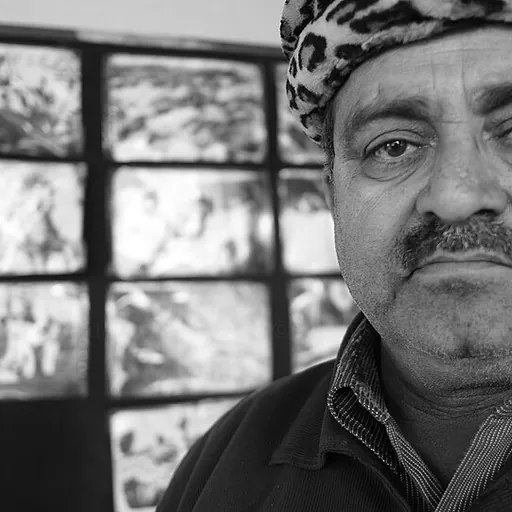
About Abdul Jabbar Khan
Lived 1957 – 2019 (aged 62). Abdul Jabbar Khan was an Indian human rights defender, known for Bhopal disaster.
Abdul Jabbar Khan (1 June 1957 – 14 November 2019) Siddhartha Deb described his activism as being slow and stubborn. Owing to Jabbar's charisma, approachability and ability to interact with common people, he enjoyed popular support and deep local roots.
The Indian government awarded him the fourth-highest civilian award, Padma Shri, posthumously in 2020.
Early life Jabbar came from a poor Muslim family which moved to Bhopal when he was one year old. He worked in the construction business, responsible for digging borewells.
Activism On the intervening night of 2–3 December 1984, Jabbar was awakened by the odour of lethal methyl isocyanate gas emanating from the Union Carbide plant around 2 kilometers from his parents' home in Rajendra Nagar, Bhopal. He rushed his mother to a safe place 40 kilometers away. Upon returning to the city, he saw dead bodies lined up on the roadside. He started voluntarily working among the victims, helping people get treatment at the state hospital and taking bodies for postmortem.
In 1987, Jabbar set up the Bhopal Gas Peedit Mahila Udyog Sangathan (BGPMUS) or Bhopal Gas-Affected Women's Enterprise Organization, also referred to as Sangathana, a grassroots organization composed mostly of women, which has been at the forefront of struggles against the Union Carbide Corporation (UCC) which owned the pesticide plant resulting in the infamous gas leak. The advocacy group consists of gas survivors and widowed women rendered destitute by the tragedy. They have been involved in every legal initiative seeking justice for the victims and have consistently sought fair compensation, medical rehabilitation, prosecution of UCC officials. Jabbar, the convener of the group, was responsible for delivering public statements, negotiating with the governments and making decisions about the group's strategies. Dismayed by the meagre amount of food compensation being provided to the victims, Jabbar started his first campaign seeking employment for them with the slogan "Khairat nahi, rozgar chahiye (We don't require charity, we want jobs)".
Jabbar is described as an old-school activist. His organization has little to zero online presence and Jabbar refused to give interviews in English, which limited their press coverage. He didn't take any foreign donations and used to rely solely on volunteer contributions. Jabbar had a paucity of funds and oftentimes his expenses were paid by his friends.
Don’t just read it —
keep it.
Full-length biographies made to live with: read them, listen on the way to work, watch them tonight.
- E-book
- Audio
- Video
Instant download · yours to keep · every purchase keeps this site free
Important facts
People in Abdul Jabbar Khan's life
Named in this biography and alive at the same time


Related people
Same field, nearest in time
Contemporaries
People whose lives overlapped Abdul Jabbar Khan's

Frequently asked questions
Who was Abdul Jabbar Khan?
Indian activist (1957–2019)
When was Abdul Jabbar Khan born?
Abdul Jabbar Khan was born on 1 June 1957.
When did Abdul Jabbar Khan die?
Abdul Jabbar Khan died on 14 November 2019 in Bhopal, Madhya Pradesh.
What was Abdul Jabbar Khan's occupation?
Abdul Jabbar Khan was a human rights defender.
What was Abdul Jabbar Khan known for?
Abdul Jabbar Khan was known for Bhopal disaster.
What nationality was Abdul Jabbar Khan?
Abdul Jabbar Khan was Indian.
Sources & further reading
· Wikipedia: Abdul Jabbar Khan
· DBpedia: Abdul Jabbar Khan (activist)
Cite this page
APA: Biography.guide. (2026). Abdul Jabbar Khan. https://biography.guide/abdul-jabbar-khan-human-rights-defender/
MLA: "Abdul Jabbar Khan." Biography.guide, https://biography.guide/abdul-jabbar-khan-human-rights-defender/.
Chicago: "Abdul Jabbar Khan." Biography.guide. https://biography.guide/abdul-jabbar-khan-human-rights-defender/.
Data last updated: 2026-09-22 · Spot an error? Report a correction.
Portrait: Wikimedia Commons · author & licence
Page generated 2026-09-27 05:02 UTC