
About Abdul Halim Khaddam
Lived 1932 – 2020 (aged 87). Abdul Halim Khaddam was a Syrian politician, diplomat and lawyer.
Abdul Halim Khaddam ( ; ; 15 September 1932 – 31 March 2020) was a Syrian politician who served as interim president of Syria in 2000 as well as the vice president of Syria and the Syrian High Commissioner to Lebanon from 1984 to 2005. He was a long known loyalist of Hafez al-Assad under the Ba'athist regime in Syria after the Corrective Movement in 1970. He resigned from his position and left the country in 2005 in protest against certain policies of Hafez's son and successor, Bashar al-Assad. He accumulated substantial wealth while in office: a Credit Suisse account in his name, opened in 1994, had nearly 90 million Swiss francs in September 2003, per Suisse secrets. This puts Khaddam and his family's net worth at $1.1 billion, making them one of the wealthiest and most influential political families in the Middle East.
Early life and education Abdul Halim Khaddam was born on 15 September 1932, in Baniyas, Syria. His family was Sunni Muslim with a middle-class origin, Khaddam obtained his elementary and secondary education in Baniyas and then studied law at Damascus University.
Career Khaddam (3rd from right) at Hafez al-Assad's inauguration at the Syrian parliament, March 1971. Khaddam became a member of the Baath Party when he was just 17 years old. He later served in the Cabinet of Syria. From 1970 until 1984 he was Minister of Foreign Affairs and Deputy Prime Minister under the Syrian President Hafez al-Assad.
In January 1976, Khaddam argued that Lebanon was part of Syria. Khaddam was slightly injured in an attack in Damascus in December 1976. In October 1977, Khaddam again survived an assassination attempt at the Abu Dhabi International Airport. In the course of the attack, Saif Ghobash, the United Arab Emirates' first Minister of State for Foreign Affairs was killed. The Syrian authorities argued that it had been planned and carried out by Iraq.
During his visit to Tehran in August 1979 following the Iranian Revolution, he publicly stated that the Syrian government backed the revolution before and after the revolutionary process.
He then served as Vice President from 11 March 1984 to 2005. He was responsible for political and foreign affairs as vice president. He accumulated substantial wealth while in office: a Credit Suisse account, opened in 1994, had nearly 90 million Swiss francs in September 2003, per Suisse secrets.
Khaddam, as Minister of Foreign Affairs, with Prince Saud al Faisal, Ronald Reagan, and George Shultz in 1982.
Khaddam was chief mediator during the Lebanon Civil War, thus giving him the unofficial titles of "High Commissioner" or "Godfather" of Lebanon.
After the death of Hafez al-Assad in 2000, a 9-member committee was founded, which was headed by Khaddam, to oversee the transition period. He was appointed by this committee as interim President of Syria on 10 June and was in consideration to be Assad's permanent successor, but instead helped Assad's son, Bashar al-Assad, who took office in July 2000.
Khaddam was one of the only senior officials in Syria who was close to Lebanese Ministers and members of Parliament, most notorious was his friendship with Prime Minister Rafik Hariri. Hariri partnered with Khaddam's sons in many business projects in Lebanon and Saudi Arabia. That made him the last influential member of the "old guard" to leave the top tier of the government. The announcement came at a point when Bashar Al-Assad had been trying to have his political wings clipped. After resigning, he relocated to Paris ostensibly to write his memoirs.
Defection and exile
On 30 December 2005, Khaddam fled Syria. In an interview with Al Arabiya on the same day, Khaddam denounced Assad's many "political blunders" in dealing with Lebanon. He especially attacked Rustum Ghazali, former head of Syrian operations in Lebanon, but defended his predecessor, Ghazi Kanaan, Syria's interior minister. Khaddam also said that former Lebanese prime minister Rafik Hariri, to whom Khaddam was considered close, "received many threats" from Syria's President Bashar al-Assad.
The Syrian parliament responded the next day by voting to bring treason charges against him, and the Baath Party expelled him. Following the Khaddam interview, the UN Commission headed by Detlev Mehlis investigating the Hariri murder said it had asked the Syrian authorities to question Bashar al-Assad and Syria's Foreign Minister Farouk al-Sharaa. He met with the UN investigators searching for the Hariri assassination in Paris in January 2006. His accusations against Assad and his inner circle regarding the Hariri assassination also grew more explicit: Khaddam said he believed that Assad ordered Hariri's assassination.
Trial Khaddam was tried in absentia by a military court in Damascus and sentenced to hard labour for life and to be stripped of his civil rights and prevented from residing in Damascus or Tartus, his native town, in August 2008. The reason for the verdict was "slandering the Syrian leadership and lying before an international tribunal regarding the killing of former Lebanese Prime Minister Rafiq Hariri."
Role in the Syrian Civil War Khaddam was considered an opposition leader to the Syrian government by the United States and the EU. He maintained strong relations with many senior army generals who had defected from the Ba'athist regime and was supporting them to overthrow Bashar Al-Assad. In 2016, he accused Iran of supporting the rise of Islamic State of Iraq and Syria, saying that Iran "is working along the lines of creating a Sunni power to fight Sunnis in the region". He also blamed the U.S. for "pushing Turkey into Russia’s open arms" and suggested that the U.S. had a role in the 2016 Turkish coup d'état attempt. He also believed that the U.S. was no longer capable of fixing the situation in Syria. They had three sons and one daughter. Khaddam was interested in reading political works and hunting.
Don’t just read it —
keep it.
Full-length biographies made to live with: read them, listen on the way to work, watch them tonight.
- E-book
- Audio
- Video
Instant download · yours to keep · every purchase keeps this site free
Important facts
more
KhaddamPeople in Abdul Halim Khaddam's life
Named in this biography and alive at the same time
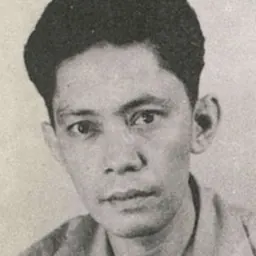


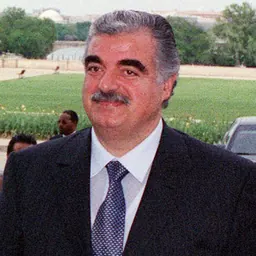



Related people
Same field, nearest in time

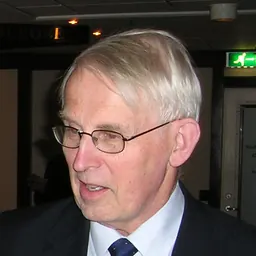


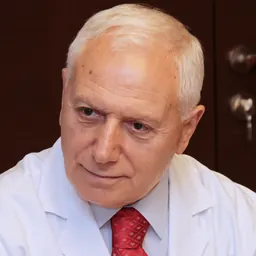
Contemporaries
People whose lives overlapped Abdul Halim Khaddam's

Frequently asked questions
Who was Abdul Halim Khaddam?
Syrian politician (1932–2020)
When was Abdul Halim Khaddam born?
Abdul Halim Khaddam was born on 15 September 1932 in Baniyas.
When did Abdul Halim Khaddam die?
Abdul Halim Khaddam died on 31 March 2020 in 16th arrondissement of Paris.
What was Abdul Halim Khaddam's occupation?
Abdul Halim Khaddam was a politician, diplomat and lawyer.
What nationality was Abdul Halim Khaddam?
Abdul Halim Khaddam was Syrian.
Sources & further reading
· Wikipedia: Abdul Halim Khaddam
· DBpedia: Abdul Halim Khaddam
Cite this page
APA: Biography.guide. (2026). Abdul Halim Khaddam. https://biography.guide/abdul-halim-khaddam/
MLA: "Abdul Halim Khaddam." Biography.guide, https://biography.guide/abdul-halim-khaddam/.
Chicago: "Abdul Halim Khaddam." Biography.guide. https://biography.guide/abdul-halim-khaddam/.
Data last updated: 2026-09-20 · Spot an error? Report a correction.
Page generated 2026-09-27 05:33 UTC