
About Abdelhakim Belhadj
Born 1966. Abdelhakim Belhadj is a Libyan civil engineer, partisan, politician and military personnel.
Abdelhakim Belhaj (or Belhadj; , nom de guerre: Abu Abdallah Assadaq) (born 1 May 1966) is a Libyan politician and military leader. He is the leader of the Islamist al-Watan Party and former head of the Tripoli Military Council.
As of June 2017, following the 2017 Qatar diplomatic crisis, Belhadj was placed on a terrorist watchlist on suspicion of terrorism-related activities with Qatari support, with Egypt, the UAE, Bahrain, Saudi Arabia, and Libya's Tobruk government among those supporting this claim.
Early life Born on 1 May 1966 in the Souq al Jum'aa area of Tripoli, Belhaj studied at Al Fateh University, where he earned a civil engineering degree.
Libya, Afghanistan/Soviet war, Libyan Islamic Fighting Group Wanting to rid Libya of Colonel Gaddafi, Belhaj joined other young Islamists who formed a group, but were chased from the country before they could achieve anything. Leaving the country via Saudi Arabia he arrived in Afghanistan, and became an Islamist fighter in the Soviet–Afghan War.
In 1992, after the Mujahideen took Kabul, he travelled across the Middle East and Eastern Europe, before returning to Libya in 1992.
The relation between LIGF and al-Qaeda was officially confirmed in October 2001, when the UN Security Council designated the Libyan Islamic Fighting Group as a terrorist entity for its association with al-Qaeda, Bin Laden and the Taliban. The UN Security Council specified that the LIFG relation with al-Qaeda was substantiated through the group's involvement in "the financing, planning, facilitating, preparing or perpetrating of acts or activities by, in conjunction with, under the name of, on behalf or in support of", "supplying, selling or transferring arms and related materiel to" or "otherwise supporting acts or activities of ... Al-Qaida ..., Usama bin Laden and the Taliban."
In 2002, after the September 11 attacks and Gaddafi's reconciliation with the West, an arrest warrant was issued for Belhadj by the Libyan authorities. In it, it was alleged by the Gaddafi government that Belhadj had developed "close relationships" with al-Qaeda leaders, and specifically Taliban chief Mullah Omar. After the United States entered Afghanistan under the command of the United Nations to confront the Taliban, the remaining members of the LIFG left the country, and roamed Europe and South East Asia. he was held at the Abu Salim prison for seven years. However, his wife Fatima was quickly released after receiving torture. According to J. Millard Burr, Belhadj's release was part of a series of negotiations supported by the Qatari government, thanks to which over a hundred members of the Muslim Brotherhood and hundreds of members of the LIFG were freed by 2008. According to J. Millard Burr, Belhadj's long-time associate Ali al-Sallabi played a major role in Qatar's involvement in securing the amnesty for those prisoners. Returned to Libya after the lifting of sanctions on the Libyan regime in 2003, Sallabi actively contributed to and eventually directed the de-radicalization program for former militant detainees.
In March 2011, Belhadj appeared in an unreleased Al Jazeera film, in which he praised the mediation of Saif al-Islam for his release. In response, Gaddafi's son said that the men who had been freed "were no longer a danger to society."
In December 2011, Belhajd began legal proceedings against the British government over its role in his rendition to Libya. Jack Straw denied any illegality in his actions as foreign secretary in the face of accusations that he had approved the British assistance in Belhadj's capture; In 2012, Tony Blair denied any memory of the incident.
In December 2013, a high court judge struck out Belhadj's case against the British government, on the grounds that if it were allowed to proceed it could potentially damage British national interests. At an Investigatory Powers Tribunal in January 2014, his lawyers said they had reason to suspect that GCHQ had been intercepting their phone calls with Libya-based Belhadj, and noted: "The right to confidential client-lawyer communication is a fundamental principle of justice." This later turned out to be the case, and but one case of many. "In how many cases has the government eavesdropped to give itself an unfair advantage in court?" wondered Dinah Rose, QC for Belhadj. In 2015, GCHQ was ordered to destroy legally privileged material of another Libyan rendition victim, Sami al-Saadi, that it had illegally intercepted.
In October 2016 Belhadj appealed the dismissal of charges against Mark Allen, who was the director counter-terrorism for MI6 when he was subjected to extraordinary rendition.
Libyan civil war
Belhadj was made commander of the Tripoli Military Council, after the rebels took over Tripoli during Operation Mermaid Dawn in late August 2011.
A Kronos Advisory report stressed that on the 22 August takeover of Tripoli Belhadj was accompanied by Qatari staff Col. Hamad Abdullah al-Marri. The country even provided fighter jets to implement the UN resolution and "offered financial guarantees to NATO if the war dragged on."
After the rebels had completed their take over of Tripoli, a joint rebel/Human Rights Watch team found documents related to Belhadj and his return to Libya, originating from both the CIA and Britain's MI6. Interviewed jointly by journalists from The Guardian, Le Monde and BBC News's Jeremy Bowen, Belhadj showed the journalists documents relating to his case, and further co-operation between the CIA/MI6 and Libyan security forces under the command of Moussa Koussa. In a later interview with the captured Abdelati Obeidi, the former Libyan foreign minister under Gaddafi, commented that MI6 had been operating in Tripoli until the start of the revolution in February.
Several politicians and experts have claimed that Qatar was exploiting Belhadj to seek influence in Libya and to provide support to the Islamist faction in the country. Reuters reported former Prime Minister of Libya Mahmoud Jibril praising Qatar's military support but also warning of Qatar allegedly "siding with a faction against the rest of the Libyan people." Gartenstein-Ross wrote that a Tunisian investigator accused Abdelhakim Belhadj of sheltering Ansar al-Sharia leader Abu Iyadh al-Tunisi after the murder of two Tunisian opposition leaders Chokri Belaid and Mohamed Brahmi.
In addition to Belhadj's alleged implication in both murders, Tunisian attorney and investigator Taieb Laguili argued that the Libyan politician had long-standing ties with Ansar al-Sharia leadership and had trained Ansar al-Sharia members. The party won no seats, however.
Family Abdelhakim Belhadj had at least one brother, Younis Belhaj, who became a senior figure in the Tripoli Council. His wife Fatima Boudchar is of Moroccan descent. Belhadj also has a son Abderrahim, who was born shortly after Fatima's release from prison in 2004.
Apology On 10 May 2018, British Prime Minister Theresa May issued an official letter of apology for MI6's role in tipping off the CIA of Belhadj's location before the American-based spy agency captured him and his family and transferred them into Libyan custody. At the time, both Britain and America were seeking to mend relations with the Gaddafi regime and documents later showed that both nations saw Belhadj as a threat to these aspirations.
Don’t just read it —
keep it.
Full-length biographies made to live with: read them, listen on the way to work, watch them tonight.
- E-book
- Audio
- Video
Instant download · yours to keep · every purchase keeps this site free
Important facts
more
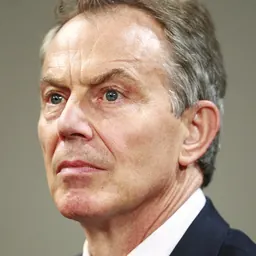
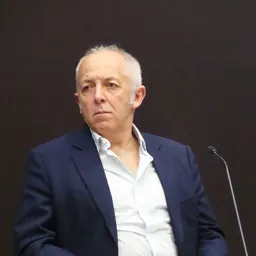
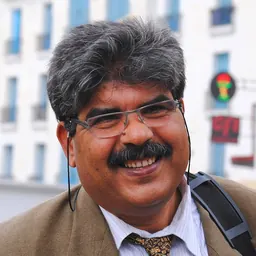
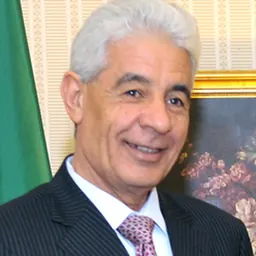
Abdel Hakim al-Hasady, Abdulhakim BelhadjPeople in Abdelhakim Belhadj's life
Named in this biography and alive at the same time



Related people
Same field, nearest in time

Contemporaries
People whose lives overlapped Abdelhakim Belhadj's



Frequently asked questions
Who is Abdelhakim Belhadj?
Libyan Islamist and military commander
When was Abdelhakim Belhadj born?
Abdelhakim Belhadj was born on 1 May 1966 in Souq al Jum'aa.
What is Abdelhakim Belhadj's occupation?
Abdelhakim Belhadj is a civil engineer, partisan, politician and military personnel.
What nationality is Abdelhakim Belhadj?
Abdelhakim Belhadj is Libyan.
Sources & further reading
· Wikipedia: Abdelhakim Belhadj
Cite this page
APA: Biography.guide. (2026). Abdelhakim Belhadj. https://biography.guide/abdelhakim-belhadj/
MLA: "Abdelhakim Belhadj." Biography.guide, https://biography.guide/abdelhakim-belhadj/.
Chicago: "Abdelhakim Belhadj." Biography.guide. https://biography.guide/abdelhakim-belhadj/.
Data last updated: 2026-09-20 · Spot an error? Report a correction.
Page generated 2026-09-27 05:30 UTC