
About Moussa Koussa
Born 1949. Moussa Koussa is a Libyan diplomat and politician.
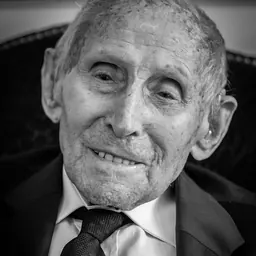
Moussa Muhammad El-Haj Nemr Koussa (, ; born 1949?) is a Libyan political figure and diplomat who held several high-profile positions in the Libyan government, lastly as Minister of Foreign Affairs from March 2009 until the Libyan Civil War, when he resigned his position on 30 March 2011. When he arrived in the United Kingdom in March 2011, the UK Foreign and Commonwealth Office released an official statement saying that Koussa no longer wished to represent the Libyan government
Early life and education Koussa was born in the Tripoli suburb of Tajura into a respected middle-class family with no significant tribal or other power base. He attended Michigan State University in East Lansing, Michigan, earning a degree in sociology in 1978 with a 200-plus pages study of Colonel Qaddafi titled "The political leader and his social background: Muammar Qadafi, the Libyan leader". Koussa was offered the chance to continue to study for a doctorate but instead returned to Tripoli. As a student, Koussa took great care with his work, interviewing Gaddafi twice, his family, childhood teachers, friends, and military colleagues, allowing him to paint a vivid picture of the influences and motivations of Gaddafi's revolutionary visions in his thesis, which may be the most comprehensive, revealing document in English about Libya's enigmatic leader. According to his thesis adviser, Christopher K. Vanderpool, Koussa would have had a promising career in academia had he not abandoned plans to study for a doctorate to become one of Gaddafi's closest confidants. in an interview with The Times newspaper about his government's intention to eliminate two political opponents who were living in the UK. On 23 August 2002, the BBC reported that Abu Nidal was 'behind Lockerbie bombing'. In October 2008, Moussa Koussa, listed as an interpreter, met both British and Scottish government officials, while on a second visit in January 2009, he was listed as Minister of Security.
In 2004, he allegedly played a leading role in the failed assassination plot against Abdullah of Saudi Arabia.
Over the decades, Koussa gained a reputation as an urbane and worldly figure "who would not have looked out of place as a Western ambassador," according to the former Central Intelligence Agency agent Paul R. Pillar.
Koussa is further credited by the CIA, British MI6, as well as French Intelligence Services for unraveling a labyrinth of Islamic radical and fundamentalist cells and movements in neighboring Sudan, Niger, Mali, and Chad. Such groups would come to be known as Al-Qaeda. On 16 March 1998, five months before the Al-Qaeda bombings of the US Embassies in Kenya and Tanzania, Libya ordered the first alert to Interpol for the capture of Osama bin Laden, a fact unbeknown to the wider public. The warrant was forwarded to Interpol in France, where it was formalized on 15 April 1998.
In 2004, George Tenet credited Libya for issuing the first international red notice Interpol alert and arrest warrant for Osama bin Laden. Koussa was also credited for negotiating Libya's decision to give up its WMD program, thus facilitating Libya's reintegration into the international community. Oliver Miles, a former British ambassador to Tripoli, stated Koussa is "straightforward and reliable ... I found him a perfectly reasonable person to deal with." Another leaked cable described him as "a useful and powerful interlocutor who has been mostly cooperative in liaison channels and key to our re-engagement."
Koussa was appointed Foreign Minister in 2009, replacing Abdurrahman Mohamed Shalgham, who was appointed Libyan ambassador to the United Nations in New York. In the May 2009 cable, Foreign Minister Moussa Koussa expressed concerns about the Canadian Government led by Stephen Harper over the issue of ransom payments, which would only further strengthen Al-Qaeda's traction in the Saharan belt and parts of North Africa. There had been eight kidnappings in the past six months, including two Canadian officials who had been released in return for money.
Koussa accompanied Mutassim Gaddafi on a visit to the United Nations headquarters in New York soon after Libya emerged from international isolation. A U.S. embassy cable quoted Koussa, in a private conversation, as saying that Mutassim was not a keen student of international relations and had to be prompted to read books on the subject. Before the Libya crisis, there were indications that Koussa was no longer at the center of the country's ruling circle. He was held responsible for the defection of Nuri Mesmari to France in October 2010 and his passport was allegedly confiscated by Gaddafi. At an international summit in Tripoli in December 2010, Koussa spent much of his time smoking in the public buffet area while the rest of Gaddafi's entourage were cloistered in a private room.
Departure and resignation
The events of the Arab Spring began in Tunisia in December 2010. By January the Tunisian revolution was under way, and demonstrations began in Libya in mid-January. An armed revolt against Gaddafi began in February 2011. Koussa, accompanied by his deputy Abdul Ati al-Obeidi, departed Tripoli by car and arrived in Tunis, Tunisia, on 28 March 2011, via the Ras Ajdir border crossing. A Tunisian government spokesman stated via Tunis Afrique Presse that Koussa had arrived on a "private visit." On 30 March 2011, Koussa departed from Djerba on a Swiss-registered private jet, while Obeidi returned to Tripoli. Koussa arrived at Farnborough Airfield, England, according to Libyan sources on a diplomatic mission. The Foreign and Commonwealth Office later released an official press statement, stating that Koussa no longer wished to represent the Libyan government and intended to resign, unhappy with Libyan Army attacks on civilians.
Scottish prosecutors interviewed Koussa about the Lockerbie bombing, and found no judicial reason or evidence to hold him in captivity. At the time, Koussa was a leading member of Al-Mathaba.
Koussa left the United Kingdom and moved to Qatar following a European Union decision to lift sanctions against him, meaning he no longer faces travel restrictions or an asset freeze. Moussa Koussa's role in the torture and deaths of Libyan people was alleged by the BBC Television Panorama programme in October 2011, after which Koussa issued a statement to the press through his lawyer, strongly denying the allegations.
Don’t just read it —
keep it.
Full-length biographies made to live with: read them, listen on the way to work, watch them tonight.
- E-book
- Audio
- Video
Instant download · yours to keep · every purchase keeps this site free
Important facts
People in Moussa Koussa's life
Named in this biography and alive at the same time
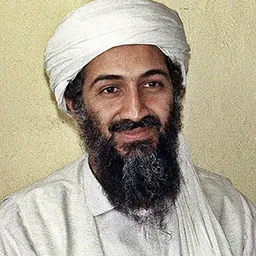

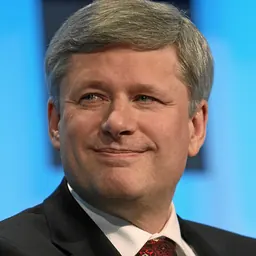
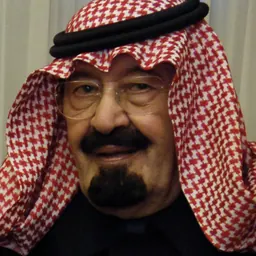



Related people
Same field, nearest in time
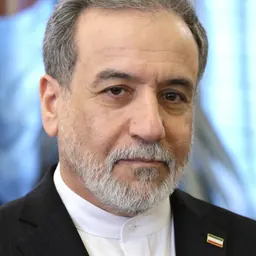
Contemporaries
People whose lives overlapped Moussa Koussa's


Frequently asked questions
Who is Moussa Koussa?
former Libyan Minister of Foreign Affairs
When was Moussa Koussa born?
Moussa Koussa was born on 23 March 1949 in Tripoli.
What is Moussa Koussa's occupation?
Moussa Koussa is a diplomat and politician.
What nationality is Moussa Koussa?
Moussa Koussa is Libyan.
Sources & further reading
Cite this page
APA: Biography.guide. (2026). Moussa Koussa. https://biography.guide/moussa-koussa/
MLA: "Moussa Koussa." Biography.guide, https://biography.guide/moussa-koussa/.
Chicago: "Moussa Koussa." Biography.guide. https://biography.guide/moussa-koussa/.
Data last updated: 2026-09-27 · Spot an error? Report a correction.
Page generated 2026-09-27 05:17 UTC