
Abdallah al-Fadil al-Mahdi
Sudanese politician
About Abdallah al-Fadil al-Mahdi
Lived 1892 – 1966 (aged 73–74).
Abdallah al-Fadil al-Mahdi (; 1892 – 18 May 1966) was a Sudanese statesman. Born in Omdurman, in the Mahdist State; Abdallah hails from a lineage tied to the Funj sultanas. Following his father death, he was raised under the care of his maternal uncle. Educated in local schools and Gordon Memorial College, he was redirected to agriculture due to academic performance, completing his education in Tokar. Abdallah embraced agriculture, working with international advisors to modernise Sudanese farming through imported equipment.
Politically, he played an important role in Sudanese independence, negotiating the 1952 "Gentlemen's Agreement" with Egypt, which paved the way for self-government and fair elections while advancing Sudanisation of public institutions. After independence, Abdallah became a senior assistant to Imam Abd al-Rahman al-Mahdi and joined the executive committee of the National Umma Party. Resisting Ibrahim Abboud's regime, he helped resolve the Ansar-government conflict. In 1965, Abdallah joined Sudan's Sovereignty Council, overseeing national governance during the transitional period. He also established a mosque in the Republican Palace.
Abdallah married twice, fathering 14 children, several of whom became prominent officials.
Early life and education Abdallah al-Fadil al-Mahdi was born in 1892
Abdallah completed the khalwa and primary school under the care of his maternal uncle, Sirr Al-Khatim, after which Imam Abd al-Rahman al-Mahdi (his uncle) came and took him to Omdurman. Abdallah completed his secondary education in Tokar. The agreement came to be known as the "Gentlemen's Agreement", which was later formalised in the Sudan Self-Government Statute between Britain and Egypt. His good relationship with Egypt played an important role in Sudan's attainment of its full rights, especially since there was mutual trust between him and Major General Muhammad Naguib.
The agreement called for establishing a committee consisting of a representative from Egypt, one from Britain, two Sudanese members, and a fifth member from a neutral nation, possibly India or Pakistan. This committee's primary purpose was to provide guidance and advice to the Governor-General in discharging his duties. It also expanded the reach of direct elections by including 35 additional constituencies, fostering a more representative political process. In addition, the agreement envisioned the establishment of an international commission tasked with overseeing the electoral processes within Sudan, ensuring fairness and impartiality. Lastly, it laid the groundwork for a "Sudanization Committee" to expedite the replacement of foreign personnel with Sudanese individuals across various sectors, including administration, the police force, and other public appointments. He worked to foster cooperation and dialogue among political factions, Sufi orders, and religious scholars. Following the death of Abd al-Rahman al-Mahdi, Abdallah refused to assume the Imamate of the Ansar despite his entitlement to it and passed it to . In 1962, he founded the first Sudanese company to help with Hajj. He later helped in stopping the bloodshed between the Ansar and the government, which led to the release of Imam Siddiq al-Mahdi. During Abdallah tenure, he joined the first line-up which came to power from 10 June 1965, and it was composed of Ismail al-Azhari (Democratic Unionist Party), and Khader Hamad (DUP), Abdel Halim Mohamed (NUP), and Luigi Adwok Bong Gicomeho (Southern Front) who resigned on 14 June 1965 and was replaced by Philemon Majok.
Following his death on 18 May 1966, Abdallah is credited with establishing a mosque in the Republican Palace during his membership in the Sovereignty Council. In 1936, he married Munira Al-Qabbani, and together they had 6 children including Mubarak, Abdallah was keen on educating his children in schools and universities inside and outside Sudan.
Don’t just read it —
keep it.
Full-length biographies made to live with: read them, listen on the way to work, watch them tonight.
- E-book
- Audio
- Video
Instant download · yours to keep · every purchase keeps this site free
Important facts
People in Abdallah al-Fadil al-Mahdi's life
Named in this biography and alive at the same time



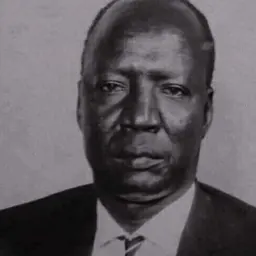
Contemporaries
People whose lives overlapped Abdallah al-Fadil al-Mahdi's
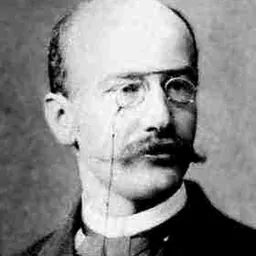
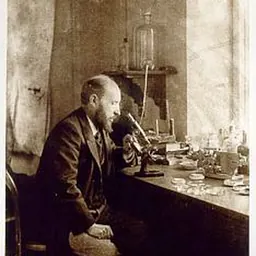

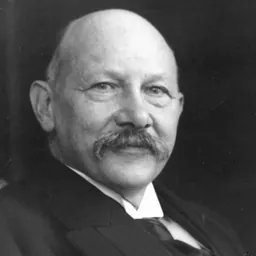
Frequently asked questions
Who was Abdallah al-Fadil al-Mahdi?
Sudanese politician (1890–1966)
When was Abdallah al-Fadil al-Mahdi born?
Abdallah al-Fadil al-Mahdi was born in 1892.
When did Abdallah al-Fadil al-Mahdi die?
Abdallah al-Fadil al-Mahdi died on 18 May 1966.
Sources & further reading
· Wikipedia: Abdallah al-Fadil al-Mahdi
· DBpedia: Abdallah al-Fadil al-Mahdi
Cite this page
APA: Biography.guide. (2026). Abdallah al-Fadil al-Mahdi. https://biography.guide/abdallah-al-fadil-al-mahdi/
MLA: "Abdallah al-Fadil al-Mahdi." Biography.guide, https://biography.guide/abdallah-al-fadil-al-mahdi/.
Chicago: "Abdallah al-Fadil al-Mahdi." Biography.guide. https://biography.guide/abdallah-al-fadil-al-mahdi/.
Data last updated: 2026-09-20 · Spot an error? Report a correction.
Page generated 2026-09-27 05:33 UTC