
About Abayomi Wilfrid Karnga
Lived 1882 – 1952 (aged 69). Abayomi Wilfrid Karnga was a historian, teacher, politician, consultant and statesperson.
Abayomi Wilfrid Karnga (29 November 1882 – 22 November 1952) was a Liberian historian, educator, politician, counselor at law, and statesman who served as an Associate Justice of the Supreme Court of the Republic of Liberia. Born at the settlement of Tallah in the northwestern section of Liberia in Grand Cape Mount County, Karnga began a long career in government service which included service as Postmaster General and General Secretary of the True Whig Party, the Liberian political party that was in power from 1869 to 1980.
Early life and education Karnga was born in 1882 at the settlement of Tallah in the northwestern section of Liberia, Grand Cape Mount County. His parents, who were recaptive Africans from the Congo region, landed in Liberia in 1859 after being taken off a slave ship by the American slave squadron. His father, Orangge (Prince of Solongo, Belgian Congo),
In 1888, the Congo Free State was established by Henry Morton Stanley under the leadership of King Leopold II of Belgium. Many recaptive Africans felt it safe to return home. Karnga’s father, Orangge, decided to visit the Congo, the country of his birth. Karnga wrote about the trip saying that in the year 1888, when he was a little boy, his father took him on a visit to the Congo. Karnga’s father also took his wife Sarah, and daughter Elizabeth along. he entered Liberia College in the capital city of Monrovia. Among Karnga's classmates who graduated with him in 1903 were Edwin Barclay, later President of Liberia, and Louis Arthur Grimes, later Chief Justice of the Supreme Court of Liberia. She was a member of the Grebo tribe. Karnga and Isabella had six children together: Abayomi, Tautla, Olivia, Rushu, Isabel and Makeda. In May 1911, he was elected to the thirty-second legislature as a representative from Grand Cape Mount County. In 1928, President King appointed Karnga to the bench of the Supreme Court as an Associate Justice.
In his later years, Karnga held several minor governmental posts. In 1940, he was appointed to an Import-Export Corporation Board to assist in controlling Liberia's wartime trade. In 1947, he was appointed to a commission to expropriate land for future sites of the capitol and University of Liberia, as part of the centennial activities.
Karnga's last major activity was the annual Independence Day address on Liberia’s centennial as a republic. His selection as speaker was in part due to Karnga being a well-known writer and historian. The selection also signified the full equality and acceptance of Liberian settlers, which had not been accorded to recaptured Africans and their offspring.
On November 22, 1952, Abayomi Wilfrid Karnga died in Monrovia.
Writings Abayomi Wilfrid Karnga wrote Liberian history from a personal conviction. In the preface of an early work, he wrote that Liberia's national ideals could not be implanted in the minds and hearts of all of its citizens by the constant "inculcation" into them of the thoughts and customs of other peoples to the sad neglect of their own. He stated that Liberia's governing people owed to themselves the duty to know themselves and to have a thorough knowledge of the customs and methods of government which long existed among their forefathers. With such knowledge, Karnga wrote, Liberia’s leaders could then hope to govern with less misunderstanding and domestic trouble.
Works Prince Jeenah. (1904). Cape Palmas.
The negro republic on West Africa. (1909). Monrovia, Liberia: College of West Africa Press.
The postal laws of Liberia, as collected from the statutes and acts of the legislature of Liberia under the direction of Hon. Isaac Moort, Postmaster General. By honorable review and approved by Hon. S. A. Ross, Attorney General. (1912). Monrovia: Government Printing Office.
Orations. Monrovia: Government Printing Office. (1911).
Liberia official postal guide. By Postmaster General of Liberia. Monrovia: The Montserrado Printing & Publishing Company. (1923).
Liberia before the new world. London: F. I. Phillips. (1923).
The new Liberia and other orations. Grand Cape Mount: Douglas Muir. (1925).
History of Liberia. Liverpool: D.N Tyte & Co. (1926).
History of the black race. (1944).
Topics from Liberian geography. Monrovia. (1933).
The native laws and customs. Monrovia. (1935).
A guide to our criminal and civil procedure. Monrovia, Liberia, College of West Africa Press. (1914).
Index to the statutes of the Republic of Liberia. (1858-1909).
History of constitutional law. (n.d)
Don’t just read it —
keep it.
Full-length biographies made to live with: read them, listen on the way to work, watch them tonight.
- E-book
- Audio
- Video
Instant download · yours to keep · every purchase keeps this site free
Important facts
People in Abayomi Wilfrid Karnga's life
Named in this biography and alive at the same time
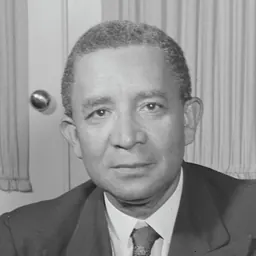

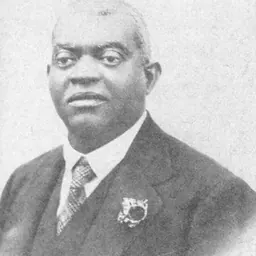

Related people
Same field, nearest in time

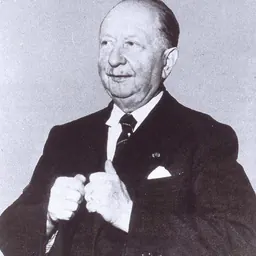
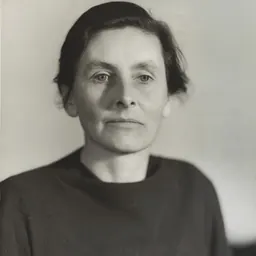
Contemporaries
People whose lives overlapped Abayomi Wilfrid Karnga's




Frequently asked questions
Who was Abayomi Wilfrid Karnga?
Liberian politician and judge
When was Abayomi Wilfrid Karnga born?
Abayomi Wilfrid Karnga was born on 29 November 1882 in Grand Cape Mount County.
When did Abayomi Wilfrid Karnga die?
Abayomi Wilfrid Karnga died on 22 November 1952 in Monrovia.
What was Abayomi Wilfrid Karnga's occupation?
Abayomi Wilfrid Karnga was a historian, teacher, politician, consultant and statesperson.
Sources & further reading
· Wikipedia: Abayomi Wilfrid Karnga
· DBpedia: Abayomi Wilfrid Karnga
Cite this page
APA: Biography.guide. (2026). Abayomi Wilfrid Karnga. https://biography.guide/abayomi-wilfrid-karnga/
MLA: "Abayomi Wilfrid Karnga." Biography.guide, https://biography.guide/abayomi-wilfrid-karnga/.
Chicago: "Abayomi Wilfrid Karnga." Biography.guide. https://biography.guide/abayomi-wilfrid-karnga/.
Data last updated: 2026-09-26 · Spot an error? Report a correction.
Page generated 2026-09-27 05:14 UTC