
A. S. Trude
British-American lawyer
About A. S. Trude
Lived 1846 – 1933 (aged 87).
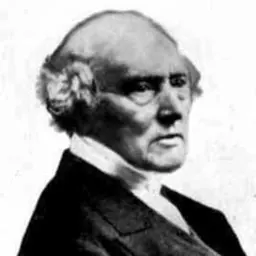
Alfred Samuel "A. S." Trude (April 21, 1846 – December 12, 1933) was a British-American lawyer. Trude was one of the most noted attorneys in his time, working on a number of high-profile cases. He resided in Chicago most of his life. While he was largely a civil attorney and occasional criminal defense attorney, among his most famous cases as a lawyer was his successful prosecution of Patrick Eugene Prendergast for the assassination of Carter Harrison III (successfully prosecuting Prendergast both in the murder trial, and a subsequent sanity proceeding).
Trude was also prominently involved in Democratic Party politics and unsuccessfully attempted to secure his party's nomination for mayor of Chicago in 1897 after having previously ruled out a mayoral run in the 1893 special election. Trude served for eight years (1892 to 1900) as a member of the Chicago Board of Education, serving as the Board's president from 1893 to 1895. Trude amassed a significant real estate investment portfolio as well.
Early life and education Trude was born in Devonshire, England on April 21, 1846, to Samuel Trude and Sally Trude . His parents both descended from English farmers. Soon after he was born, he emigrated with his parents from England to the United States. His family settled in Lockport, New York, there. He was educated in the town's Old Union school. Trude and his family later moved to Lindsay in the Canadian province of Ontario. They then moved back to the United States, settling in the city of Chicago, Illinois.
In 1870, Trude graduated from Chicago's Union College of Law
Civil defense work in libel and tort claims against newspapers
After Medill left office as mayor and returned to his private-sector job of running the Chicago Tribune, he frequently hired Trude for the next twenty-seven years to represent the newspaper's defense in libel and tort lawsuits. None of the cases in which Trude defended Chicago Tribune saw plaintiffs recover punitive damages from the newspaper, and nearly all of the verdicts found no guilt on the newspaper's part.
In the 1889 divorce suit between Michael Cassius McDonald and his wife Mary, Trude served as McDonald's solicitor while A.B. Jenks served as counsel.
Trude was a counsel in many high-profile cases of litigation regarding the contesting of wills. Burke was prosecuted by Charles S. Deneen, the Republican Cook County state's attorney. (who was the son of the late Carter Harrison III, who Trude had also represented in matters) In March 1905, he was part of a team of lawyers that sought a change of venue for proceedings related to the fire. Dora McDonald, who was married to Chicago crime boss and political boss Michael Cassius McDonald, had killed Webster Guerin, a man with whom she had had a decade-long sexual affair. This affair had begun when Guerin, fifteen years her junior, was only a thirteen-year-old high school student. Dora McDonald had suspected Guerin of seeing other women, He had stood by his wife, who told him she had only shot Guerin because she was being blackmailed. Ultimately, in January 1908, McDonald was acquitted after only five hours of deliberation by a jury.
Prosecution in the murder case against Patrick Eugene Prendergast and work in subsequent litigation
After the assassination of Chicago Mayor Carter Harrison III, Trude was initially seen as a likely front-runner to win the mayoralty as a potential candidate in the 1893 Chicago special mayoral election. Trude instead opted to prosecute the case against Harrison's assassin, Patrick Eugene Prendergast. Trude served as the lead counsel prosecuting the state's case against Prendergast, doing so at the request of both the county government and the family of Harrison. This is arguably the most noted matter that Trude worked on.
After this, a petition for a writ of habeas corpus and a request for a stay of execution were presented on Prendergast's behalf to Judge Peter S. Grossup of the United States District Court for the Northern District of Illinois. Strong arguments were made on Prendergast's behalf by his team of lawyers. However, hours before Prendergast's scheduled July 13, 1894 time of execution, the court issued a detailed opinion in which they refused to stop the execution. Prendergast was hanged. Further legal actions were unsuccessfully attempted by Prendergast's lawyers in the hours between the opinion being issued and the execution being carried out.
Tenure on the Chicago Board of education Trude served on the Chicago Board of Education for eight years between from 1892 to 1900.
Politics Trude was a prominent figure in Democratic Party politics and was a leading figure in Chicago's Democratic politics. He supported Samuel J. Tilden during the 1876 presidential elections and was responsible for recruiting members of the People's Party back to the Democratic Party.
Trude was a delegate to the 1896 Democratic National Convention and a delegate at large to the 1900 Democratic National Convention. However, in mid-November, Trude formally ruled a candidacy out. Trude claimed that he would not run because – among other things – if he were the party's nominee, conflict of interest would have forced his brother George to resign his elected position as city attorney, because that position made George an ex-officio member of the city's election commission. Because George would presumably be replaced by a Republican (due to the makeup of the city's government and the Republican affiliation of Acting Mayor George Bell Swift), Trude argued that it would be problematic because his brother was, "about the only Democrat on that board," and he believed that the Democratic Party's interests would be harmed by ceding that representation on the election commission. Trude was an ally of John Patrick Hopkins after he was elected mayor. Trude was the most prominent backer of Washington Hesing's unsuccessful pursuit of the Democratic Party's mayoral nomination in the 1895 Chicago mayoral election.
Allied at the time with John Peter Altgeld, in 1895 Trude led a successful effort to elect Thomas Gahan as chair of the Cook County Democratic Party. In 1896, after John Peter Altgeld was ousted from his position in the Illinois Democratic Party's Central Committee, Trude was appointed to assume his seat.
Trude sought the Democratic Party's nomination in the 1897 Chicago mayoral election. Trude unsuccessfully sought Altgeld's endorsement. Trude ultimately withdrew his candidacy prior to the party's city nominating convention. Despite Carter Harrison IV having been a recent political rival of his, he formally submitted Harrison's name for the party's mayoral nomination at the nominating convention.
Real estate investments Trude amassed an impressive portfolio of real estate investments in the Chicago Loop. The realty holdings he held at the time of his death were worth $1,500,000 in 1933 dollars. In 1912, Marshall Field & Co. acquired and demolished the sixteen-floor tower to expand the Marshall Field and Company Building. This is considered to have been one of the first demolitions, if not the first, of a high-rise skyscraper.
In addition to Chicago, Trude also owned land in Idaho and was regarded to be a pioneer in Idaho recreation. Trude regularly vacationed in Idaho. He first visited Idaho in 1888 on a visit with his wife and his son Daniel, during which he saw Yellowstone Park and various parts of Idaho. He stayed at the ranch of Uncle George Rea, an early white settler of Idaho. He was impressed with the area. He and his wife would visit Idaho every year after. The following year, he traveled through the Jackson Hole area. He built his first Idaho vacation home on the property of Uncle George Rea. Trude bought of land in Idaho to create his own ranch. His ranch was visited by noted individuals such as William Jennings Bryan, Carter Harrison IV, C. K. G. Billings, William Borah, George Dern, Fred Dubois, and Frank Steunenberg. Trude was also a benefactor of local libraries and charities in the area of Idaho near his ranch, and also funded the construction of a hospital room.
Trude's brother George served as a judge on the Municipal Court of Chicago,
The estate that Trude left behind was valued at $2 million. $500,000 of this was personal property. $1,500,000 of this was realty investments. Realty included,
In popular culture Trude is included in the novel The Devil in the White City, which deals with Prendergast's murder of Harrison.
Don’t just read it —
keep it.
Full-length biographies made to live with: read them, listen on the way to work, watch them tonight.
- E-book
- Audio
- Video
Instant download · yours to keep · every purchase keeps this site free
Important facts
People in A. S. Trude's life
Named in this biography and alive at the same time



Contemporaries
People whose lives overlapped A. S. Trude's




Frequently asked questions
Who was A. S. Trude?
British-American lawyer (1846–1933)
When was A. S. Trude born?
A. S. Trude was born on 21 April 1846.
When did A. S. Trude die?
A. S. Trude died on 12 December 1933.
Sources & further reading
Cite this page
APA: Biography.guide. (2026). A. S. Trude. https://biography.guide/a-s-trude/
MLA: "A. S. Trude." Biography.guide, https://biography.guide/a-s-trude/.
Chicago: "A. S. Trude." Biography.guide. https://biography.guide/a-s-trude/.
Data last updated: 2026-09-20 · Spot an error? Report a correction.
Page generated 2026-09-27 05:24 UTC