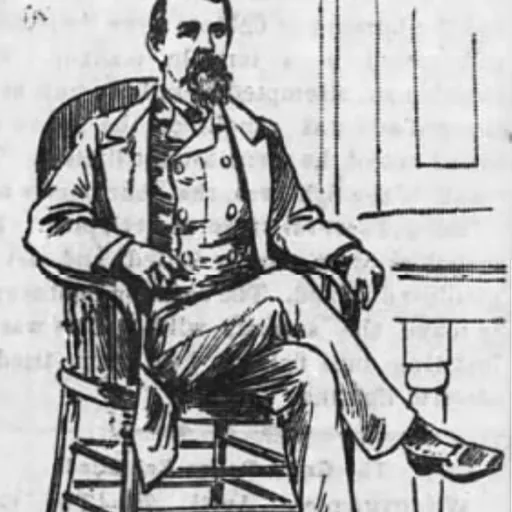
About Michael Cassius McDonald
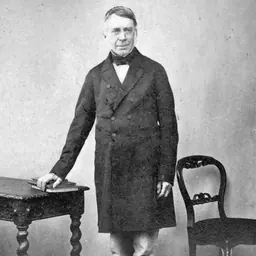
Lived 1839 – 1907 (aged 67–68). Michael Cassius McDonald was an American politician, businessperson, crime boss and political boss.
Michael Cassius McDonald (c. 1839 – August 9, 1907) was a crime boss, political boss, and businessman based out of Chicago. He is considered to have introduced organized crime to the city, and to have also established its first political machine. At the height of his power, he had influence over politicians of all levels in the state of Illinois. McDonald and his family lived in an Irish enclave of Niagara County, New York. As a young man, Ed McDonald had immigrated to Canada from County Cork, Ireland as a stowaway.
The younger McDonald, despite his father's urging, refused to pursue a job as a bootmaker's apprentice.
In the autumn of 1854, a fifteen year old McDonald traveled to Chicago on a two-week trip. He returned to Chicago two years later along with four friends from school. In New Orleans he took note of the gambling culture there. In this scheme, he colluded with army deserters, who had agreed to turn themselves in, to then reenlist, and then split the commission which McDonald received for recruiting them.
Return to Chicago Sometime after the American Civil War he returned to Chicago. After having spent some time financing a traveling faro bank, in 1867, McDonald opened his first gambling establishment at 89 Dearborn street. In 1869, he was arrested for allegedly stealing $30,000 from an assistant cashier of the Chicago Dock Company. The cashier had given the money to McDonald to finance his gambling operations. McDonald was unable to afford bail, and, consequentially, spent three months in prison prior to being acquitted at his trial.
In the 1871 Great Chicago Fire, McDonald lost the entirety of his real estate and businesses, which were uninsured. Within a few weeks of the fire, McDonald managed to raise enough funds to establish a saloon at State Street and Harrison Street, where illegal card games were featured.
On December 5, 1871, McDonald married Mary Ann Noonan, a divorcee with two children from her previous marriage.
Criminal and political rule in Chicago In the mid-1870s, McDonald would engage in a number of ventures which would make him a multi-millionaire by the mid-1880s.
In 1873, McDonald opened a gaming parlor named "The Store". "The Store" proved to be an instant success.
McDonald's criminal activities in the 1870s and 1880s are considered to mark the beginning of organized crime in the city of Chicago. He is considered to have been Chicago's first mob boss. His crime syndicate would make him significant amounts of revenue.
McDonald became involved in Chicago's politics, forming a political organization that was dubbed the "gambler's trust". Some consider his political activities to have laid the base upon which the city's modern Democratic Party was built. McDonald, thus, gained a friend in the mayor's office, as opposed to the previous anti-gambling mayor Joseph Medill, who had made many efforts at reform in the city. McDonald's political influence experienced a setback when Chicago elected reform mayor Monroe Heath in 1876. playing a major role in Harrison's election as mayor.
While mayor, Monroe Heath ordered raids on McDonald's gambling operations. On November 23, 1878, there was a police raid on McDonald's personal apartment, located on the third floor of "the Store". McDonald was not home, but his wife Mary was. Mary hated cops, and fired a gunshot from a pistol that pierced a police officer's coat, but missed him. She also dropped an iron bar down the stairs onto another policeman, injuring his back, but despite some later claims that she killed a cop during the raid, an article in the Chicago Tribune states otherwise. Amid these raids, he had his saloon license briefly revoked, but it was restored within a week. The most notable racetrack was Garfield Park Racetrack. In early 1885, McDonald also said he was going to retire from politics. Both would prove not to be the case, and he would remain involved in politics until his death and would not retire from the gambling business until roughly a decade later.
In February 1885, a month before the 1885 Chicago mayoral election, a grand jury found McDonald's right-hand man Joseph Mackin and others with connections to Harrison guilty of election fraud in the 1884 elections, creating a scandal for Harrison ahead of being up for reelection. Despite the fact that no personal wrongdoing on Harrison's part was involved in these charges, the charges against Mackin and others compounded with the preexisting rumors relating to Harrison to foster a public sentiment that challenged Harrison's popularity. While he won a narrow reelection in 1885, the loss popularity from these scandals contributed to Harrison's decision to not seek reelection to a fifth term in the 1887 Chicago mayoral election.
Various contracting firms which McDonald owned would receive sweetheart deals from the city government, thanks to a number of alderman popularly dubbed "Mike McDonald's Democrats". In 1887, McDonald successfully bribed the Chicago City Council and Cook County Board of Commissioners to give him a contract to paint the city's court house with a compound that, in actuality, was only chalk and water. He charged $128,250 for this work. Some went to prison for participation in this fraud, but the powerful McDonald did not even face any prosecution for his role. In the aftermath of the scandal, McDonald largely withdrew for a while, even selling "The Store".
By the mid-1880s, McDonald had invested in the transit company of Charles Yerkes. In 1888, partnering with Yerkes and Colonel Alberger, McDonald began to push plans for the Lake Street Elevated, being involved in the Lake Street Elevated Railroad Company. While not one of the official incorporators of the company, he was a key figure in it. In December of that year, after McDonald bribed thirteen members of the Chicago City Council, it approved an ordinance allowing construction of the rapid transit line by approving a 25-year franchise. Construction began that same month. In the aftermath of this, McDonald would renounce his Catholic faith. On September 11, 1889, McDonald filed in Superior Court of Cook County for divorce from Mary. He requested full custody of their two children, arguing that Mary was "unfit".
In the 1891 Chicago mayoral election, ahead of the Democratic nominating convention, McDonald supported incumbent mayor DeWitt Clinton Cregier for re-nomination over Carter Harrison, the latter of whom was seeking to make a comeback and win a fifth nonconsecutive term as mayor. Cregier would win renomination, but would lose the general election after Harrison ran an independent campaign, helping to split the Democratic Party vote. In October 1892, McDonald came out in support of Benjamin Harrison for reelection as president.
By the time of the 1893 Chicago mayoral election, McDonald had a longstanding feud with Carter Harrison Sr., who was again seeking election to a fifth nonconsecutive term. In the Democratic mayoral primary, McDonald backed Washington Hesing against Harrison.
During the 1893 World's Columbian Exposition in Chicago, McDonald made the demand that pickpockets and hustlers avoid the area near to the world's fair in order to avoid tarnishing the city's image.
In the mid-1890s, McDonald retired from the gambling business. The daughter of a rabbi, she was burlesque dancer before marrying McDonald. McDonald had known her when she was a child, as she had been a schoolmate of his sons. Moreover, at the time McDonald began a public affair with her, she was married to professional baseball player Sam Barkley. So, McDonald gave Barkley $30,000 to help persuade him to agree to divorce her. McDonald also adopted her son Harold Barkley. At the age of 19, McDonald's son Guy, wanting to escape the drama-filled household, married his girlfriend over his father's objections and threats to disinherit him if he did. After a decade long affair with him, she suspected Guerin of seeing other women. She fired a single gunshot into Guerin. The trial was anticipated by some in the media to be even more sensationalized than the murder trial of Harry Kendall Thaw for the killing of Stanford White. She had previously experienced frequent psychotic episodes in her youth. Her mental health was evaluated multiple times while in jail.
Death
McDonald died in Chicago on August 9, 1907. At his side when he died was his ex-wife Mary. Ultimately, in January 1908, his widow would be acquitted after only five hours of deliberation by a jury.
Soon after his death, his ex-wife Mary attempted to contest Dora McDonald's inheritance. Mary McDonald asserted that she had still been legally married to McDonald at the time of his death, and that Dora McDonald's marriage to him was therefore invalid. This lawsuit was settled in favor of Dora McDonald in May 1908.
McDonald was interred in a mausoleum at Mount Olivet Cemetery in Chicago.
Portrayal in pop culture McDonald's elegant and flamboyant dress inspired the appearance of the character Gaylord Ravenal in Edna Ferber's 1926 book Show Boat. The book was quickly adapted into the musical of the same name, and the musical has seen several film, radio and television adaptions.
Don’t just read it —
keep it.
Full-length biographies made to live with: read them, listen on the way to work, watch them tonight.
- E-book
- Audio
- Video
Instant download · yours to keep · every purchase keeps this site free
Important facts
People in Michael Cassius McDonald's life
Named in this biography and alive at the same time



Related people
Same field, nearest in time






Contemporaries
People whose lives overlapped Michael Cassius McDonald's

Frequently asked questions
Who was Michael Cassius McDonald?
American crime boss (1839–1907)
When was Michael Cassius McDonald born?
Michael Cassius McDonald was born in 1839 in Niagara Falls.
When did Michael Cassius McDonald die?
Michael Cassius McDonald died on 8 August 1907 in Chicago.
What was Michael Cassius McDonald's occupation?
Michael Cassius McDonald was a politician, businessperson, crime boss and political boss.
What nationality was Michael Cassius McDonald?
Michael Cassius McDonald was American.
Sources & further reading
· Wikipedia: Michael Cassius McDonald
· DBpedia: Michael Cassius McDonald
Cite this page
APA: Biography.guide. (2026). Michael Cassius McDonald. https://biography.guide/michael-cassius-mcdonald/
MLA: "Michael Cassius McDonald." Biography.guide, https://biography.guide/michael-cassius-mcdonald/.
Chicago: "Michael Cassius McDonald." Biography.guide. https://biography.guide/michael-cassius-mcdonald/.
Data last updated: 2026-09-22 · Spot an error? Report a correction.
Portrait: Wikimedia Commons · author & licence
Page generated 2026-09-27 05:01 UTC