
About A. Piatt Andrew
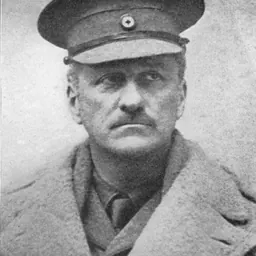
Lived 1873 – 1936 (aged 63). A. Piatt Andrew was an American politician and writer.
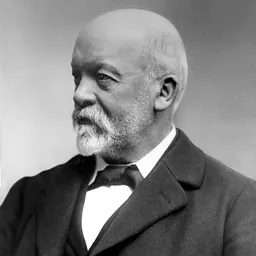
Abram Piatt Andrew Jr. (February 12, 1873 – June 3, 1936) was an American economist and politician who served as Assistant Secretary of the Treasury, the founder and director of the American Ambulance Field Service during World War I, and a member of the U.S. House of Representatives from Massachusetts.
Early life and education He was born in La Porte, Indiana, on February 12, 1873. He attended the public schools and the Lawrenceville School. He graduated from Princeton College in 1893, studied at the Harvard Graduate School of Arts and Sciences from 1893 to 1898, graduating with a master's degree in 1895 and a doctorate in 1900. He later pursued postgraduate studies in the Universities of Halle, Berlin, and Paris.
Early career in economics He moved to Gloucester, Massachusetts, and was an instructor and assistant professor of economics at Harvard University from 1900 to 1909. The commission's report recommended the creation of a Federal Reserve System.
The Republicans lost the White House in 1912, putting Andrew out of a job. He worked informally after the election with Democratic Senator Robert Latham Owen to draft Owen's version of a Federal Reserve Bill, which in the event came closest of several competing drafts to the Act eventually passed and signed into law in December 1913.
Founder of American Field Service
Despite American neutrality, Andrew went to France when war broke out in the summer of 1914. He wrote to his parents about his compulsion to respond to "the possibility of having even an infinitesimal part in one of the greatest events in all history--...and above all the chance of doing the little all that one can for France."
Andrew drove an ambulance in the Dunkirk sector for a few weeks, but his supervisor at the American Military Hospital recognized his exceptional energy and organizing ability. Robert Bacon created a new position for him to fill: Inspector General of the American Ambulance Field Service. In his official capacity, Andrew toured the ambulance sections of Northern France and learned that the American volunteers were bored with so called "jitney work," transporting wounded soldiers from railheads to hospitals, far back from the front lines. French army policy prohibited foreign nationals from traveling into battle zones.
In March 1915, Andrew met with Captain Aime Doumenc, head of the French Army Automobile Service and pleaded his case for the American volunteers. They desired above all, he said, "To pick up the wounded from the front lines..., to look danger squarely in the face; in a word, to mingle with the soldiers of France and to share their fate!" Doumenc agreed to a trial. The success of Andrew's Section Z was immediate and overwhelming. By April 15, 1915, the French created American Ambulance Field Service operating under French Army command.
Andrew headed the organization, soon shortened to American Field Service, throughout the war, though his role changed significantly when its ambulance sections were taken over by the United States Army in late summer 1917. Andrew established a domestic organization based in Boston to recruit young American drivers and to raise funds from wealthy donors. The stateside office was headed by Henry Davis Sleeper and assisted by John Hays Hammond Jr and former ambulance driver, Leslie Buswell. The French office was located at number 21 rue Raynouard, Paris.
At the time of militarization, the American Field Service had formed thirty-four ambulance sections manned by 1,200 American volunteers. (A total of 2,100 volunteers had volunteered over the course of two years.) In addition the AFS had created fourteen camion sections with 800 additional American volunteers trucking supplies and soldiers up the Voie Sacree from Bar-le-Duc to Verdun and other routes to the Front.
The AFS motto was "Tous et tout pour France," everyone and everything for France. At an AFS reunion a few years after the war, Andrew said, "The opportunity of living in France, as we Americans lived during the first years of the war...meant glimpses of human nature shorn of self, exalted by love of country, singing and jesting in the midst of hardships, smiling at pain, unmindful even of death."
Piatt would also help French Captain Aimé Doumenc and American Major Richard Mallet create the Reserve Mallet in 1917. The Reserve Mallet would be similar to the AFS, but instead of ambulances, it would drive supply and ammunition trucks that were desperately needed at the front.
Congressman Andrew was elected as a Republican to the Sixty-seventh United States Congress to fill the vacancy caused by the resignation of Willfred W. Lufkin; he was reelected to the Sixty-eighth and to the six succeeding Congresses and served from September 27, 1921, until his death.
He was a member of the board of trustees of Princeton University from 1932 to 1936.
Awards He was made an officer in the Legion of Honor in 1927. He received the Army Distinguished Service Medal for his World War I service. He was named an Officer in Belgium's Order of Leopold.
Death and legacy He died on June 3, 1936, in Gloucester, Massachusetts, at his home "Red Roof" from influenza, which he had been suffering from for several weeks.
His remains were cremated and the ashes scattered from an airplane flying over his estate on Eastern Point in Gloucester.
In 1953, a bridge carrying Massachusetts Route 128 over the Annisquam River to the island section of Gloucester was named the "A. Piatt Andrew Bridge" in honor of his service as a congressman.
Don’t just read it —
keep it.
Full-length biographies made to live with: read them, listen on the way to work, watch them tonight.
- E-book
- Audio
- Video
Instant download · yours to keep · every purchase keeps this site free
Important facts
People in A. Piatt Andrew's life
Named in this biography and alive at the same time



Related people
Same field, nearest in time





Contemporaries
People whose lives overlapped A. Piatt Andrew's

Frequently asked questions
Who was A. Piatt Andrew?
American politician (1873–1936)
When was A. Piatt Andrew born?
A. Piatt Andrew was born on 12 February 1873 in La Porte.
When did A. Piatt Andrew die?
A. Piatt Andrew died on 3 June 1936 in Gloucester.
What was A. Piatt Andrew's occupation?
A. Piatt Andrew was a politician and writer.
What nationality was A. Piatt Andrew?
A. Piatt Andrew was American.
Sources & further reading
Cite this page
APA: Biography.guide. (2026). A. Piatt Andrew. https://biography.guide/a-piatt-andrew/
MLA: "A. Piatt Andrew." Biography.guide, https://biography.guide/a-piatt-andrew/.
Chicago: "A. Piatt Andrew." Biography.guide. https://biography.guide/a-piatt-andrew/.
Data last updated: 2026-09-20 · Spot an error? Report a correction.
Page generated 2026-09-27 05:20 UTC