
About A. F. Yeager
Lived 1892 – 1961 (aged 68–69). A. F. Yeager was a horticulturist.
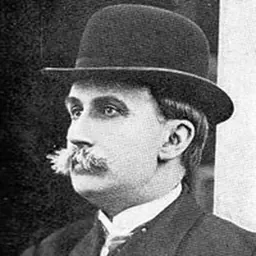
Albert Franklin Yeager (1892 – November 4, 1961) was an American horticulturalist. From his work developing hardy vegetables and fruits at the North Dakota Agricultural College (NDAC) and the North Dakota Agricultural Experiment Station (NDAES), he was known as the "plant wizard of the north" and the "Luther Burbank of North Dakota."
Early life and education Born in Kansas in 1892, Yeager earned his bachelor's degree from Kansas Agricultural College in 1912 and then a horticulture master's degree in pomology at Oregon Agricultural College in 1916.
Academic career Yeager's earliest job came about just after he received his bachelor's degree and the creation of the Pennsylvania Chestnut Blight Commission, which he became a field agent for in 1913. Then he went on to teach vocational agriculture classes at Crete High School from 1914 to 1915 before completing his graduate level degree. Yeager first joined the staff of North Dakota State University as a horticulturalist in 1919, along with becoming a part of the college's Experiment Station (NDAES). He served in this position until 1937, during which he was frequently an article writer for the horticultural bulletin publication whenever a new cultivar had been developed. The main focus of his research during this time period was developing crop cultivars resistant to early snap frosts, droughts, and lengthy cold temperatures, which were all conditions important to farmers in the state. He determined that frosts were of the greatest concern in killing crop fields and so sought to make cultivars of tomatoes and corn with higher resistance to sudden extreme lower temperatures.
Winter squash cultivation Another crop that Yeager began investigating was sweet potatoes thanks to their high nutrient levels, but determined that the growing season of North Dakota was too short for any hybrid cultivar or other trait improvement to overcome. So he turned to winter squash instead in 1922 and worked until 1925 with the cultivar Quality. He failed, however, to find more than a single desirable trait and found out that even that single one was due to an accidental hybridization with the Essex Hybrid cultivar. This difference interested him though, and he abandoned his other squash research to focus on this new hybrid, creating a new cultivar in 1927 called the Buttercup squash. He was convinced of its improvement over the general Hubbard cultivar after his final testing in 1931, and he eventually released the Buttercup for general farming in 1932.
Melon cultivation Yeager's early work at the University of New Hampshire starting from 1936 focused on producing minuscule "midget" watermelons for easier public consumption. The first success was the creation of the White Mountain cultivar in 1943, but it had the unfortunate additional trait of producing white seeds. This made it unsellable due to that feature generally implying unripeness in other watermelons, which would put off customers from purchasing it. He ultimately triumphed in 1950 in making the New Hampshire Midget cultivar, which was a hybrid cross of the Dakota Sweet from Russia and the Favorite Honey from Japan. It was described as being sweet and having a small rind that made disposal easy. The New Hampshire Midget went on to be entered into the All-America Selections and won the 1951 gold medal for approval as a garden crop.
Next for his research, Yeager collaborated in 1951 with fellow pomologist Elwyn Meader to create a new watermelon cultivar named the Golden Midget, which was a hybrid made by crossing the New Hampshire Midget with an Oklahoma variety named the Pumpkin Rind. It took over a year and multiple generational trials to make the recessive golden rind consistent and to have other traits that allowed the melon to grow within 70 days. The Golden Midget was first released for public consumption in 1952, and by April 1953 more than in Florida and over in Cuba were devoted to growing the cultivar. It was especially popular for its small size, which led to it being referred to as a "refrigerator" or "ice box" watermelon.
Bulletin publications The agricultural experiment stations and their researchers were tasked with releasing periodic bulletins on farming and horticultural practices and methodologies, either generally or for specific crops. This was also true for Yeager and the station at North Dakota State University. Some of the first bulletins he published include Control of Garden and Household Insects in 1921 and Shelterbelts for North Dakota that same year. These general topic bulletins would lead to ones on the plants he had been breeding, with one on his Sunshine Sweet Corn and also his Buttercup Squash. A broader, but focused bulletin titled Fruit Culture in North Dakota was published in 1925 and covered all the necessities for obtaining and planting various fruit trees and bushes in the state and how to arrange a fruit garden. Another bulletin called Tomato Breeding was released in 1933 and discussed similar methods.
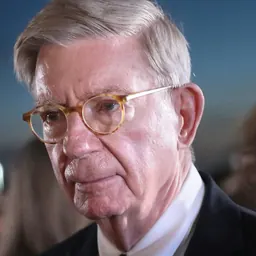
Throughout his academic work, he became friends with several other notable individuals, including the owner of the Bismarck seed company George Will, the "Flower Lady of North Dakota" Fannie Mahood Heath, and fellow researcher from Canada W. Russ Leslie.
Don’t just read it —
keep it.
Full-length biographies made to live with: read them, listen on the way to work, watch them tonight.
- E-book
- Audio
- Video
Instant download · yours to keep · every purchase keeps this site free
Important facts
People in A. F. Yeager's life
Named in this biography and alive at the same time
Related people
Same field, nearest in time


Contemporaries
People whose lives overlapped A. F. Yeager's



Frequently asked questions
Who was A. F. Yeager?
American horticulturalist
When was A. F. Yeager born?
A. F. Yeager was born in 1892.
When did A. F. Yeager die?
A. F. Yeager died on 4 November 1961.
What was A. F. Yeager's occupation?
A. F. Yeager was a horticulturist.
Sources & further reading
Cite this page
APA: Biography.guide. (2026). A. F. Yeager. https://biography.guide/a-f-yeager/
MLA: "A. F. Yeager." Biography.guide, https://biography.guide/a-f-yeager/.
Chicago: "A. F. Yeager." Biography.guide. https://biography.guide/a-f-yeager/.
Data last updated: 2026-09-20 · Spot an error? Report a correction.
Page generated 2026-09-27 04:59 UTC