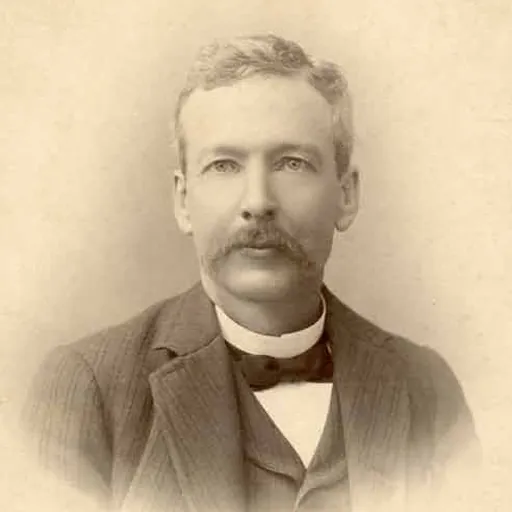
About Luther Burbank
Lived 1849 – 1926 (aged 77). Luther Burbank was an American horticulturist, geneticist, botanist, gardener, academic and non-fiction writer.
Luther Burbank (March 7, 1849 – April 11, 1926) was an American botanist, horticulturist, and pioneer in agricultural science who developed more than 800 strains and varieties of plants over his 55-year career. Burbank primarily worked with fruits, flowers, grains, grasses, and vegetables. He developed (but did not create) a spineless cactus (useful for cattle-feed) and the plumcot.
Burbank's most successful strains and varieties included the Shasta daisy, the fire poppy (note possible confusion with the California wildflower, Papaver californicum, which is also called a "fire poppy"), the "July Elberta" peach, the "Santa Rosa" plum, the "Flaming Gold" nectarine, the "Wickson" plum (named after the agronomist Edward J. Wickson), the freestone peach, and the white blackberry.
A natural genetic variant of the Burbank potato with russet-colored skin later became known as the russet Burbank potato. This large, brown-skinned, white-fleshed potato has become the world's predominant potato in food processing. The Russet Burbank potato originated to help with the devastating situation in Ireland following the Great Famine of 1845-1852. This particular potato variety was developed by Burbank and exported to Ireland to "revive that country's leading crop" as it is slightly late-blight-resistant. (Late blight is a disease that spread and destroyed potatoes all across Europe, but caused extreme chaos in Ireland due to the Irish population's high dependency on potatoes as a crop. )
Life and work Born in Lancaster, Massachusetts, Burbank grew up on a farm and received only a high school education in Lancaster County Academy. The thirteenth of fifteen children, he enjoyed the plants in his mother's large garden. His father died when he was 18 years old, and Burbank used his inheritance to buy a 17-acre (69,000 m2) plot of land near Lunenburg center. There, he developed the Burbank potato. Burbank sold the rights to the Burbank potato for $150 ($ in dollars) and used the money to travel to Santa Rosa, California, in 1875. Later, a natural vegetative sport (that is, an aberrant growth that can be reproduced reliably in cultivation) of Burbank potato with russetted skin was selected and named Russet Burbank potato. Today, the Russet Burbank potato is the most widely cultivated potato in the United States. The potato is popular because it doesn't expire as easily as other types of potatoes. A large percentage of McDonald's french fries are made from this cultivar.
In Santa Rosa, Burbank purchased a plot of land, and established a greenhouse, nursery, and experimental fields that he used to conduct crossbreeding experiments on plants, inspired by Charles Darwin's The Variation of Animals and Plants Under Domestication. (This site is now open to the public as a city park, Luther Burbank Home and Gardens.) Later he purchased an plot of land in the nearby town of Sebastopol, called Gold Ridge Farm.
Burbank became known through his plant catalogs, the most famous being 1893's "New Creations in Fruits and Flowers," and through the word of mouth of satisfied customers, as well as press reports that kept him in the news throughout the first decade of the century.
In that same year, Stark Bro's Nurseries & Orchards Co. discovered the 'Delicious' apple, an elongated fruit with five bumps on the calyx end. The oddly-shaped apple attracted the attention of Burbank, a famed grafter and budder of trees, plants and flowers. He called the new 'Delicious' variety "the finest-flavored apple in all the world." It was also in 1893 that the Starks began their storied cooperation with Luther Burbank and his fantastic new varieties of fruits.
Among those with the foresight to recognize the possibilities of Burbank's work was Clarence McDowell Stark, who went to California and sought Burbank out. After talking to him in Santa Rosa and seeing the results of his experiments, Clarence was convinced that Burbank was right, and his professorial critics were wrong. To Clarence's great dismay, he saw that Luther Burbank was operating a small seed and nursery business in an attempt to finance his experiments and provide himself a living. It was clear that he would never be able to realize his potential under these meager circumstances.
Clarence said to Burbank: "I don't think you will ever make a real success in the nursery business because your heart is not in it. But if you will carry forward the type of hybridizing you are doing, I think you will go very far in your chosen field. To demonstrate our sincere belief in your work, our company will give you $9,000 if you will let me pick three of these new fruits you have shown me." Along with Clarence's $9,000 worth of help, Luther also had something of a fan club – The Luther Burbank Society. The group took it upon themselves to publish his discoveries and manage his business affairs, affording him some additional means by which to live.
From 1904 through 1909, Burbank received several grants from the Carnegie Institution to support his ongoing research on hybridization. He was supported by the practical-minded Andrew Carnegie himself, over those of his advisers who objected that Burbank was not "scientific" in his methods. Paul Stark Sr. pays his respects at Luther Burbank's gravesite
Gastrointestinal complications and violent hiccups weakened Luther in the last two weeks before his death, which was ultimately caused by heart failure. At his bedside were Elizabeth (his wife) and his sister when he died on April 11, 1926. The famous botanist was buried in an unmarked grave, under a giant Cedar of Lebanon at the Luther Burbank Home and Gardens in Santa Rosa, California. The tree in the photo no longer stands.
As Burbank's life drew to a close, the question arose as to who would carry on his work, and naturally there were many interested in doing so. Before his death in April 1926, Luther Burbank spoke quietly to his wife, and said:
"If anything happens to me, you will have to dispose of the business and the work, because you can't go on with it. There aren't a dozen organizations in the world that are equipped to go forward with it; of them all, there is really only one I think of that could make the most of it."
He named Stark Bro's Nurseries & Orchards Co. to carry on the work. Considerable argument has been spent upon whether the plants were technically willed to Stark Bro's; they were not. He left everything to Elizabeth: money, personal property, real estate, dozens of municipal utility bonds — and the plants and precious seeds.
Fruits
Grains, grasses, forage 9 types
Vegetables 26 types
Ornamentals 91 types
On paper his method seems simple, but in practice it was extremely difficult. Most of the time, he would grow 10,000 or more plants of one variety, from which he selected as many as 50 seedlings or as few as one. From the selected plant or plants, he grew another 10,000 seedlings, continuing selective process until he produced the results he wanted. When he started his work, chestnut trees took 25 years to bear fruit. From his efforts, chestnut trees produced fruit after three years. A white blackberry so clear that one could see the seeds inside, a juicy and large plum which is still considered one of the finest in the world, a spineless cactus, and a calla lily with fragrant odor were among his many creations.
Publications
Burbank was criticized by scientists of his day because he did not keep the kind of careful records that are the norm in scientific research and because he was mainly interested in creating useful or targeted cultivars rather than in the basic research of understanding their biology or the mechanisms by which his artificial selection schemes achieved their results. Purdue University professor Jules Janick, writing in the 2004 World Book Encyclopedia, says: "Burbank cannot be considered a scientist in the academic sense."
Although Burbank may not have been a scientist by the standards of his peers, his lack of record keeping reflected the difficulties of developing and distributing cultivars in the era in which he lived. His innovations were revolutionary, and in a time when there was no way to legally protect one's inventions, Burbank may have been cautious with the successes he decided to document. Additionally, his records may not have been coherent (to the chagrin of modern scholars) because he felt his time was better valued in the garden, not writing each trial and error down in his record book.
In 1893, Burbank published a descriptive catalog of some of his best varieties, entitled New Creations in Fruits and Flowers.
In 1907, Burbank published an "essay on childrearing", called The Training of the Human Plant. In it, he advocated improved treatment of children, cultural homogenization and replacement in education, and management of reproduction and development in both a eugenic and euthenic manner, though he does not directly reference either. His support for eugenic methods is couched in his horticultural methodology and he makes direct analogies between the two, comparing the population of the United States to a massive outcrossing experiment:
During his career, Burbank wrote and co-wrote several books on his methods and results, including his eight-volume How Plants Are Trained to Work for Man (1921), Harvest of the Years (with Wilbur Hall, 1927), Partner of Nature (1939), and the 12-volume Luther Burbank: His Methods and Discoveries and Their Practical Application.
Methodology Burbank experimented with a variety of techniques such as grafting, hybridization, and cross-breeding.
Intraspecific breeding Intraspecific hybridization within a plant species was demonstrated by Charles Darwin and Gregor Mendel and was further developed by geneticists and plant breeders.
In 1908, George Harrison Shull described heterosis, also known as hybrid vigor. Heterosis describes the tendency of the progeny of a specific cross to outperform both parents. The detection of the usefulness of heterosis for plant breeding has led to the development of inbred lines that reveal a heterotic yield advantage when they are crossed. Maize was the first species where heterosis was widely used to produce hybrids.
By the 1920s, statistical methods were developed to analyze gene action and distinguish heritable variation from variation caused by environment. In 1933, another important breeding technique, cytoplasmic male sterility (CMS), developed in maize, was described by Marcus Morton Rhoades. CMS is a maternally inherited trait that makes the plant produce sterile pollen. This enables the production of hybrids without the need for labor-intensive detasseling.
These early breeding techniques resulted in large yield increase in the United States in the early 20th century. Similar yield increases were not produced elsewhere until after World War II. The Green Revolution increased crop production in the developing world in the 1960s.
Eugenics
Along with breeding plants, Burbank believed human beings should be selectively bred, and he was active in the American eugenics movement and wrote in publications of the American Breeders' Association as an honorary member. He was also elected to the ABA's Committee on Eugenics in 1906. He was very interested in education and gave money to the local schools.
He married twice: to Helen Coleman in 1890, which ended in divorce in 1896; and to Elizabeth Waters in 1916. He had no children of his own but did adopt a daughter.
In a speech given to the First Congregational church of San Francisco in 1926, Burbank said:
Luther Burbank was highly revered throughout the United States of America. In September 1905 a group of California's most influential businessmen, intellectuals, and politicians gathered at a banquet thrown in honor of Luther Burbank by the State Board of Trade. Many people spoke about Burbank, such as Senator Perkins who stated that Burbank could teach the government valuable lessons, and that "he is doing more to instruct, interest, and make popular the work in the garden than any man of his generation."
At the same convention, Albert G. Burnett, a judge of the Superior Court for Sonoma County stated that Burbank had improved the community incredibly making it a place that people came "to sit at the feet of this great apostle and prophet of beauty and happiness ... and catch some measure of his matchless inspiration." He also stated that Burbank's deeds were always done to "bring more of the sunshine of comfort and happiness into the cottages of the poor as well as the palaces of the rich." He caused a great deal of public controversy a few months before his death in 1926 when he answered questions about his deepest beliefs by a reporter from the San Francisco Bulletin with the following statement:
I am an infidel today. I do not believe what has been served to me to believe. I am a doubter, a questioner, a skeptic. When it can be proved to me that there is immortality, that there is resurrection beyond the gates of death, then will I believe. Until then, no.
Death In mid-March 1926, Burbank suffered a heart attack and became ill with gastrointestinal complications. He died on April 11, 1926, aged 77, and is buried near the greenhouse at the Luther Burbank Home and Gardens. The honor guard at his funeral included San Francisco mayor James Rolph, Santa Rosa mayor Charles O. Dunbar, and former Stanford University Chancellor David Starr Jordan. An address at the Memorial Service was given by Judge Ben Lindsey.
In 1940, the U.S. Postal Service issued a 3-cent stamp honoring Burbank.
In 1986, Burbank was inducted into the National Inventors Hall of Fame. The Luther Burbank Home and Gardens, in downtown Santa Rosa, are now designated as a National Historic Landmark. Luther Burbank's Gold Ridge Experiment Farm is listed in the National Register of Historic Places a few miles west of Santa Rosa in the town of Sebastopol, California.
The home that Luther Burbank was born in, as well as his California garden office, were moved by Henry Ford to Dearborn, Michigan, and are part of Greenfield Village.
Several places and institutions are named for Luther Burbank. They include: Luther Burbank Center for the Arts, a large facility in Santa Rosa, California Luther Burbank High School in Sacramento, California Luther Burbank High School in San Antonio, Texas The Luther Burbank School District in San Jose, California Luther Burbank Middle School in Lancaster, Massachusetts Luther Burbank Middle School in the Los Angeles neighborhood of Highland Park, California Luther Burbank Middle School in Burbank, California Luther Burbank Elementary School in Milwaukee, Wisconsin Luther Burbank Elementary School in Santa Rosa, California Luther Burbank Elementary School in Burbank, Illinois Luther Burbank Elementary School in Long Beach, California Luther Burbank Elementary School in Merced, California Burbank Elementary School in Modesto, California Luther Burbank Park in Mercer Island, Washington Burbank Elementary School in Artesia, California The census-designated place Burbank, Washington The census-designated place Burbank, Santa Clara County, CA The census-designated place Burbank, Illinois The census-designated place Burbank, Alabama Luther Burbank Savings, Santa Rosa-based financial institution Plant species named after Luther Burbank Canna 'Burbank' Chrysanthemum burbankii Makino (Asteraceae) Myrica × burbankii A.Chev. (Myricaceae) Solanum × burbankii (Solanum retroflexum) (Solanaceae)
Don’t just read it —
keep it.
Full-length biographies made to live with: read them, listen on the way to work, watch them tonight.
- E-book
- Audio
- Video
Instant download · yours to keep · every purchase keeps this site free
Important facts
People in Luther Burbank's life
Named in this biography and alive at the same time

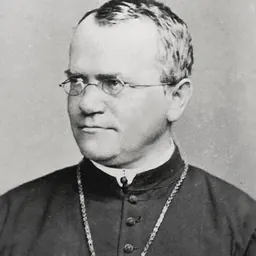

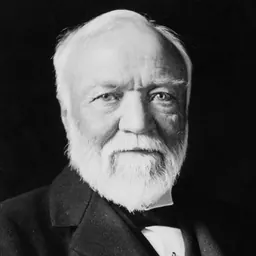


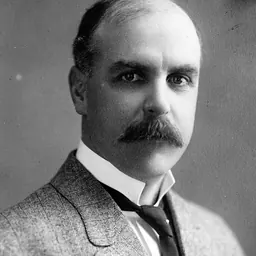

Related people
Same field, nearest in time

Contemporaries
People whose lives overlapped Luther Burbank's



Frequently asked questions
Who was Luther Burbank?
American botanist and horticulturist (1849–1926)
When was Luther Burbank born?
Luther Burbank was born on 7 March 1849 in Lancaster.
When did Luther Burbank die?
Luther Burbank died on 11 April 1926 in Santa Rosa.
What was Luther Burbank's occupation?
Luther Burbank was a horticulturist, geneticist, botanist, gardener, academic and non-fiction writer.
What nationality was Luther Burbank?
Luther Burbank was American.
Sources & further reading
Cite this page
APA: Biography.guide. (2026). Luther Burbank. https://biography.guide/luther-burbank/
MLA: "Luther Burbank." Biography.guide, https://biography.guide/luther-burbank/.
Chicago: "Luther Burbank." Biography.guide. https://biography.guide/luther-burbank/.
Data last updated: 2026-09-21 · Spot an error? Report a correction.
Portrait: Wikimedia Commons · author & licence
Page generated 2026-09-27 05:00 UTC