
A. Bartlett Giamatti
American baseball commissioner
About A. Bartlett Giamatti
Lived 1938 – 1989 (aged 51). A. Bartlett Giamatti was an American university teacher, sports executive, dantist, major League Baseball, national League and yale University.
Angelo Bartlett "Bart" Giamatti ( ; April 4, 1938 – September 1, 1989) was an American professor of English Renaissance literature, the president of Yale University, and the seventh commissioner of Major League Baseball.
Giamatti served as Commissioner for only five months before dying suddenly of a heart attack. He is the shortest-tenured baseball commissioner in the sport's history and the only holder of the office not to preside over a full Major League Baseball season. Giamatti's most notable act as Commissioner was to negotiate the agreement resolving the Pete Rose betting scandal in which Rose was permitted to voluntarily withdraw from the sport to avoid further punishment.
Personal life Giamatti was born in Boston and grew up in South Hadley, Massachusetts, the son of Mary Claybaugh Walton (Smith College, 1935) and Valentine John Giamatti. His father was professor and chairman of the Department of Italian Language and Literature at Mount Holyoke College. Giamatti's paternal grandparents were Italian immigrants Angelo Giammattei and Maria Lavorgna : his grandfather Angelo emigrated to the United States from Telese, near Benevento, Italy, around 1900. Giamatti's maternal grandparents, from Wakefield, Massachusetts, were Helen Buffum (Davidson) and Bartlett Walton, who graduated from Phillips Academy Andover and Harvard College. a senior secret society. He graduated magna cum laude in 1960. Together the couple had three children: actors Paul and Marcus and jewelry designer Elena.
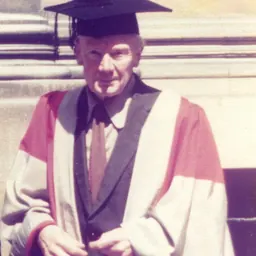
Yale Giamatti stayed in New Haven to receive his doctorate in 1964, when he also published a volume of essays by Thomas G. Bergin he had co-edited with a philosophy graduate student, T. K. Seung. He became a professor of comparative literature at Yale University, an author, and master of Ezra Stiles College at Yale, a post to which he was appointed by his predecessor as Yale president, Kingman Brewster Jr. He was the youngest president of the university in its history and presided over the university during a bitter strike by its clerical and technical workers in 1984–1985. As university president, he refused student, faculty, and community demands to divest from apartheid South Africa. Giamatti prohibited students from playing Bladderball on campus after years of increasingly strange pranks and several student hospitalizations in 1982. He also served on the board of trustees of Mount Holyoke College for many years. Giamatti was elected a fellow of the American Academy of Arts and Sciences in 1980 and a member of the American Philosophical Society in 1982.
Baseball In 1989, Giamatti declined to reinstate Shoeless Joe Jackson because the case was "now best given to historical analysis and debate as opposed to a present-day review with an eye to reinstatement". Giamatti had a lifelong interest in baseball and was a noted Boston Red Sox fan. In 1978, when he was first rumored to be a candidate for the presidency of Yale, he had deflected questions by observing that "The only thing I ever wanted to be president of was the American League." He also wrote several noteworthy essays about baseball, including "The Green Fields of the Mind", published in the Yale Alumni Magazine in November 1977; "Tom Seaver's Farewell", published in Harper's Magazine in September 1977; and "Baseball and the American Character," published in Harper's in October 1986.
Giamatti was named president of the National League in . During his stint in that position, he placed an emphasis on the need to improve the environment for the fan in the ballparks. He also decided to make umpires strictly enforce the balk rule and cited affirmative action as a remedy for the lack of minority managers, coaches, or executives in the major leagues.
While still serving as National League president, Giamatti suspended Pete Rose for 30 games after Rose shoved umpire Dave Pallone on April 30, 1988. Later that year, Giamatti also suspended Los Angeles Dodgers pitcher Jay Howell for three days, after Howell was caught using pine tar during the National League Championship Series.
Giamatti, whose tough dealing with Yale's union favorably impressed Major League Baseball owners, was unanimously elected to succeed Peter Ueberroth as commissioner on September 8. He formally took office on April 1. Determined to maintain the integrity of the game, on August 24, 1989, Giamatti prevailed upon Pete Rose to agree voluntarily to remain permanently ineligible to play baseball. He was interred at Grove Street Cemetery in New Haven, Connecticut. He became the second baseball commissioner to die in office, the first being Kenesaw Mountain Landis in 1944.
Fay Vincent, Giamatti's close friend and baseball's first deputy commissioner, became acting commissioner upon Giamatti's death, and was quickly elected by MLB owners to succeed Giamatti as the new commissioner. On October 14, 1989, before Game 1 at the World Series, Giamatti—to whom this World Series was dedicated—was memorialized with a moment of silence. Son Marcus Giamatti threw out the first pitch before the game. One of the three awards given annually by Major League Baseball's Baseball Assistance Program is named the "Bart Giamatti Award".
Giamatti was inducted into the National Italian American Sports Hall of Fame in 1992.
James Reston Jr. notes in his book Collision at Home Plate: The Lives of Pete Rose and Bart Giamatti that Giamatti suffered from Charcot-Marie-Tooth disease, an inherited neuromuscular disease affecting peripheral nerves.
Neil Thomas Proto argues in his book Fearless: A. Bartlett Giamatti and the Battle for Fairness that Giamatti's early life with his parents and family in New Haven established the code of conduct about fairness that tempered his decision about Pete Rose. Proto also states that as president of Yale, Giamatti was a consequential force in changing Yale's once-harmful relationship with New Haven; in reintroducing Sterling Scholarships for New Haven high school students, which had been discontinued by his predecessors; in challenging the eugenics culture at Yale, which had spread nationally and affected Yale's view of urban renewal; and in challenging an admissions system that excluded applicants on the basis of race and religion. According to Proto, Giamatti believed the university's duty was to educate students in the civic responsibility of good citizenship, not the elitist imperative of creating "leaders."
The research library at the National Baseball Hall of Fame and Museum is named in his honor.
Works Master Pieces from the Files of T.G.B., ed. Thomas K. Swing and A. Bartlett Giamatti (1964). The Earthly Paradise and the Renaissance Epic (1966) Play of Double Senses: Spenser's Faerie Queene (1975) The University and the Public Interest (1981) Exile and Change in Renaissance Literature (1984) Take Time for Paradise: Americans and their Games (1989) A Free and Ordered Space: The Real World of the University (1990) A Great and Glorious Game: Baseball Writings of A. Bartlett Giamatti (ed. Kenneth Robson, 1998)
Don’t just read it —
keep it.
Full-length biographies made to live with: read them, listen on the way to work, watch them tonight.
- E-book
- Audio
- Video
Instant download · yours to keep · every purchase keeps this site free
Important facts
Family & relationships
People in A. Bartlett Giamatti's life
Named in this biography and alive at the same time


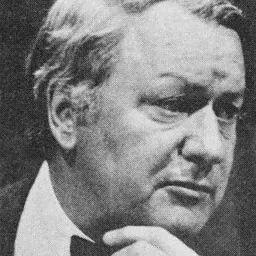



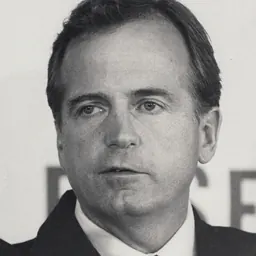
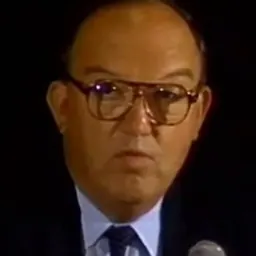
Related people
Same field, nearest in time




Contemporaries
People whose lives overlapped A. Bartlett Giamatti's


Frequently asked questions
Who was A. Bartlett Giamatti?
American baseball commissioner (1938–1989)
When was A. Bartlett Giamatti born?
A. Bartlett Giamatti was born on 4 April 1938 in Boston.
When did A. Bartlett Giamatti die?
A. Bartlett Giamatti died on 1 September 1989 in Oak Bluffs.
What was A. Bartlett Giamatti's occupation?
A. Bartlett Giamatti was a university teacher, sports executive, dantist, major League Baseball, national League and yale University.
What nationality was A. Bartlett Giamatti?
A. Bartlett Giamatti was American.
Sources & further reading
· Wikipedia: A. Bartlett Giamatti
· DBpedia: A. Bartlett Giamatti
Cite this page
APA: Biography.guide. (2026). A. Bartlett Giamatti. https://biography.guide/a-bartlett-giamatti/
MLA: "A. Bartlett Giamatti." Biography.guide, https://biography.guide/a-bartlett-giamatti/.
Chicago: "A. Bartlett Giamatti." Biography.guide. https://biography.guide/a-bartlett-giamatti/.
Data last updated: 2026-09-20 · Spot an error? Report a correction.
Page generated 2026-09-27 05:05 UTC