
About Zsigmond Móricz
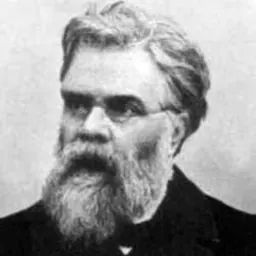
Lived 1879 – 1942 (aged 63). Zsigmond Móricz was a Hungarian writer, journalist, playwright, children's writer and editing staff.
Zsigmond Móricz (; 29 June 1879, Tiszacsécse – 4 September 1942) was a major Hungarian novelist and Social Realist.
Biography
Zsigmond Móricz was born in Tiszacsécse in 1879 to Bálint Móricz and Erzsébet . On his mother's side, he came from an impoverished but ancient noble family while his father was the descendant of serfs. He studied at the Debrecen Reformed Theological University (1891–1893), Sárospataki Kollégium (1894–1896), and in Kisújszállás and Szakoly (1896–1898). In 1899, he enrolled at the Debrecen Reformed Theological University to study theology, but transferred into law after only six months.
In 1903, he began to work as a journalist at the newspaper Az Újság, remaining there until 1909.
During the revolutionary government after World War I, he was vice president of the Vörösmarty Academy. After its fall, his plays were not performed in the National Theater, and his work was published only in Nyugat and Az Est. At the end of 1929, he became the prose editor for Nyugat.
In 1905, Moricz married Eugénia Holics. Suffering from depression, she committed suicide in 1925. He married for a second time in 1926 to .
His novels express the lives of the Hungarian peasantry and dealt with issues of poverty.
Works Kivilágos kivirradtig (Until the Small Hours of Morning) (1924) Légy jó mindhalálig (Be Faithful Unto Death) (1920), a classic of Hungarian literature. It is the story from the viewpoint of an 11-year-old boy at a boarding school in Debrecen. Úri muri (Very Merry) (1928) Rokonok (Relatives) (1932) Hét krajcár (Seven Pennies and Other Short Stories) (1907) Az ezüstkirály sípja. Iromba J (Silver King's Flute; Broody Jankó) Sárarany (Gold in the Mud: A Hungarian Peasant Novel) (1911) Az Isten háta mögött (In the Godforsaken Hinterlands: A Tale of Provincial Hungary) (1911) Árvácska (Orphalina) (1941) Film adaptations Be True Until Death (1936) Be True Until Death (1960)
Criticism
The Novels of Zsigmond Móricz in the Context of European Realism: A Thematic Approach (by Virginia L. Lewis) (2023)
Legacy Móricz Zsigmond körtér in Budapest is named after him, as is its metro station. Móricz Zsigmond Gimnázium in Budapest is named after him.
Don’t just read it —
keep it.
Full-length biographies made to live with: read them, listen on the way to work, watch them tonight.
- E-book
- Audio
- Video
Instant download · yours to keep · every purchase keeps this site free
Important facts
People in Zsigmond Móricz's life
Named in this biography and alive at the same time
Related people
Same field, nearest in time




Contemporaries
People whose lives overlapped Zsigmond Móricz's



Frequently asked questions
Who was Zsigmond Móricz?
Hungarian writer (1879-1942)
When was Zsigmond Móricz born?
Zsigmond Móricz was born on 29 June 1879 in Tiszacsécse.
When did Zsigmond Móricz die?
Zsigmond Móricz died on 4 September 1942 in Budapest.
What was Zsigmond Móricz's occupation?
Zsigmond Móricz was a writer, journalist, playwright, children's writer and editing staff.
What nationality was Zsigmond Móricz?
Zsigmond Móricz was Hungarian.
Sources & further reading
Cite this page
APA: Biography.guide. (2026). Zsigmond Móricz. https://biography.guide/zsigmond-moricz/
MLA: "Zsigmond Móricz." Biography.guide, https://biography.guide/zsigmond-moricz/.
Chicago: "Zsigmond Móricz." Biography.guide. https://biography.guide/zsigmond-moricz/.
Data last updated: 2026-09-27 · Spot an error? Report a correction.
Page generated 2026-09-27 05:17 UTC