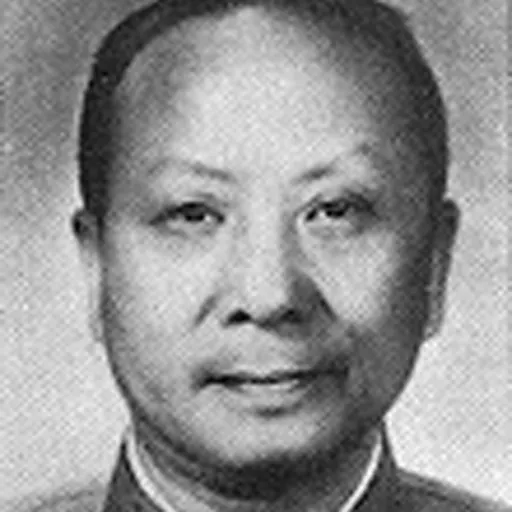
About Zhu Xi
Lived 1900 – 1962 (aged 61). Zhu Xi was a Chinese biologist and politician.
Zhu Xi (; 1900 ), born Zhu Yongchang, courtesy name Yu Wen, was a Chinese biologist, anarchist and a pioneer of cell biology and experimental embryology in the People's Republic of China. He was a public opponent of the Eliminate Sparrows campaign in the 1950s, for which his grave was desecrated during the Cultural Revolution.
Biography Zhu Xi was born in 1900 to a farming family in the village of Dianqian , Linhai, Taizhou, Zhejiang Province. He began his studies at a private school at the age of eight. In 1915, he entered Huipu Higher Primary School, where he was elected chairman of the student council and head of the public welfare department. In June 1918, he graduated second in his class from the fourth graduating class of Huipu Higher Primary School. In the autumn of 1918, he entered Zhejiang Provincial Sixth Middle School (the predecessor of today's Taizhou Middle School). In the early summer of 1919, the May Fourth Movement broke out. Nineteen-year-old Zhu Xi participated by inciting student unrest and advocating for a strike, for which he was subsequently expelled.
Upon learning that Cai Yuanpei, Li Shizeng, and other anarchists were recruiting young people in Shanghai to study in Europe as part of the Work-Study Movement, Zhu Xi traveled from Linhai to Shanghai. In Shanghai, he worked as a typesetter at The Commercial Press for a year, and met Wu Zhihui and other influential Chinese anarchists of the period. He went to France for work-study in the summer of 1920.
In France, he became fascinated by anarchism, which would have a lifelong influence on him, and visited French anarchist leader Jean Grave in 1923. He was an apprentice and worker in several factories, working during the day and studying French and other subjects at night. In the winter of 1925, he was admitted to the Department of Biology at the University of Montpellier in Paris, where he studied under Eugène Bataillon, a French embryologist. The two of them conducted research on parthenogenesis in frogs. In 1931, Zhu Xi passed the examination of the French Academy of Sciences and received his French doctoral degree, with his academic paper "Cellular Research on Hybridization of Tailless Animals".
In early 1935, Zhu left Sun Yat-sen University after accepting a position as a research fellow at the Institute of Zoology of . From 1935 to 1937, Zhu Xi worked at the Institute of Zoology while serving as a professor at the . In 1937, at the suggestion of Li Shizeng, director of the Beiping Research Institute, Zhu founded the Shanghai Institute of Biology, serving as both research fellow and director. After the Battle of Shanghai broke out later that year, Zhu found himself in difficult circumstances. His laboratory work was forced to stop, and his source of income was almost cut off. He stayed with friends and continued to write.
In 1942, following the outbreak of the Pacific War, Zhu was forced to return to his hometown of Linhai, where he founded the Linshan Agricultural School. From 1942 to 1945, he served as both principal and teacher there.
In 1945, following the victory of the War of Resistance Against Japan, Zhu Xi returned to Shanghai, serving as a researcher and director at the Shanghai Institute of Biology, and as a researcher and director at the Institute of Physiology of . Shortly afterward, at the invitation of Luo Zongluo, president of National Taiwan University, he concurrently served as professor and head of the Department of Zoology at National Taiwan University. In 1961, he enabled artificially produced parthenogenetic female toads to mate with male toads and successfully produce offspring, demonstrating that higher animals engaging in parthenogenesis still retained hereditary capacity. His research on mixed-sperm hybridization in domesticated silkworms revealed that supernumerary sperm from different breeds could influence the genetic traits of the offspring.
Don’t just read it —
keep it.
Full-length biographies made to live with: read them, listen on the way to work, watch them tonight.
- E-book
- Audio
- Video
Instant download · yours to keep · every purchase keeps this site free
Important facts
People in Zhu Xi's life
Named in this biography and alive at the same time


Related people
Same field, nearest in time




Contemporaries
People whose lives overlapped Zhu Xi's


Frequently asked questions
Who was Zhu Xi?
Chinese cytologist (1900–1962)
When was Zhu Xi born?
Zhu Xi was born on 13 September 1900.
When did Zhu Xi die?
Zhu Xi died on 24 July 1962 in Shanghai.
What was Zhu Xi's occupation?
Zhu Xi was a biologist and politician.
What nationality was Zhu Xi?
Zhu Xi was Chinese.
Sources & further reading
Cite this page
APA: Biography.guide. (2026). Zhu Xi. https://biography.guide/zhu-xi-biologist/
MLA: "Zhu Xi." Biography.guide, https://biography.guide/zhu-xi-biologist/.
Chicago: "Zhu Xi." Biography.guide. https://biography.guide/zhu-xi-biologist/.
Data last updated: 2026-09-22 · Spot an error? Report a correction.
Portrait: Wikimedia Commons · author & licence
Page generated 2026-09-27 05:02 UTC