
About Zhou Xinmin
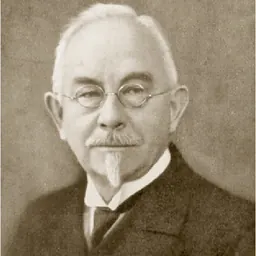
Lived 1897 – 1979 (aged 81–82). Zhou Xinmin was a Chinese politician and jurist.
Zhou Xinmin (; March 14, 1897 – October 1979), originally named Zhou Jun , courtesy name Zhenfei, was a Chinese politician, legal scholar, and democratic activist from Lujiang, Anhui. He participated in the May Fourth Movement in his youth and joined the Chinese Communist Party in 1926. Zhou was active in the revolutionary and anti-Japanese movements of the 20th century and later held several government and academic posts in the People's Republic of China, including secretary-general of the Chinese People's Political Consultative Conference, deputy director of the General Office of the State Council, secretary-general of the Supreme People's Procuratorate, vice mayor of Shenyang, and deputy director of the Institute of Law, Chinese Academy of Sciences. He was also a member of the Standing Committee of the China Democratic League.
Biography
Zhou Xinmin was born on March 14, 1897, in Lujiang County, Anhui, into a poor farming family near Dai'ao Mountain in Leqiao Town. From 1918 to 1921, he studied at the Anhui School of Law and Politics, graduating with excellent academic results. He later continued his legal studies in Japan at Meiji University between 1922 and 1924. After returning to China, he taught civil law at the Anhui School of Law and Politics while also serving as a student affairs supervisor.
During the First United Front between the Kuomintang and the Chinese Communist Party, Zhou joined the Communist Party in 1926 while also working within the Kuomintang organization. He served as a standing committee member of the Kuomintang Anqing municipal party headquarters and later as a standing committee member and secretary-general of the Kuomintang Anhui provincial party headquarters. In this capacity he supported Sun Yat-sen's Three Principles policy of “alliance with the Soviet Union, cooperation with the Communists, and assistance to workers and peasants,” endorsed the Northern Expedition, and opposed the right-wing faction within the Kuomintang. During this period he confronted Chiang Kai-shek directly in political disputes in Anqing.
After 1928, Zhou returned to his native Lujiang County under party instructions, where he helped organize early Communist Party activities and guide local revolutionary work. Between 1929 and 1936 he taught civil law at several institutions, including the Fudan University, the Shanghai Law and Politics College, and other higher education institutions. In 1935, following the outbreak of the December 9th Movement, Zhou actively participated in the nationwide anti-Japanese patriotic movement. He became one of the initiators of the Shanghai Cultural Circles National Salvation Association and helped organize the broader National Salvation Movement among intellectuals.
During the Second Sino-Japanese War, Zhou continued his political and academic work. In 1938 he served as a member of the Anhui People's Mobilization Committee and deputy head of its Organization Department, working to unite progressive forces and establish local mobilization organizations across the province. In 1942 he joined the China Democratic League in Chongqing as a representative of the National Salvation Association. He later helped establish the first local branch of the League in Kunming together with Luo Longji and served as an organizational leader. From 1943 to 1945 he taught civil law at Yunnan University. In 1944 he was elected to the central executive committee of the China Democratic League.
After the end of the war, Zhou continued to advocate for peace and democratic reforms while opposing civil war and political dictatorship. When the China Democratic League was forced to dissolve in 1947 under political pressure, he moved secretly to Hong Kong. In January 1948 he participated in the Third Plenary Session of the League's First Central Committee and served as acting head of its secretariat.
In 1949 Zhou was among the representatives of the China Democratic League who participated in the preparatory meetings for the establishment of the Chinese People's Political Consultative Conference. He attended the First Plenary Session of the Chinese People's Political Consultative Conference in September 1949.
After the founding of the People's Republic of China, Zhou held several important administrative and legal posts. He served as secretary-general of the Chinese People's Political Consultative Conference, deputy director of the General Office of the State Council, and secretary-general of the Supreme People's Procuratorate between 1951 and 1954, during which he participated in drafting the Organizational Law of the People's Procuratorates. He was also a member of the Legislative Affairs Committee of the National People's Congress. Later he served as vice mayor of Shenyang.
In 1958 Zhou moved to the Chinese Academy of Sciences, where he worked with Zhang Youyu to establish the Institute of Law, Chinese Academy of Sciences, the first major legal research institution in the People's Republic of China, and served as its deputy director. During his career he was elected a deputy to the First and Second National People's Congress and served as a member of the National Committee of the Chinese People's Political Consultative Conference from the first through the fifth terms.
Zhou Xinmin died in October 1979.
Don’t just read it —
keep it.
Full-length biographies made to live with: read them, listen on the way to work, watch them tonight.
- E-book
- Audio
- Video
Instant download · yours to keep · every purchase keeps this site free
Important facts
People in Zhou Xinmin's life
Named in this biography and alive at the same time


Related people
Same field, nearest in time






Contemporaries
People whose lives overlapped Zhou Xinmin's


Frequently asked questions
Who was Zhou Xinmin?
Chinese jurist
When was Zhou Xinmin born?
Zhou Xinmin was born in 1897.
When did Zhou Xinmin die?
Zhou Xinmin died in 1979.
What was Zhou Xinmin's occupation?
Zhou Xinmin was a politician and jurist.
What nationality was Zhou Xinmin?
Zhou Xinmin was Chinese.
Sources & further reading
· DBpedia: Zhou Xinmin (politician, born 1897)
Cite this page
APA: Biography.guide. (2026). Zhou Xinmin. https://biography.guide/zhou-xinmin/
MLA: "Zhou Xinmin." Biography.guide, https://biography.guide/zhou-xinmin/.
Chicago: "Zhou Xinmin." Biography.guide. https://biography.guide/zhou-xinmin/.
Data last updated: 2026-09-20 · Spot an error? Report a correction.
Page generated 2026-09-27 05:22 UTC