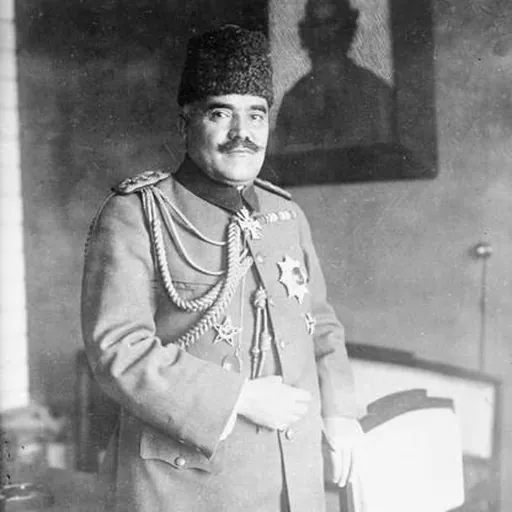
Zeki Kolaç
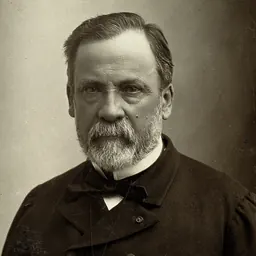
Turkish military officer and statesperson
About Zeki Kolaç
Lived 1862 – 1943 (aged 80–81). Zeki Kolaç was a Turkish and Egyptian military personnel, politician, military officer and mehmed V.
Zeki Pasha (; 1862–1943), was an Ottoman Balkan Wars and World War I field marshal of the Ottoman Army. He was of Circassian descent.
Career He graduated from the Ottoman Military Academy in 1883 and the Staff College in 1887. Zeki Pasha had a direct link with the Palace and was much trusted by the Sultan. As Commander of the IV Corps he was responsible for the tribal Hamidiye cavalry. In 1894, he was decorated for his participation during the Sassoun massacre. During the massacres, he reportedly stated, "not finding any rebellion we cleared the country so none should occur in the future."
In 1912–1913, he was commander of the Vardar Army during the First Balkan War. Following the orders of Nazim Pasha, Chief of Staff of the Ottoman Army, Zeki Pasha initiated the Battle of Kumanovo against Serbia.
His failure to emplace key artillery hindered the forces under his command and led to their defeat at Kumanovo. During the frantic Ottoman retreat from Kumanovo, a disgruntled Ottoman soldier attempted to assassinate him, contributing to the panic. The Vardar Army; consisting of the VII Corps commanded by Fethi Pasha, the VI Corps commanded by Djavid Pasha and the V Corps commanded by Kara Said Pasha, all under Zeki Pasha's command, retreated to Monastir (present day: Bitola) after the defeat at Kumanovo.
Zeki Pasha established a strong defensive position on the Oblakovo heights northwest of Monastir prior to the battle. However, during the Battle of Monastir, Serbian artillery and infantry managed to defeat the Ottomans. Fethi Pasha was among the casualties.
On 21 November 1914, he was assigned the Ottoman liaison officer to Kaiser Wilhelm II and was sent to German Empire. The German General Ludendorff described him as a “noble Ottoman and reliable friend of Germany, an amazingly discreet and good advocate of his army.” He led the Ottoman delegation that signed the armistice with Russia on 15 December 1917. After the armistice, he returned to Constantinople and served as the Ottoman Chief of General Staff between 23 October 1920 and 1 November 1922. He retired from the army in 1923 and settled in Istanbul.
Don’t just read it —
keep it.
Full-length biographies made to live with: read them, listen on the way to work, watch them tonight.
- E-book
- Audio
- Video
Instant download · yours to keep · every purchase keeps this site free
Important facts
People in Zeki Kolaç's life
Named in this biography and alive at the same time

Related people
Same field, nearest in time




Contemporaries
People whose lives overlapped Zeki Kolaç's





Frequently asked questions
Who was Zeki Kolaç?
Turkish military officer and statesperson (1862–1943)
When was Zeki Kolaç born?
Zeki Kolaç was born in 1862 in Aleppo.
When did Zeki Kolaç die?
Zeki Kolaç died in 1943 in Istanbul.
What was Zeki Kolaç's occupation?
Zeki Kolaç was a military personnel, politician, military officer and mehmed V.
What nationality was Zeki Kolaç?
Zeki Kolaç was Turkish and Egyptian.
Sources & further reading
Cite this page
APA: Biography.guide. (2026). Zeki Kolaç. https://biography.guide/zeki-kolac/
MLA: "Zeki Kolaç." Biography.guide, https://biography.guide/zeki-kolac/.
Chicago: "Zeki Kolaç." Biography.guide. https://biography.guide/zeki-kolac/.
Data last updated: 2026-09-22 · Spot an error? Report a correction.
Portrait: Wikimedia Commons · author & licence
Page generated 2026-09-27 05:03 UTC