
About Zeger Bernhard van Espen
Lived 1646 – 1728 (aged 82). Zeger Bernhard van Espen was a Dutch theologian, canon law jurist, lawyer, university teacher, jurist and catholic priest.
Zeger Bernhard van Espen (Espenius) (9 July 1646 at Leuven – 2 October 1728 at Amersfoort, Netherlands) was a Belgian canonist, who supported Gallican theories and was an ardent upholder of secular power against religious authority. Van Espen is generally classed among the ablest writers on ecclesiastical law.
Life He completed his higher studies at old University of Louvain, became priest in 1673, and doctor of civil and canon law in 1675. He soon began to teach canon law at the university where he was obliged to lecture only for six weeks during the summer vacation; the professor might explain one or other important chapter of the decretals, at his choice. He never accepted any other chair at the university, and he resigned even this position in order to devote himself entirely to study.
Espen was a lucid and clarifying expositor of the discipline of the ancient Church. He is accused, not without reason, of having borrowed considerably from the works of his predecessors, notably from Louis Thomassin. He collected the most recent legislative decisions of the Church and discussed them with judgment. He showed with precision the special canon law of Belgium. Pope Benedict XIV recognized his authority in this matter.
The Jansenist quarrels led to Espen's ruin. On being consulted by the Catholics of Holland with regard to the ordination of the Bishop of Utrecht, Cornelius Steenoven, he pronounced in favour of this ordination, which had been performed without the authorization of the Holy See. An attempt has been made to justify Espen's conduct in this matter, on the ground that he merely declared that episcopal ordination performed by a single bishop was valid. This was not the whole question, nor was it indeed the principal question, viz. to determine whether an episcopal ordination, performed without the pope's consent, was admissible.
His action in this matter led to his suspension a divinis by the Bishop of Mechlin. The latter summoned him to make a declaration of orthodox faith. At the order of the civil power, the University of Leuven condemned and deprived Espen of his university functions in 1728.
He was a strenuous defender of the Gallican theories, on the right of religious authority and of the civil power. It may be added, however, that he exalted and combated in turn all power, even the civil power. He exalted the power of the bishops in order to lessen that of the religious orders, and the rights of an extinct chapter in order to combat the powers of the Pope. He gained notoriety in the Jansenist conflicts, by denying the importance of the distinction between right and fact with regard to Cornelius Jansen's doctrine; he declared that it was of little consequence to admit that Jansen taught the propositions, condemned in 1713 by Pope Clement XI in Unigenitus, provided the doctrine itself was rejected. His books were listed on the Index of Prohibited Books.
According to Catholic Encyclopedia, the best edition of was published in Louvain as four volumes in 1753:
A fifth volume was published at Brussels in 1768, and contains biographical details:
Peter-Ben Smit wrote, in Old Catholic and Philippine Independent Ecclesiologies in History, that "the Church of Utrecht used the entirety of the Corpus Juris Canonici," mainly van Espen's Ius Ecclesiasticum Universum and "a considerable body of particular canon law".
Don’t just read it —
keep it.
Full-length biographies made to live with: read them, listen on the way to work, watch them tonight.
- E-book
- Audio
- Video
Instant download · yours to keep · every purchase keeps this site free
Important facts
People in Zeger Bernhard van Espen's life
Named in this biography and alive at the same time
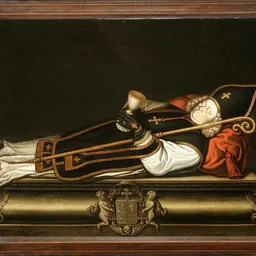
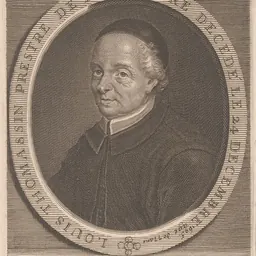
Related people
Same field, nearest in time



Contemporaries
People whose lives overlapped Zeger Bernhard van Espen's



Frequently asked questions
Who was Zeger Bernhard van Espen?
Belgian jurist
When was Zeger Bernhard van Espen born?
Zeger Bernhard van Espen was born on 9 July 1646 in Leuven.
When did Zeger Bernhard van Espen die?
Zeger Bernhard van Espen died on 2 October 1728 in Amersfoort.
What was Zeger Bernhard van Espen's occupation?
Zeger Bernhard van Espen was a theologian, canon law jurist, lawyer, university teacher, jurist and catholic priest.
What nationality was Zeger Bernhard van Espen?
Zeger Bernhard van Espen was Dutch.
Sources & further reading
· Wikipedia: Zeger Bernhard van Espen
· DBpedia: Zeger Bernhard van Espen
Cite this page
APA: Biography.guide. (2026). Zeger Bernhard van Espen. https://biography.guide/zeger-bernhard-van-espen/
MLA: "Zeger Bernhard van Espen." Biography.guide, https://biography.guide/zeger-bernhard-van-espen/.
Chicago: "Zeger Bernhard van Espen." Biography.guide. https://biography.guide/zeger-bernhard-van-espen/.
Data last updated: 2026-09-20 · Spot an error? Report a correction.
Page generated 2026-09-27 05:25 UTC