
About Žanka Stokić
Lived 1887 – 1947 (aged 60). Žanka Stokić was a Serbian film actor and actor.
Živana "Žanka" Stokić (; 24 January 1887 – 21 July 1947) was a Serbian actress.
Though most popular for her work in comedy, she also excelled in dramatic roles. Often referred to as the "Serbian Sarah Bernhardt" and "Great Žanka", she is considered by critics and many of her peers as the greatest Serbian actress of all time.
Early life Born Živana Stokić in Veliko Gradište in eastern Serbia on 24 January 1887, her baker-turned-police-clerk father Bogosav died when Živana was still an infant. Her mother Julka then remarried—to a widower priest Aleksandar "Sanda" Nikolajević—and moved to the village of Rabrovo (modern day municipality of Kučevo). As a result, Rabrovo had been reported as Žanka Stokić's birthplace for decades in the latter part of the 20th century until data discovered during the 1990s showed otherwise. Dorine (Tartuffe by Molière), Madame Sans-Gêne (by Victorien Sardou), Katyusha (Resurrection by Leo Tolstoy), Mrs. Warren (Mrs. Warren's Profession by George Bernard Shaw) and was especially successful as Toinette in Molière's The Imaginary Invalid. In national repertoire she distinguished herself in the roles of Fema (Pokondirena tikva, by Jovan Sterija Popović), Sultanija/Pela (Zla žena, also by Sterija), Nera (The Hoax, by Milovan Glišić), Emina (Zulumćar, by Svetozar Ćorović), Ruška (by Petar Petrović Pecija) and Jela (U zatišju, by Uroš S. Dojčinović).
Žanka's broadest popularity, however, rested on her roles in the works of one of the greatest Serbian playwrights, Branislav Nušić. They include Innkeeper Janja (in Foundling), Sarka (Bereaved Family), Mrs. Spasić (SYEW – Society of Yugoslav Emancipated Women), Juliška (Travel Around the World), Mica (Authority), but above everything, Živka in The Cabinet Minister's Wife. Written by Nušić specifically for her, and premiering on May 25, 1929, under the direction of Vitomir Bogić, it was a pinnacle of her career which acquired her the nicknames of Great Žanka and the greatest Serbian actress. Until 1941, the play had over 200 performances, with guest performances in theatres in Vienna, Prague, Sofia, Warsaw, Kraków and Vilnius.
She made one motion picture, Grešnica bez greha (Sinner without a sin), in 1927, directed by Kosta Novaković and co-starring Viktor Starčić.
Personal life After running away from her first husband in 1902, he found her, and with beatings and physical force, took her back to his home. She ran away again. This time members of the troop stood in her defense, and she remained in the company. Well known actor Aleksandar Aca Gavrilović was especially protective of her and soon became her great love Their romance later ended when Gavrilović left her for an actress Mica Hrvojić.
Ultimately unhappy in her private life, she reclused to her house in Belgrade's neighborhood of Topčidersko Brdo, as a severe diabetic, living with her pets and a longtime maid and confidant, Magda.
Personality and public image Though successful in dramatic roles, as well as in foreign stage productions where Stokić specifically excelled in soubrette roles, her highest artistic achievement occurred in character comedy with her irresistibly suggestive acting that included spontaneity, freshness of expression, vivid imagination, exuberant temperament, and dynamic spirit. It is believed that due to the intervention of Mitra Mitrović, at the time wife of Milovan Đilas and a severe diabetic seizure during the trial, she escaped a worse fate as, according to the official statistics, 77 of her colleague actors were shot by the new government, including popular actors like Aleksandar Cvetković and Jovan Tanović.
In 1947 Žanka appealed the ruling admitting that she performed in theatre on her own free will because she needed money for the insulin, but that she was forced to appear on the radio by the Germans. She offered witnesses and testimonies that, during the war, she sheltered Koča Popović, a high ranking Communist operative, future foreign minister and Josip Broz Tito's deputy, but also Jews Samuil Pijade and the Flore family. She pleaded that the state allow her to perform again so that she wouldn't have to live on charity. Serbian justice minister Dušan Bratić suggested reducing her penalty saying, 'the defendant has been harmless to society for years’.
Death
In the summer of 1947, before any official decision on her sentence, she was visited by Milivoje Živanović, one of the greatest Serbian actors, who told her that 'everything is forgiven'. Director Bojan Stupica, who was in charge of creating the Yugoslav drama theatre and making it the forerunner of modern theatre in Yugoslavia, was adamant to get Žanka for his company. After acquiring a permissions from the Agitprop of the Central Committee and from Radovan Zogović, chief propagandist of the Communist Party, Stupica personally visited her to tell her that she can start acting again. Tragically, three days after his visit and one night before Žanka was to appear on her first rehearsal, she died.
On the day when she was to be interred at the Topčider, thousands of people escorted her coffin, kneeling along the road where a bullock cart, with her casket on, passed to the cemetery.
Rehabilitation NGO League for the protection of private property and human rights began process of rehabilitation in October 2006, soon joined in the effort by the National Theatre in Belgrade. On March 3, 2009, Belgrade's District Court officially rehabilitated her. In its ruling, the court determined that she was not politically active during the war and that her conviction was based on political and ideological reasons and not on the judicial ones. The court also established that, during the trial, she was deprived of some basic rights, like a lawyer or a defender.
Žanka Stokić award
In 2001, on the celebration of her 60-years of acting, Mira Stupica, widow of Bojan Stupica and herself one of the greatest Serbian actresses, on stage publicly called for establishing the Velika Žanka award (Great Žanka), in honor of Žanka Stokić, pointing out that there are no appropriate awards for actresses in their prime, when they are too old for the debutant awards and still too young for the life-time awards. In 2002 it was announced that the new award will be established next year, under the name of Žanka Stokić award. The prize has been awarded yearly ever since, and Mira Stupica was the president for life of the jury (she died in 2016).
In popular culture In 1991 Radio Television Belgrade made a TV movie Smrt gospođe ministarke (Death of the cabinet minister’s wife). Directed by Sava Mrmak and written by Dušan Savković, it follows Žanka's life from the trial until her death. Fueled by the stellar performance of Svetlana Bojković as Žanka, drama gained a broad popularity, and was voted the best TV drama in the poll conducted on television's 50th anniversary.
She also was an inspiration for a biography "Žanka Stokić" by Petar Volk (1986) and for drama "Žanka" by Miodrag Ilić (2006)
In Rabrovo, which is, as historian Simo C. Ćirković noted, incorrectly regarded as her birthplace but nevertheless remains integral part of her biography,
Don’t just read it —
keep it.
Full-length biographies made to live with: read them, listen on the way to work, watch them tonight.
- E-book
- Audio
- Video
Instant download · yours to keep · every purchase keeps this site free
Important facts
People in Žanka Stokić's life
Named in this biography and alive at the same time



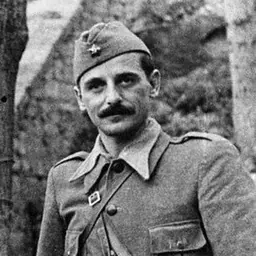
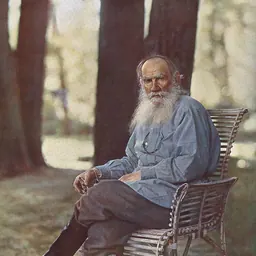


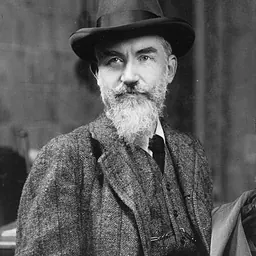
Related people
Same field, nearest in time
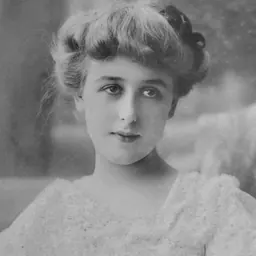


Contemporaries
People whose lives overlapped Žanka Stokić's





Frequently asked questions
Who was Žanka Stokić?
Serbian actor (1887-1947)
When was Žanka Stokić born?
Žanka Stokić was born on 24 January 1887 in Veliko Gradište.
When did Žanka Stokić die?
Žanka Stokić died on 21 July 1947 in Belgrade.
What was Žanka Stokić's occupation?
Žanka Stokić was a film actor and actor.
What nationality was Žanka Stokić?
Žanka Stokić was Serbian.
Sources & further reading
Cite this page
APA: Biography.guide. (2026). Žanka Stokić. https://biography.guide/zanka-stokic/
MLA: "Žanka Stokić." Biography.guide, https://biography.guide/zanka-stokic/.
Chicago: "Žanka Stokić." Biography.guide. https://biography.guide/zanka-stokic/.
Data last updated: 2026-09-22 · Spot an error? Report a correction.
Page generated 2026-09-27 05:29 UTC