
About Zahir Raihan
Lived 1935 – 1972 (aged 36). Zahir Raihan was an Indian, Pakistani and Bangladeshi writer and film director.
Mohammad Zahirullah (19 August 1935 – disappeared 30 January 1972), known as Zahir Raihan , was a Bangladeshi novelist, writer and filmmaker. He is most notable for his documentary Stop Genocide, made during the Bangladesh Liberation War. He was posthumously awarded Ekushey Padak in 1977 and Independence Day Award in 1992 by the government of Bangladesh.
Early life and education Mohammad Zahirullah was born on 19 August 1935 in the village of Majupur in Sonagazi, Feni subdivision, then a part of the Bengal Presidency's Noakhali district. His father, Mawlana Mohammad Habibullah, was a professor at the Calcutta Alia Madrasa and later the Dacca Alia Madrasa. Raihan had enrolled at the former institution's Anglo-Persian Department but his studies were interrupted due to the Partition of Bengal in 1947, and so he, along with his parents, returned to his village from Calcutta.
Career Along with literary works, Raihan started working as a journalist, when he joined Juger Alo in 1950. Later, he also worked in newspapers, namely Khapchhara, Jantrik, and Cinema. He also worked as the editor of Probaho in 1956. His first collection of short stories, titled Suryagrahan, was published in 1955. He worked as an assistant director on the Urdu film Jago Hua Savera in 1957. This was his first direct involvement in film. He also assisted Salahuddin in the film Je Nadi Marupathe. The filmmaker Ehtesham also employed him on his film E Desh Tomar Amar, for which he wrote the title song. In 1960, he made his directorial début with Kokhono Asheni, which was released in 1961. In 1964, he made Pakistan's first colour film, Sangam, and completed his first CinemaScope film, Bahana, the following year.
Raihan was an active supporter of the Bengali language movement of 1952 and was present at the historical meeting of Amtala on 21 February 1952. He was among the first group of people who got arrested on the day. The effect of the Bengali Language Movement was so strong on him that he used it as the premise of his landmark film Jibon Theke Neya. He also took part in the 1969 Mass uprising in East Pakistan.
In the immediate aftermath of the March 1971 start of the Bangladesh Liberation War, Raihan made the documentary Stop Genocide. Before that he was making his first English film, Let There Be Light. He abandoned the project and made his most notable work, the documentary Stop Genocide, depicting the horrendous atrocities of the Pakistani forces. Critic Ziaul Haq Swapan calls it the start of the history of Bangladeshi documentaries and describes it as "a vehement protest against the Pakistan army's pogrom in Bangladesh". Raihan also made the documentary A State is Born during the war. Raihan went to Calcutta during the conflict, where his film Jibon Theke Neya was shown. His film was highly acclaimed by Satyajit Ray, Ritwik Ghatak, Mrinal Sen, and Tapan Sinha. Though he was in financial difficulties at the time, he gave all his money from the Calcutta showing to the Freedom Fighters trust.
Personal life
His father's name was Mohammad Habibullah and mother's name was Syeda Sufia Khatun. He had an elder brother named Shahidullah Kaiser. Raihan had been married twice, to Sumita Devi in 1961 and Shuchonda in 1968, both of whom were film actresses. With Sumita he had two sons, Bipul Raihan and Anol Raihan. Again with Shuchonda, had also two sons named Opu Raihan and Topu Raihan.
Disappearance Raihan went missing on 30 January 1972, when he was trying to locate his brother, notable writer Shahidullah Kaiser, who was captured and presumably killed by the Pakistan army and/or local collaborators during the final days of the liberation war. Many believe that he was killed with many others when armed Bihari and Bengali collaborators and soldiers of the Pakistan Army who were hiding fired on them when they went to Mirpur, a suburb of the capital city of Dhaka that was one of few strongholds for Pakistani/Bihari collaborators at that time, Sonar Kajol, 1962 (jointly with Kalim Sharafi) Kancher Deyal, 1963 Sangam, 1964, Urdu Bahana, 1965, Urdu Behula, 1966 Anwara, 1967 Jibon Theke Neya, 1970 Jaltey Suraj Ke Neeche, 1971, Urdu Let There Be Light, unfinished
Documentary films Stop Genocide, 1971 Shuorani Duorani, 1968 Moner Moto Bou, 1969 Shesh Parjyanta, 1969 Jibon Theke Neya, 1970, with A. Rahman
Awards Adamjee Literary Award Bangla Academy Literary Award (1972) Ekushey Padak (1977) Independence Day Award (1992) Bangladesh National Film Awards (2005)
Don’t just read it —
keep it.
Full-length biographies made to live with: read them, listen on the way to work, watch them tonight.
- E-book
- Audio
- Video
Instant download · yours to keep · every purchase keeps this site free
Important facts
Family & relationships
People in Zahir Raihan's life
Named in this biography and alive at the same time



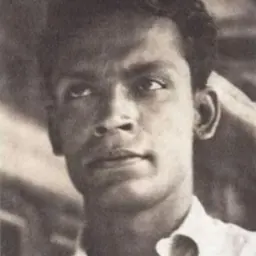

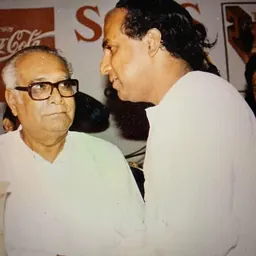
Related people
Same field, nearest in time
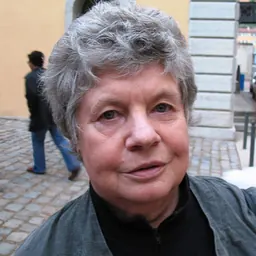



Contemporaries
People whose lives overlapped Zahir Raihan's

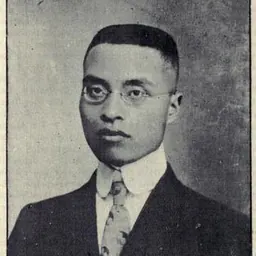


Frequently asked questions
Who was Zahir Raihan?
Bangladeshi novelist, writer & filmmaker (1935-1972)
When was Zahir Raihan born?
Zahir Raihan was born on 19 August 1935 in Majupur.
When did Zahir Raihan die?
Zahir Raihan died on 30 January 1972.
What was Zahir Raihan's occupation?
Zahir Raihan was a writer and film director.
What nationality was Zahir Raihan?
Zahir Raihan was Indian, Pakistani and Bangladeshi.
Sources & further reading
Cite this page
APA: Biography.guide. (2026). Zahir Raihan. https://biography.guide/zahir-raihan/
MLA: "Zahir Raihan." Biography.guide, https://biography.guide/zahir-raihan/.
Chicago: "Zahir Raihan." Biography.guide. https://biography.guide/zahir-raihan/.
Data last updated: 2026-09-22 · Spot an error? Report a correction.
Page generated 2026-09-27 05:24 UTC