
About Tapan Sinha
Lived 1924 – 2009 (aged 84). Tapan Sinha was an Indian author, film director, screenwriter, composer, lyricist and film producer.
Tapan Sinha (2 October 1924 – 15 January 2009) was one of the most prominent Indian film directors of his time forming a legendary quartet with Satyajit Ray, Ritwik Ghatak and Mrinal Sen. He was primarily a Bengali filmmaker who worked both in Hindi cinema and Bengali cinema, directing films like Kabuliwala, Louha-Kapat, Sagina Mahato (1970), Apanjan (1968), Kshudhita Pashan and children's film Safed Haathi (1978) and Aaj Ka Robinhood. Sinha started his career in 1946, as a sound engineer with New Theatres film production house in Kolkata, then in 1950 left for England where he worked at Pinewood Studios for next two years, before returning home to start his six decade long career in Indian cinema, making films in Bengali, Hindi and Oriya languages, straddling genres from social realism, family drama, labor rights, to children's fantasy films. He was one of the acclaimed filmmakers of Parallel Cinema movement of India.
Personal life and background Sinha was born in Murshidabad, West Bengal. His empathy for films began from his student life. He was admitted in the Durgacharan M. E. School of Bhagalpur in the fifth standard. Later it went on to become a secondary school. His Principal was Surendranath Gangopadhyay who happened to be Sarat Chandra Chattopadhyay's maternal uncle. He studied physics at the University of Patna and later earned an M.Sc. at the Rajabazar Science College, University of Calcutta.
He married Indian actress Arundhati Devi. Their son is Indian scientist professor, Anindya Sinha.
On 15 January 2009, he died of pneumonia and septicaemia.
Career
Charles Dickens's novel, A Tale of Two Cities and the cinematic adaptation featuring Ronald Colman inspired Sinha to get involved in film-making. Tapan Sinha went to London in the 1950s to learn film-making. On reaching London, he contacted CryHearsth, Manager of Pinewood Studios. Through his help, he managed to obtain his first assignment. He got to work in director Charles Crichton's unit as a sound engineer. Cryton, who made some British comedies like The Lavender Hill Mob etc. was then working for a film called The Hunted. Sinha started as a sound recording engineer and gradually shifted to directing.
Tapan Sinha was greatly influenced by contemporary American and British Cinema, in his youth. Among his favourite directors were John Ford, Carol Reed, and Billy Wilder. He used to think that he had to make films on the lines of his favourites. Rabindranath Tagore's work had been a great source of inspiration to him as well. Different Tagore works had special significance to him in various moments of his life.
Sinha's first film, Ankush, is based on the Narayan Ganguly's story Sainik, which had an elephant as the central character. Sinha's Ek Je Chilo Desh is a fantasy film, based on a story by Shankar. He made a few documentaries, including a biographical film on scientist Jagadish Bose. He also used Rabindrasangeet in other films. Sinha's Sagina Mahato might be categorized as a political film, although it was reactionary in nature and was a direct attack on left-wing politics. It tried to disrepute organized struggle by championing the individual heroism of a worker. The Hindi version of the film, named "Sagina", also stars Dilp Kumar as the central character. The film was entered into the 7th Moscow International Film Festival.
His Daughters of This Century Starring Shabana Azmi, Jaya Bachchan, Madhuri Dixit, Nandita Das, Deepa Sahi, and Sulabha Deshpande in central roles, marked a new beginning in Indian Cinema.
Raja Sen's documentary on Tapan Sinha is entitled Filmmaker for Freedom.
Sinha's wife, filmmaker and actress Arundhuti Devi, died in 1990.
Sinha's final venture, the children's filme Anokha Moti, was incomplete. The film stars Arjun Chakravorty, and is being made in Hindi.
Sinha composed the music for many of his films. At the end of his career, he composed the music for the Bengali film Tara, directed by Bratya Basu, which was released after his death.
Death
On 15 January 2009, he died of pneumonia and septicaemia. Tapan's works left an impact and influence on Bollywood filmmakers like Hemen Gupta, Hrishikesh Mukherjee, Gulzar, Ashutosh Gowariker and Bengali filmmakers like Raja Sen, Kamaleshwar Mukherjee. His work highly influence and impact and popular culture by Bengali filmmaker Tarun Majumdar and Nowadays, Suman Ghosh (director). While in London, he was exposed to the works of Italian directors Federico Fellini, Vittorio De Sica and Roberto Rossellini. Tapan Sinha has also served as a member of the jury in the popular film festivals at Tashkent and San Francisco among others. Tapan Sinha has been selected for the Dada Saheb Phalke Award for the year 2006 for his outstanding contribution to Indian cinema.
Television career Aadmi Aur Aurat is based on a story by Prafulla Roy. Amol Palekar and Mahua Roy Choudhury acted in this telefilm. Aadmi Aur Aurat was remade in Bengali as Manush (starring Samit Bhanja and Devika Mukherjee) by the director himself. Sinha made another telefilm Didi with Deepti Naval as the central character. Sinha made a detective TV serial Hutumer Naksa.
Awards Civilian award Padma Shri (1992)
National Film Awards 1956: National Film Award for Best Feature Film – Kabuliwala 1956: National Film Award for Best Feature Film in Bengali – Kabuliwala 1960: National Film Award for Second Best Feature Film – Kshudhita Pashan 1965: National Film Award for Second Best Feature Film – Atithi 1967: National Film Award for Best Feature Film- Hatey Bazarey 1968: National Film Award for Best Feature Film in Bengali- Apanjan 1971: Best Screenplay – Ekhonee 1977: National Film Award for Best Children's Film - Safed Haathi 1981: National Film Award for Best Feature Film in Bengali- Adalat o Ekti Meye 1984: Nargis Dutt Award for Best Feature Film on National Integration - Aadmi Aur Aurat 1990: Best Direction – Ek Doctor Ki Maut 1990: National Film Award for Second Best Feature Film- Ek Doctor Ki Maut 1994: National Film Award for Best Film on Other Social Issues- Wheelchair 2006: Dadasaheb Phalke Award
International Awards Best Film-Cork festival, Ireland for Khudhita Pashan Silver Bear Extraordinary Prize of the Jury at 7th Berlin International Film Festival for Kabuliwala Jury Award-Sanfransisco Film Festival for Hansuli Banker Upokotha Silver Peacock-2nd best film, International Film Festival of India & Audience Award, Sydney Film Festival for Nirjan Saikate International Certificate of Merit, Venice Film Festival for Atithi Diploma of Merit, London Film Festival for Aarohi Silver Leopard, Locarno Film Festival for Aarohi Award for Best Film-Royal Cup, Cambodia Asian Film festival for Hatey Bazarey Award for Best film in 13th Asia Pacific Film Festival for Hatey Bazarey Silver trophy (Cup of honour) in Phnom Penh Film Festival for Hatey Bazarey Afro-Asian Award, Moscow International Film Festival for Sagina Mahato Golden Crown for Best Music, Seoul Asian Film Festival12 for Harmonium Special Award 'Child of our Time', Vii Film Festival, Milano for Safed Haathi UNICEF Award(Honorable Mention), Berlin International Film Festival for Aaj Ka Robin Hood
Filmography Films
TV series Year Title Cast1998 Hutumer Naksha
Don’t just read it —
keep it.
Full-length biographies made to live with: read them, listen on the way to work, watch them tonight.
- E-book
- Audio
- Video
Instant download · yours to keep · every purchase keeps this site free
Important facts
Family & relationships
People in Tapan Sinha's life
Named in this biography and alive at the same time





Related people
Same field, nearest in time
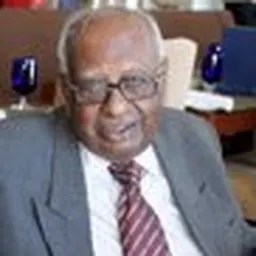


Contemporaries
People whose lives overlapped Tapan Sinha's


Frequently asked questions
Who was Tapan Sinha?
Indian film director (1924–2009)
When was Tapan Sinha born?
Tapan Sinha was born on 2 October 1924 in Kolkata.
When did Tapan Sinha die?
Tapan Sinha died on 15 January 2009 in Kolkata.
What was Tapan Sinha's occupation?
Tapan Sinha was an author, film director, screenwriter, composer, lyricist and film producer.
What nationality was Tapan Sinha?
Tapan Sinha was Indian.
Sources & further reading
Cite this page
APA: Biography.guide. (2026). Tapan Sinha. https://biography.guide/tapan-sinha/
MLA: "Tapan Sinha." Biography.guide, https://biography.guide/tapan-sinha/.
Chicago: "Tapan Sinha." Biography.guide. https://biography.guide/tapan-sinha/.
Data last updated: 2026-09-20 · Spot an error? Report a correction.
Page generated 2026-09-27 05:26 UTC