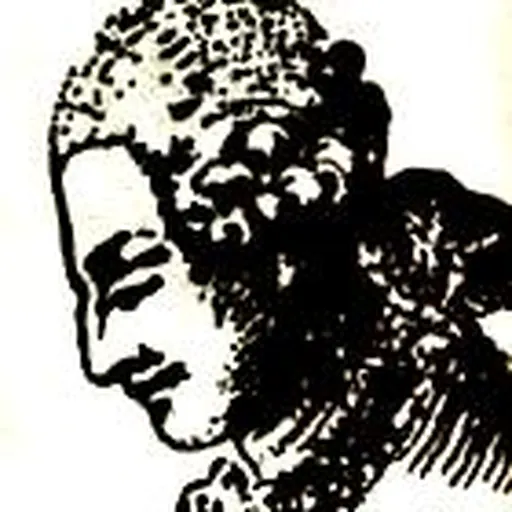
About Zaharije Orfelin
Lived 1726 – 1785 (aged 58–59). Zaharije Orfelin was a historian, poet, church Slavonic writers, writer and artist.
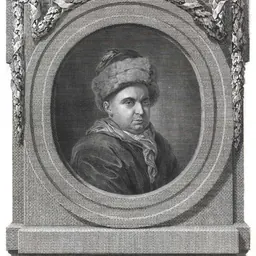
Zaharije Orfelin (; 1726 – 19 January 1785) was a Serbian polymath who lived and worked in the Habsburg monarchy and Venice. Considered a Renaissance man, he is variously described as a theologist, scientist, poet, engraver, painter, lexicographer, herbalist, oenologist, historian, publisher and translator.
Saint Lazar, Serbian Great Prince, a copperplate by Orfelin (1773). The first Serbian magazine by Zaharije Orfelin, published in 1764.
Biography He was born in a Serb family in Vukovar in 1726, in the period after the Great Turkish War. His father's name was Jovan. Zaharije's nephew was the painter Jakov Orfelin.
Orfelin's first published work was , written during his scribal service as a scribe for the Metropolitan Nenadović in 1758.
It is assumed that he was trained in Budapest and Vienna, as well as that he subsequently studied on his own in Novi Sad.
Work Orfelin appeared on the Serbian cultural scene in 1758.
As a poet, Orfelin is the most significant figure in Serbian poetry of the 18th century. He wrote a dozen longer poems, the most significant of which is (Lament of Serbia, 1761) in two versions, folk version and Church-Slavonic. It is an anti-Austrian, rebellious song. In that song, Serbia regrets the former glory of the medieval state and criticizes compatriots who forget their national identity.
Orfelin also wrote a manuscript Against Roman Papacy as a reaction to Austria and the Roman Catholic Church's proselytism towards Habsburg Serbs.
Orfelin founded Slavenoserbski magazin in Venice in 1768, credited as the first South Slavic or Serbian journal/periodical though only one number came out.
In 1768, Zaharije Orfelin proclaimed a mixture of Church-Slavonic and vernacular into the Serbian literary language, in which there was always room for specific Russian words, thus practically establishing the Slavic Serbian language. Literary historian Jovan Deretić considers him, along with Jovan Rajić, to be the most important writer of the Russo-Slavic era in Serbian literature.
In 1776 Orfelin's name appears in a lexicon of Austrian artists, Des Gelehte Osterisch by de Luca, where he is listed as both an engraver and a writer, elected as an academician in the newly established Art Academy of Engraving in Vienna, and acknowledged by its director Jacob Matthias Schmutzer.
Zaharije Orfelin is the author of the first modern Serbian spelling book from 1767, which was used by numerous generations of children. The second edition was published in 1797.
He is also the author of the first textbooks of the Latin language. His most extensive work is "The Life of Peter the Great" (Venice, 1772), in whom he saw an enlightened monarch. Zaharije Orfelin also wrote the first Serbian "Perpetual Calendar" in 1780, printed in Vienna in 1783. Writing about recipes for wine production, Zaharije Orfelin also mentions the recipe for making bermet, which differed from house to house. Orfelin gave a recipe that became popular with various modifications in the Fruška gora region. It is the first book of its kind in the Serbian language.
Legacy
Serbian poet Đorđe Nešić wrote a poem titled A toast to Zaharije Orfelin, inspired by his poetry and publications on winemaking. He is the main character of the novel "Drugo Telo" by Milorad Pavić.
A private secondary school based in Belgrade is named after him.
Works The illustration Creation of the World and the title page of the book Вѣчный калєндарь (Eternal Calendar) by Orfelin, 1783.
Pesan novosadelanuje za gradjanku gospodicnu Femku, between 1748 and 1757 Pozdrav Mojseju Putniku, Novi Sad, 1757. Omologija, 1758. Hulitelj, Sremski Karlovci, 1759. Kratkoje o sedmih tajinstvah nastavlenije, 1760. Gorestni plač slavnija inogda Serbiji, Venice, 1761 Trenodija, Venice, 1762 Plač Serbii, jejaže sini v različnija gosudarstva rasjejali sja, Venice, 1762 Oda na vospominanije vtorago Hristova prišestvija, 1763. Apostolskoje mleko, Timișoara, 1763. Istina o Boze, Novi Sad, 1764. Hristoljubivih dus stihoslovije, Novi Sad, 1764. Sjetovanije naučenogo mladago čelovjeka, 1764. Strasno jevandljelje, Venice, 1764. Pjesn istoriceskaja, Venice 1765. Melodija k proleću, Novi Sad, 1765. Slavenosrpski kalendar za godionu 1766., Novi Sad, 1765. Latinski bukvar, Venice, 1766. Pervija načatki latinskogo jazika, 1767. Pervoje ucenije hotjastim ucitisja knig pismeni slavenskimi nazivaemo Bukvar, Venice, 1767. Latinska gramatika, Venice, 1768. Slaveno-serbski magazin, Venice, 1768. Istorija o žitija i slavnih djelah velikago gosudarja i imperatora Petra Pervago, Venice, 1772 Generalnaja karta vserosijkoj Imperiji, 1774. Položenije provuncij: Liflandije, Finlandije, Karelije, Ingrije, i Kurlandije, 1774. Karta georaf. Germanije, Holandije, Danije, Poljane, 1774. Karta Male Tatarije, 1774. Bukvar za srpsku decu slovenski, Venice, 1776. Propisi srpski, Sremski Karlovci, 1776. Slavenska i vlaska Kaligrafija, Sremski Karlovci, 1778. Večni kalendar, Vienna, 1783. Iskusni podrumar, Budapest, 1808. Sedam stepenej premudrosti
Edited or translated Srpska gramatika, 1755. Kratkoje nastavlenije, Sremski Karlovci, 1757. Ortodoksosomologija ili pravoslavnoje ispovjedanije, Sremski Karlovci, edited 1758. Kratko nastavljenije, Sremski Karlovci, 1758. Oda na vospominanije vtoraga Hristova prisestvija, Vienna, 1759. Molitvoslav, Venice, 1762. Psaltir, Venice, 1762. Trebnik, Venice, 1762. Propoved ili slovo o osuzdeniji, Venice, 1764. Evangelija ctomaja vo sjatij i velikij cetveretok, Venice, 1764. Catechisis by Peter Mohyla Catechisis by Jovan Rajić Srbljak (a compedium of old Serbian writings) Short Stories by Feofan Prokopovich
Don’t just read it —
keep it.
Full-length biographies made to live with: read them, listen on the way to work, watch them tonight.
- E-book
- Audio
- Video
Instant download · yours to keep · every purchase keeps this site free
Important facts
People in Zaharije Orfelin's life
Named in this biography and alive at the same time

Related people
Same field, nearest in time


Contemporaries
People whose lives overlapped Zaharije Orfelin's





Frequently asked questions
Who was Zaharije Orfelin?
Serbian writer and historian
When was Zaharije Orfelin born?
Zaharije Orfelin was born in 1726 in Vukovar.
When did Zaharije Orfelin die?
Zaharije Orfelin died on 19 January 1785 in Novi Sad.
What was Zaharije Orfelin's occupation?
Zaharije Orfelin was a historian, poet, church Slavonic writers, writer and artist.
Sources & further reading
Cite this page
APA: Biography.guide. (2026). Zaharije Orfelin. https://biography.guide/zaharije-orfelin/
MLA: "Zaharije Orfelin." Biography.guide, https://biography.guide/zaharije-orfelin/.
Chicago: "Zaharije Orfelin." Biography.guide. https://biography.guide/zaharije-orfelin/.
Data last updated: 2026-09-21 · Spot an error? Report a correction.
Portrait: Wikimedia Commons · author & licence
Page generated 2026-09-27 04:59 UTC