
About Zafar Ali Khan
Lived 1873 – 1956 (aged 83). Zafar Ali Khan was an Indian and Pakistani journalist, politician and writer.
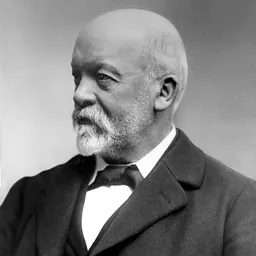
Zafar Ali Khan (1873 – 27 November 1956) was a Pakistani writer, poet, translator and a journalist who used his journalism against the British rule. He was one of the Majlis-e-Ahrar-e-Islam's founding members.
Working with both Islamic and Western knowledge and contemporary trends in economics, sociology and politics, he is considered one of the fathers of Urdu journalism.
Early life and education Zafar was born in the Sialkot District in 1873 into a Punjabi family of the Rajput Janjua clan, as per the contemporary report of 1920.
He received his early education at Mission High School, Wazirabad, Wazirabad District, matriculated (10th grade) from Patiala, and passed his intermediate (12th grade) from the Aligarh College in 1895. Next, he worked in the postal department of the princely state of Jammu and Kashmir, the same place where his father worked, but resigned over a row with his seniors. He rejoined Aligarh College and gained his BA degree from there; stood fifth in his batch.
Career
Journalism After graduation, Khan was appointed secretary to a Muslim political leader Mohsin-ul-Mulk, then in Bombay. Then he worked for some time as a translator in Hyderabad, Deccan, rising to the post of Secretary, Home Department. He returned from Hyderabad and took over the daily Zamindar newspaper from Lahore in 1908, founded by his father Maulvi Sirajuddin Ahmad in 1903. At one time, this newspaper was an important newspaper of the Punjab.
Relation with the Ahmadiyya Movement Zafar Ali Khan's relationship with the Ahmadiyya was belligerent. He was among the vanguard, who censured Mirza Ghulam Ahmad from Qadian by writing satirical poems against him. He even wrote the preface to the book "His Holiness", which was written as a refutation of the Ahmadiyya movement. Later on, when Pakistan was created, he was an ardent participant in the 1953 Tehreek e Khatm e Nabuwat (a movement against the Ahmadis), writing articles against them.
Poetry He chose to write in Urdu. Khan's interest in poetry began in his childhood. His poems have religious and political sentiments.
Most popular Naats Woh Shama Ujalaa Jis Ne Kiya 40 Baras Tak Ghaaron Mein sung by Mehdi Hassan, a Radio Pakistan production, a popular Naat written by Zafar Ali Khan '' sung by Muneeba Sheikh, a Pakistan Television production, a popular Naat written by Zafar Ali Khan
Death and legacy He died on 27 November 1956, and was buried in Wazirabad, Punjab. thumb
Sahiwal Stadium, а multi-purpose stadium in Sahiwal, Punjab, was renamed as Zafar Ali Stadium in his honour. It is used for football and cricket games. The stadium holds 10,000 people.
Zafar Ali Khan was an active member of the Khilafat Movement and a close associate of Maulana Muhammad Ali Jauhar. A public degree college in Wazirabad is named after him as Government Maulana Zafar Ali Khan Degree College.
Commemorative postage stamp Pakistan Post issued a commemorative postage stamp in his honor in its 'Pioneers of Freedom' series.
Books Some of his notable publications include:
Poetry Bahāristān Nigāristān Camanistān Rahāristān Armag̲h̲ān-i Qādiyān Kulliyāt-i Maulānā Ẓafar ʻAlī K̲h̲ān Ḥabsiyāt Nashīd-i Shīrāz, collection of Persian poems and articles published in different periodicals K̲h̲amistān-i Ḥijāz, poetry about Muhammad
Essays G̲h̲albah-yi Rūm: ek tārīk̲h̲ī tafsīr, historical commentary of Sūrat ar-Rūm on the victory of Romans over the Persians and the Muslims over the Meccan polytheists as predicted by Koran in AD 615 Taqārīr-i Maulānā Ẓafar ʻAlī K̲h̲ān̲, speeches of the author, especially in regard with the Khilafat movement Lat̤āʼifuladab, on the relation between literature and Islam Mʻaās̲h̲irat, on the social sciences Jamāluddīn Afg̲h̲ānī: yaʻnī itiḥād-i Islāmī ke muharrik-i aʻzīm, Misr, Ṭarkī, Īrān aur Hindūstān ke z̲arīʻah ʻalim-i Islām man̲, biography of the Muslim reformer and independence fighter Jamāl al-Dīn al-Afghānī
Plays Jang-i Rus va Japān: yaʻnī ek tārīk̲h̲ī ḍrāmā, a play on the Russian Japanese War, (1904–1905)
Translations Jangal buk, Urdu translation from the English of Rudyard Kipling's Jungle Book Al-Farooq: the life of Omar the Great, English translation from the Urdu of Shibli Nomani's Al-Farooq, a biography of Umar
Don’t just read it —
keep it.
Full-length biographies made to live with: read them, listen on the way to work, watch them tonight.
- E-book
- Audio
- Video
Instant download · yours to keep · every purchase keeps this site free
Important facts
People in Zafar Ali Khan's life
Named in this biography and alive at the same time
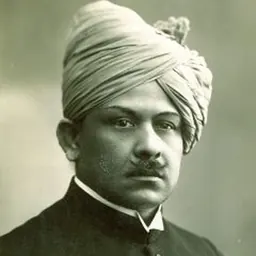

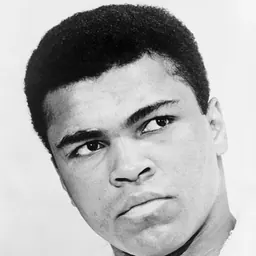

Related people
Same field, nearest in time
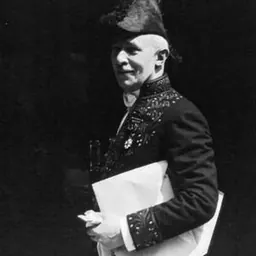
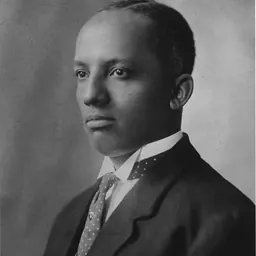


Contemporaries
People whose lives overlapped Zafar Ali Khan's


Frequently asked questions
Who was Zafar Ali Khan?
Pakistani writer (1873–1956)
When was Zafar Ali Khan born?
Zafar Ali Khan was born on 19 January 1873 in Wazirabad District.
When did Zafar Ali Khan die?
Zafar Ali Khan died on 27 November 1956 in Wazirabad Tehsil.
What was Zafar Ali Khan's occupation?
Zafar Ali Khan was a journalist, politician and writer.
What nationality was Zafar Ali Khan?
Zafar Ali Khan was Indian and Pakistani.
Sources & further reading
Cite this page
APA: Biography.guide. (2026). Zafar Ali Khan. https://biography.guide/zafar-ali-khan/
MLA: "Zafar Ali Khan." Biography.guide, https://biography.guide/zafar-ali-khan/.
Chicago: "Zafar Ali Khan." Biography.guide. https://biography.guide/zafar-ali-khan/.
Data last updated: 2026-09-22 · Spot an error? Report a correction.
Page generated 2026-09-27 05:21 UTC