
About Zafar Ahmad al-Uthmani
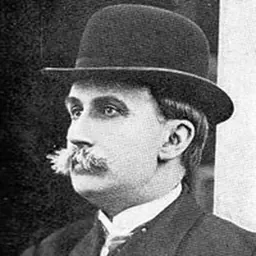
Lived 1892 – 1974 (aged 81–82). Zafar Ahmad al-Uthmani was a Pakistani poet, jurist, theologian and scholar.
Zafar Ahmad Usmani (; 4 October 1892 – 1974), also known as Zafar Ahmad Thanwi, was a Pakistani independence activist and Islamic jurist who became an influential figure of the Deobandi movement.
He is most famous for having written I'la Al-Sunan, a 20-volume Hadith encyclopedia of Hanafi proofs, written as a refutation by the Hanafi school against the objections raised by the growing Ahl-i Hadith movement, as per the request of his uncle Ashraf Ali Thanwi.
Birth
Zafar Ahmad Usmani was born on 4 October 1892 in Deoband. His ism (given name) was Zafar Ahmad. His nasab (patronymic) is: Zafar Ahmad ibn Lateef Ahmad ibn Nehal Ahmad ibn Karamat Hussain ibn Nabi Bakhsh ibn Hayātullah ibn Ināyatullah ibn Laqā'ullāh ibn Ihsānullāh ibn Nasīrullah ibn Dīwān Lutfullah ibn Owais ibn Ahmad ibn Abd al-Razzāq ibn Muḥammad Hasan ibn Habībullah ibn Usmān ibn Ali ibn Shaykh Muḥammad ibn Fazlullāh ibn Abu al-Wafā Usmāni.
Education and career After the death of his mother when he was 3, he was raised by his grandmother, considered to be a religious woman. He started studying and memorizing the Quran at the age of 5. At age 7, he studied Mathematics, Urdu, and Persian under Mawlana Muhammad Yasin. His uncle, Ashraf Ali Thanwi guided him as he studied with more religious scholars.
In Pakistan, he became a close associate of Maulana Shabbir Ahmad Usmani and an active member of Jamiat Ulema-e-Islam founded by him. After the death of Shabbir Ahmad Usmani in 1949, he and Maulana Ehteshamul Haq Thanvi became key leaders of this party.
Works Usmani's most famous work is I’la’ al-Sunan, which is a hadith commentary that connects the opinions of this Hanafi's book with direct evidence from the Hadiths. The reason for this was that the Ahl-i Hadith movement was growing and bringing their objections, and Maulana Ashraf Ali Thanwi asked his nephew to respond. The book was first printed in 1923. It consists of 21 volumes.
Honored by Jinnah At the independence of Pakistan ceremony in 1947, Quaid-e-Azam Muhammad Ali Jinnah asked the renowned religious scholar Maulana Shabbir Ahmad Usmani to hoist the Pakistani flag in Karachi and he asked Zafar Ahmad Usmani to hoist it in Dhaka. Also, since Zafar Ahmad Usmani was a jurist, he was selected to take oath from the first Chief Justice of Pakistan, Abdul Rashid.
Don’t just read it —
keep it.
Full-length biographies made to live with: read them, listen on the way to work, watch them tonight.
- E-book
- Audio
- Video
Instant download · yours to keep · every purchase keeps this site free
Important facts
People in Zafar Ahmad al-Uthmani's life
Named in this biography and alive at the same time




Related people
Same field, nearest in time
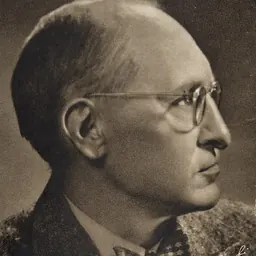
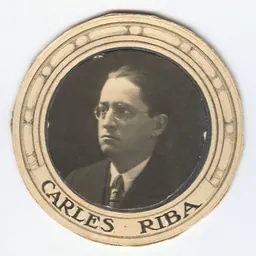
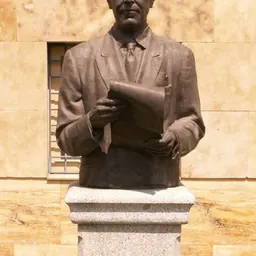
Contemporaries
People whose lives overlapped Zafar Ahmad al-Uthmani's

Frequently asked questions
Who was Zafar Ahmad al-Uthmani?
Pakistani poet
When was Zafar Ahmad al-Uthmani born?
Zafar Ahmad al-Uthmani was born on 4 October 1892 in India.
When did Zafar Ahmad al-Uthmani die?
Zafar Ahmad al-Uthmani died in 1974 in Pakistan.
What was Zafar Ahmad al-Uthmani's occupation?
Zafar Ahmad al-Uthmani was a poet, jurist, theologian and scholar.
What nationality was Zafar Ahmad al-Uthmani?
Zafar Ahmad al-Uthmani was Pakistani.
Sources & further reading
· Wikipedia: Zafar Ahmad al-Uthmani
Cite this page
APA: Biography.guide. (2026). Zafar Ahmad al-Uthmani. https://biography.guide/zafar-ahmad-al-uthmani/
MLA: "Zafar Ahmad al-Uthmani." Biography.guide, https://biography.guide/zafar-ahmad-al-uthmani/.
Chicago: "Zafar Ahmad al-Uthmani." Biography.guide. https://biography.guide/zafar-ahmad-al-uthmani/.
Data last updated: 2026-09-20 · Spot an error? Report a correction.
Page generated 2026-09-27 05:04 UTC