
Zacharias Barbitsiotis
Greek klepht of the Peloponnese, during Ottoman rule
About Zacharias Barbitsiotis
Lived 1759 – 1804 (aged 44). Zacharias Barbitsiotis was a Turkish klepht.
Zacharias Pantelakos (; 22 October 1759 – 20 July 1804), nicknamed Barbitsiotis but more commonly known as Kapetan Zacharias , was a Greek klepht in the Peloponnese during the last decades of Ottoman rule over Greece. He is described by Kyriakos Kassis as the best klepht of Taygetus.
Early life and career
Zacharias "Barbitsiotis" Pantelakos was born on 22 October 1759 in the town of Varvitsa, Laconia, though his family originated from Mani. His father's name was Theodoros Pantelakos and his mother's name was unknown. In 1775, his brother Pantelis, was murdered by the Turks. Zacharias, wanting revenge, went to the town of Loggastra in northern Laconia where he joined a band of klephts under the command of kapetan (chieftain) Mantzaris.
The next year during the Battle of Rekitsa, Zacharias charged at the Turks without orders. The other klephts followed him and they chased after the Turks. This incident won Zacharias recognition from his comrades for his bravery. However, Mantzaris was angry with Zacharias as he had not followed orders and Zacharias left and founded his own group of sixty men under his own flag.
Zacharias' fame grew even more when he defeated the Turks at the Battle of Salesi in Arcadia. Kontakis, who was the leader of the village of Agios Petros in Arcadia, and who was at first an enemy and later a friend of Zacharias, described in his memoirs:
In 1792, the renowned klepht captain Androutsos – father of Odysseas Androutsos – was expelled by the Turks from his base in Aegina and escaped on the ship of Lambros Katsonis, an equally renowned pirate captain. They landed in Mani, where they were greeted by Zacharias and a young Theodoros Kolokotronis, and took him to his base.
In terms of alliances, Zacharias formed the Armatoliki Omospondia (Armatoloi Federation) around 1786–1804, uniting disparate klepht and armatoloi bands across the Peloponnese into a coordinated network that amplified their collective power against Ottoman authority. He consolidated authority by forging unity among fragmented Peloponnesian klepht groups, often mediating feuds to prioritize anti-Ottoman actions. By the early 1800s, he had assumed a commanding role, signing documents as "Commander-in-Chief of the Peloponnese" – reflecting his ascent to regional preeminence among irregular fighters who evaded Ottoman control in the mountains – with Theodoros Kolokotronis and Petimezas serving as key deputies, which not only secured privileges for local fighters but also elevated national morale through structured collaboration. His leadership emphasized mobility and surprise, drawing followers through proven successes rather than formal rank. His inner circle included prominent klephts such as Nikitas Tringas, Stametelos Tourkolekas (father of Nikitaras), Anagnostaras, Panagiotis Kefalas, Ramogiannis, and Ilias Margeliotis, forming a core of loyal fighters for joint operations. For specific raids, he allied with Maniot figures like Andreas Tsakonis and Dimitris Kalliantzis, utilizing their seafaring expertise to execute hybrid land-sea assaults. This federation represented a rare attempt at klephtic unity, though internal rivalries and Ottoman countermeasures eventually strained it, culminating in Zacharias appointment as Dervenokapetan (governor of the defiles) by the Porte in 1797 after repelling a conspiracy at Agrilovouni.
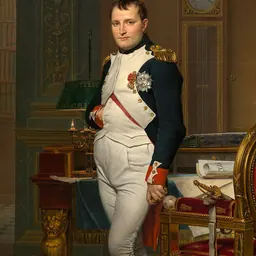
Death In 1804, the Turks extended their efforts to capture Zacharias as well as the former Bey of Mani, Tzanetos Grigorakis, who retreated to the mountains after being deposed and after the events of the 1803 Ottoman Invasion of Mani. The reason for this increased interest into Zacharias' capture was because it had been revealed that together with Tzanetos and other prominent Maniots, he had been conspiring with Napoleon Bonaparte, who had sent them French weapons. In charge of the attempt to capture Zacharias was Seremet, who had been instructed to capture Zacharias and hand him over to the higher authorities.
Don’t just read it —
keep it.
Full-length biographies made to live with: read them, listen on the way to work, watch them tonight.
- E-book
- Audio
- Video
Instant download · yours to keep · every purchase keeps this site free
Important facts
People in Zacharias Barbitsiotis's life
Named in this biography and alive at the same time



Related people
Same field, nearest in time


Contemporaries
People whose lives overlapped Zacharias Barbitsiotis's





Frequently asked questions
Who was Zacharias Barbitsiotis?
Greek klepht of the Peloponnese, during Ottoman rule
When was Zacharias Barbitsiotis born?
Zacharias Barbitsiotis was born on 22 October 1759 in Varvitsa, Laconia.
When did Zacharias Barbitsiotis die?
Zacharias Barbitsiotis died on 20 July 1804.
What was Zacharias Barbitsiotis's occupation?
Zacharias Barbitsiotis was a klepht.
What nationality was Zacharias Barbitsiotis?
Zacharias Barbitsiotis was Turkish.
Sources & further reading
· Wikipedia: Zacharias Barbitsiotis
· DBpedia: Zacharias Barbitsiotis
Cite this page
APA: Biography.guide. (2026). Zacharias Barbitsiotis. https://biography.guide/zacharias-barbitsiotis/
MLA: "Zacharias Barbitsiotis." Biography.guide, https://biography.guide/zacharias-barbitsiotis/.
Chicago: "Zacharias Barbitsiotis." Biography.guide. https://biography.guide/zacharias-barbitsiotis/.
Data last updated: 2026-09-20 · Spot an error? Report a correction.
Page generated 2026-09-27 05:32 UTC