
About Yūsaku Kamekura
Lived 1915 – 1997 (aged 82). Yūsaku Kamekura was a Japanese illustrator, graphic designer, designer and graphic artist.
Yūsaku Kamekura (, Kamekura Yūsaku; April 6, 1915 – ) was a Japanese graphic designer, the leading figure in post-World War II Japanese graphic design. His stature in the field led to the nickname "Boss".
Early life and career Yūsaku Kamekura was born on April 6, 1915, in Yoshidamachi, Nishi-Kambara, Niigata Prefecture, Japan. He graduated from Nihon University High School in 1933. He took his first paying assignment at 17, when he designed the Japanese edition of Antoine de Saint-Exupéry's Night Flight.
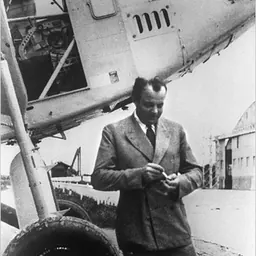
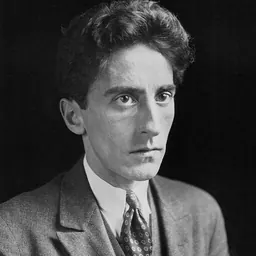
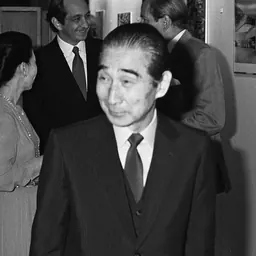
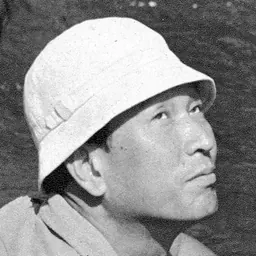
From 1935 to 1937, Kamekura studied at the Institute of New Architecture and Industrial Arts in Tokyo. In 1938, he began working for Yōnosuke Natori laying out Nippon, a multilingual cultural magazine. Natori's training in Germany influenced Kamakura, who became fascinated with the moderns and, eventually, Bauhaus. He was a fan of Cassandre, Saint-Exupéry, and Jean Cocteau. Early on, it was recognized that Kamekura, Akira Kurosawa, and Kenzō Tange made up a trio of great Japanese visual artists of the 20th century.
In 1951, Kamekura helped found Japan Advertising Artists Club, which was the first group in Japan dedicated to graphic design. They were able to host their first poster exhibition within Tokyo and that ended up catching the publics attention to advertising design. He hosted the World Design Conference in 1960 but was still a trifle ashamed of the level of Japanese design. Convinced that it needed a boost and funding, Kamekura gathered the presidents of powerful corporations to sponsor a cooperative house agency: Nippon Design Center (NDC). The companies included were Asahi Beer, Toyota, Nomura Securities, Japan Railways, and Toshiba. After managing the design agency, he left to pursue an independent career.
In addition to the Bauhaus, Kamekura was influenced by the work of Cassandre and Russian constructivism. John Clifford writes that Kamekura's work "blended the functionality of these modern movements with the lyrical grace of traditional Japanese design," resulting in "a boldly minimal aesthetic that used color, light, geometry, and photography."
He was art director or editor for a series of magazines: Nippon (starting in 1937), Kaupapu (in 1939), and Commerce Japan (in 1949). Kamekura eschewed the classical imagery traditionally associated with the Olympics in favor of a stark, modernist aesthetic, featuring the Olympic rings in simple gold below a red circle.
I drew a large red circle on top of the Olympic logo. People may have considered that this large red circle represented the hinomaru, but my actual intention was to express the sun. I wanted to create a fresh and vivid image through a balance between the large red circle and the five-ring Olympic mark. I thought that it would make the hinomaru look like a modern design. The most memorable of Kamekura's Olympic posters captured a group of runners immediately after the start of a race, against a stark black background. Kamekura was the first to employ photography for Olympic posters, and this poster required split-second photography which was technically difficult to accomplish at the time. It is considered "a classic of modern poster design". Kamekura went on to design posters for many other events, including the 1972 Winter Olympics and the 1970 and 1989 World Design Expos.
Yūsaku Kamekura was also a prolific author. One of his most notable works was an examination of what he considered the best logo designs, 1965's Trademarks and Symbols of the World, with a preface by Paul Rand.
Death and legacy Yūsaku Kamekura died on 11 May 1997 in Tokyo.
Don’t just read it —
keep it.
Full-length biographies made to live with: read them, listen on the way to work, watch them tonight.
- E-book
- Audio
- Video
Instant download · yours to keep · every purchase keeps this site free
Important facts
People in Yūsaku Kamekura's life
Named in this biography and alive at the same time




Related people
Same field, nearest in time




Contemporaries
People whose lives overlapped Yūsaku Kamekura's



Frequently asked questions
Who was Yūsaku Kamekura?
Japanese graphic designer (1915–1997)
When was Yūsaku Kamekura born?
Yūsaku Kamekura was born on 6 April 1915 in Tsubame.
When did Yūsaku Kamekura die?
Yūsaku Kamekura died on 11 May 1997 in Tokyo.
What was Yūsaku Kamekura's occupation?
Yūsaku Kamekura was an illustrator, graphic designer, designer and graphic artist.
What nationality was Yūsaku Kamekura?
Yūsaku Kamekura was Japanese.
Sources & further reading
Cite this page
APA: Biography.guide. (2026). Yūsaku Kamekura. https://biography.guide/yusaku-kamekura/
MLA: "Yūsaku Kamekura." Biography.guide, https://biography.guide/yusaku-kamekura/.
Chicago: "Yūsaku Kamekura." Biography.guide. https://biography.guide/yusaku-kamekura/.
Data last updated: 2026-09-20 · Spot an error? Report a correction.
Page generated 2026-09-27 05:17 UTC