
About Yuri Slezkine
Born 1956. Yuri Slezkine is a Russian and American linguist, historian, translator, university teacher and ethnologist.
Yuri Lvovich Slezkine (Russian: Ю́рий Льво́вич Слёзкин Yúriy L'vóvich Slyózkin; born February 7, 1956) is a Russian-born American historian and translator.
He was a professor of Russian history, Sovietologist, and served as Director of the Institute of Slavic, East European, and Eurasian Studies at the University of California, Berkeley in 2004-2013.
He is best known as the author of the books The Jewish Century (2004) and The House of Government: A Saga of The Russian Revolution (2017).
Life and career Slezkine was born into a family which "considered itself a part of the Russian intelligentsia". He was raised in a secular household, and only became aware of his maternal Jewish descent at the age of 11. His maternal grandparents emigrated to Argentina from the Pale of Settlement before moving back to Russia in 1931, inspired by their socialist convictions. Their daughter, Slezkine's mother, was a violin teacher. Paternally, Slezkine is descended from a noble family with a tradition of service to the Russian Empire; his paternal grandfather, also named , was a novelist and friend of Mikhail Bulgakov, and his father, was a historian of the Americas.
Slezkine studied medieval Russian literature at Moscow State University, but took up Portuguese in his senior year in response to the end of the Portuguese Colonial War. His first trip outside the Soviet Union was in 1978-1979, when he worked as a translator in Beira, Mozambique. He returned to Moscow to serve as a translator of Portuguese and moved to Lisbon in 1982 before entering graduate school in Austin, Texas, the following year. He earned a PhD in history from the University of Texas at Austin. At Austin, he was taught by Sheila Fitzpatrick.
Slezkine was a W. Glenn Campbell and Rita Ricardo-Campbell National Fellow at Stanford University's Hoover Institution and Jane K. Sather Professor of History at the University of California, Berkeley. He is also a member of the American Academy of Arts and Sciences (2008).
Slezkine met his wife, a scholar of Russian, at Austin. As of 2025, Slezkine lived in a dacha in Latvia, and visited Russia at least once a year.
Views on the Russo-Ukrainian War and Western Civilization
According to Slezkine, Russia is divorcing itself from the rest of Western civilization, a process reinforced by the Russo-Ukrainian War. He further argues that the West's unwillingness to integrate Russia into a common European security infrastructure was a major factor in provoking the war.
In October 2022, he argued that the West maintains unity in part by characterizing Russia as "evil," remarking "where would the West be without it?" He also alluded to the supposedly controversial ideas in Ukraine which do not sit well with the Western views: "Ukrainian national ideology is in many ways the opposite of what we are taught in the United States or in Western Europe".
More broadly, he believes that Western civilization is divided between Anglo-American/Western European cosmopolitanism and Eastern European/Israeli ethnonationalism. He has described the Baltic states as “ethnocracies” and Israel as “a racist state”, which, for just or unjust reasons, implemented an apartheid system with first-, second- and third-class citizens. Slezkine himself has many relatives in Israel; his aunt’s kibbutz was attacked in the October 7 attacks, but she survived.
He argues that censorship in the West is very substantial. It originates from private and professional organizations and creates a “society of conformists”. Among the West’s “sacred cows” are matters related to family, sexuality, and race. 2020 Valdai Discussion Club Award, awarded in the presence of Russian Minister of Foreign Affairs, Sergey Lavrov.
Don’t just read it —
keep it.
Full-length biographies made to live with: read them, listen on the way to work, watch them tonight.
- E-book
- Audio
- Video
Instant download · yours to keep · every purchase keeps this site free
Important facts
People in Yuri Slezkine's life
Named in this biography and alive at the same time
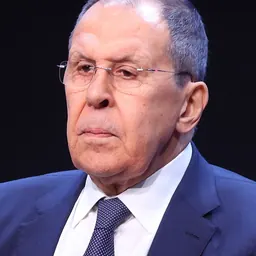
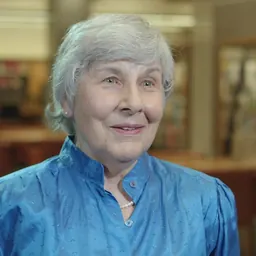


Related people
Same field, nearest in time

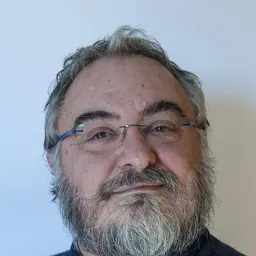
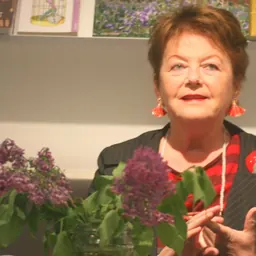

Contemporaries
People whose lives overlapped Yuri Slezkine's

Frequently asked questions
Who is Yuri Slezkine?
American writer
When was Yuri Slezkine born?
Yuri Slezkine was born on 7 February 1956 in Moscow.
What is Yuri Slezkine's occupation?
Yuri Slezkine is a linguist, historian, translator, university teacher and ethnologist.
What nationality is Yuri Slezkine?
Yuri Slezkine is Russian and American.
Sources & further reading
Cite this page
APA: Biography.guide. (2026). Yuri Slezkine. https://biography.guide/yuri-slezkine/
MLA: "Yuri Slezkine." Biography.guide, https://biography.guide/yuri-slezkine/.
Chicago: "Yuri Slezkine." Biography.guide. https://biography.guide/yuri-slezkine/.
Data last updated: 2026-09-22 · Spot an error? Report a correction.
Page generated 2026-09-27 05:32 UTC