
About Yu Kil-chun
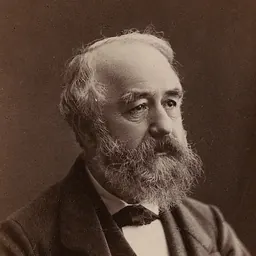
Lived 1856 – 1914 (aged 57). Yu Kil-chun was a Korean and Japanese autobiographer, writer, journalist, politician and poet.
Studying abroad in Japan and America In 1881, he was sent to Japan as an attendant of a Joseon foreign mission. While there, he was allowed to remain in Japan and study abroad for a year at the Keiō School (later "Keiō University"). This made him the first Korean exchange student to Japan. When the Imo Incident occurred in 1882, recommended that Yu return to Korea, which he did in January 1883.
Yu was among the first Koreans to ever set foot in North America. In July 1883, Yu traveled as an attendant to Min as part of the first-ever Korean special mission to the United States. While there, he again remained to study abroad. He stayed for around a year and a half thanks to the patronage of the American zoologist Edward S. Morse, whom he had previously met while in Japan. In Fall 1884, he enrolled in the Governor Dummer Academy (now known as The Governors Academy) in Byfield, Massachusetts. This also made him the first Korean to study abroad in the United States. However, his studies were once again halted due to another incident in his home country: the Gapsin Coup. He halted his studies in December 1884, and returned to Korea via Europe. He stopped by a number of major European countries along the way.
Return to Korea However, upon his return to Korea, he was viewed with suspicion due to his association with members of the pro-reform Gaehwa Party. Yu was then arrested. With the assistance of Han Kyu-seol, Yu was eventually able to escape a verdict of capital punishment, and was allowed to serve his sentence at Han's house until 1892.
While in detention, Yu wrote a book on his experiences entitled Observations on Travels in the West and published it in 1895. The book is nearly 600 pages long, and is written in a mix of hangul and hanja, and introduces Western civilization to Korean audiences. It advocates for a number of reforms, including the establishment of a constitutional monarchy, military reforms, international trade, and a modern currency and tax system. It also discussed ideas such as the social contract. These ideas later became a significant inspiration for the Gabo Reform.
At the end of the Donghak Peasant Revolution and the First Sino-Japanese War that followed, Yu worked in the government as part of a pro-Japanese faction. From 1894 to 1895, Yu worked for the government under Prime Minister Kim Hong-jip, who intended to modernize Korea. In 1895, he became Vice Minister of State for the Home Office.
In 1895, he published the first Korean dictionary and grammar book.
In October 1895, he was labeled by King Gojong as one of the 'Eulmi Four Traitors' for collaborating with Imperial Japan leading up to the assassination of Empress Myeongseong. Following the assassination, Yu contacted Inoue Kaoru, the Japanese Minister for Foreign Affairs, to discuss the incident. In February 1896, during Gojong's internal exile to the Russian legation, the pro-Japanese faction collapsed, and Yu fled to Japan. Yu and a group of young Korean graduates of the Imperial Japanese Army Academy attempted to execute a coup d'état against the Korean government, but the attempt failed. This sparked a diplomatic row between the two countries, and Yu was subsequently imprisoned on the Ogasawara Islands. Yu was eventually allowed to return to Korea in 1907, when Gojong was dethroned. Yu then served as the vice chair of the .
In 1909, Yu wrote and published a book on Korean grammar.
Later life and death
When Korea was annexed by Imperial Japan in 1910, Yu opposed the annexation. He declined the Danshaku title he was awarded by the Japanese government. He then fell into a depression.
On September 30, 1914, he died from complications of a kidney disease.
Legacy and honors In 1910, Yu received a Order of the Taegeuk, 1st class from the Korean Empire.
In 2003, the Peabody Essex Museum in Salem, Massachusetts, had an exhibit dedicated to Yu installed.
Works All five of Yu's books were republished in 1971. Seoyu gyeonmun Yu also published a number of translations of foreign books, including histories of the Seven Years' War, the Crimean War, and the rise and fall of Poland.
Family Father Yu Chinsu (; 1825–1898) Mother Lady Yi of the Hansan Yi clan (; 1824–1900) Sibling(s) Older brother – Yu Hoejun (; 1847 – ?) Younger brother – Yu Sŏngjun (; 1859/1860 – 27 February 1934) Wives and their issues Lady Kim of the Gyeongju Kim clan (? – 1874) – No issue. Lady Yi of the Chungju Yi clan ; daughter of Yi Kyŏngjik Son – Yu Man'gyŏm (; 13 July 1889 – 13 December 1944) Son – Yu Ŏkkyŏm (; 23 October 1896 – 8 November 1947)
Don’t just read it —
keep it.
Full-length biographies made to live with: read them, listen on the way to work, watch them tonight.
- E-book
- Audio
- Video
Instant download · yours to keep · every purchase keeps this site free
Important facts
People in Yu Kil-chun's life
Named in this biography and alive at the same time
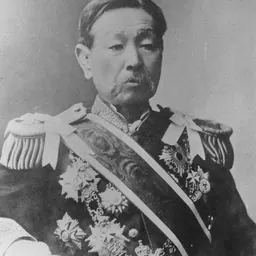
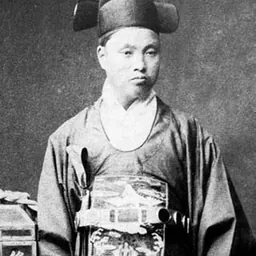


Related people
Same field, nearest in time



Contemporaries
People whose lives overlapped Yu Kil-chun's





Frequently asked questions
Who was Yu Kil-chun?
Korean independence activist (1856–1914)
When was Yu Kil-chun born?
Yu Kil-chun was born on 24 October 1856 in Seoul.
When did Yu Kil-chun die?
Yu Kil-chun died on 30 September 1914 in Seoul.
What was Yu Kil-chun's occupation?
Yu Kil-chun was an autobiographer, writer, journalist, politician and poet.
What nationality was Yu Kil-chun?
Yu Kil-chun was Korean and Japanese.
Sources & further reading
Cite this page
APA: Biography.guide. (2026). Yu Kil-chun. https://biography.guide/yu-kil-chun/
MLA: "Yu Kil-chun." Biography.guide, https://biography.guide/yu-kil-chun/.
Chicago: "Yu Kil-chun." Biography.guide. https://biography.guide/yu-kil-chun/.
Data last updated: 2026-09-20 · Spot an error? Report a correction.
Page generated 2026-09-27 05:20 UTC