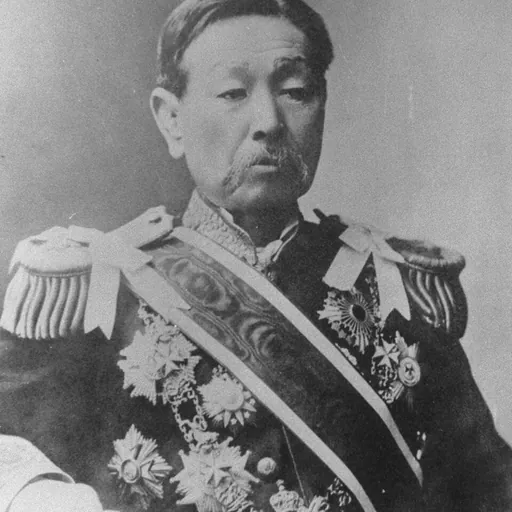
About Inoue Kaoru
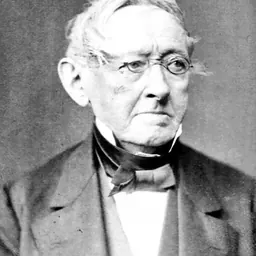
Lived 1836 – 1915 (aged 79). Inoue Kaoru was a Japanese diplomat, politician, samurai and minister.
Marquess Inoue Kaoru (井上 馨; 16 January 1836 – 1 September 1915) was a Japanese politician and a prominent member of the Meiji oligarchy during the Meiji period of the Empire of Japan. As one of the senior statesmen (Genrō) in Japan during that period, he had a tremendous influence on the selection of the nation's leaders and formation of its policies.
Early life and education
Born Yakichi (勇吉) to a lower-ranked samurai family in Yuda, Chōshū domain (present day Yamaguchi, Yamaguchi Prefecture), Inoue attended the Meirinkan domain school with his brother Ikutarō (幾太郎). He was a close boyhood friend of Itō Hirobumi who later became Japan's first prime minister, and he played an active part in the sonnō jōi movement. In 1858, he studied rangaku, artillery and swordsmanship in Edo.
In the Bakumatsu period, Inoue emerged as a leader of the anti-foreigner movement in his native Chōshū. Desiring to rid Japan of foreigners, he and Takasugi Shinsaku set fire to the British legation in Edo in January 1863.
Recognizing Japan's need to learn from the Western powers, Inoue joined the Chōshū Five and was smuggled out of Japan to study at University College, London in England in 1863. When he returned with Itō Hirobumi, he unsuccessfully tried to prevent war (the Battle of Shimonoseki) between Chōshū and the Western naval powers over the closing of the Straits of Shimonoseki to foreign shipping.
Later, during the 1864 First Chōshū Expedition which he was severely wounded by assassins from a rival Chōshū faction. Suffering a near-fatal injury, Inoue asked his elder brother to behead him and end his unbearable pain. However, Ikutaro Tokoro, who was in hiding from the Tokugawa shogunate alongside Prince Sanjō Sanetomi, rushed to Inoue's aid. In an emergency procedure during the wartime chaos, Tokoro stitched Inoue's wounds—about 50 in total—using a tatami needle and without anesthesia. (According to a story featured in the National Japanese textbook of the 5th period, Inoue's mother, holding her bloodied son, dissuaded his elder brother from carrying out the beheading.)
He later played a key role in the formation of the Satchō Alliance against the Tokugawa shogunate.
Statesman in the Meiji government
After the Meiji Restoration, Inoue served in several important positions in the new Meiji government. He was appointed Vice Minister of Finance in 1871 and was influential in reorganizing government finances on modern lines, especially in the reform of the land tax system, termination of government stipends to the ex-samurai and former aristocracy and for promoting industrialization. Closely linked to business circles, including the emerging Mitsui zaibatsu, he was also involved in the railway business. These measures created many political enemies, and Inoue was forced to resign in May 1873. Inoue took part in the Osaka Conference of 1875 to support the creation of a representative national assembly.
In 1876, Inoue was asked to assist in the field of foreign affairs, and was involved in the conclusion of the Japan-Korea Treaty of 1876 as vice-ambassador extraordinary and plenipotentiary. He returned to government as Minister of Public Works in 1878 and Lord of Foreign Affairs in 1879 under the early Meiji Dajō-kan Cabinet. In 1884, he was elevated to the rank of count (hakushaku) under the new kazoku peerage system.
In December 1885, Inoue officially became Japan's first Minister of Foreign Affairs bearing that title in the first Itō Hirobumi cabinet. However, Inoue came under public criticism for his failure to negotiate a revision of the unequal treaties, his building of the Rokumeikan, and support of its Westernizing influences, which forced him to resign in August 1887.
Later he served as Minister of Agriculture and Commerce in the Kuroda administration, as Home Minister in the second Itō administration and again as Finance Minister in the 3rd Itō administration.
From 1901 onwards, Inoue served as most senior of the genrō, and considered himself the government's foremost advisor on financial affairs. He was advanced to the title of marquis (kōshaku) in 1907, and died in 1915 at his summer home at Okitsu-juku, Shizuoka prefecture.
Honours From the article in the Japanese Wikipedia
Japanese Peerages and other titles Count (7 July 1884) Genrō (18 February 1904) Marquess (21 September 1907)
Decorations Grand Cordon of the Order of the Rising Sun (10 February 1879) Grand Cordon of the Order of the Rising Sun with Paulownia Flowers (7 October 1895) Grand Cordon of the Order of the Chrysanthemum (1 April 1906) Collar of the Order of the Chrysanthemum (1 September 1915; posthumous)
Foreign Knight Grand Cross of the Order of the Crown (2 December 1879) Grand Officer of the Legion of Honour (26 March 1883) Grand Cross of the Order of the Red Eagle (25 May 1883) Order of Charles III, 3rd Class (1 March 1884) Knight Grand Cross of the Order of the Immaculate Conception of Vila Viçosa (7 May 1884) Knight of the White Eagle (8 March 1885) Knight of the Iron Crown, 1st Class (10 November 1892) Honorary Knight Grand Cross of the Order of St. Michael and St. George (GCMG) (20 February 1906)
Don’t just read it —
keep it.
Full-length biographies made to live with: read them, listen on the way to work, watch them tonight.
- E-book
- Audio
- Video
Instant download · yours to keep · every purchase keeps this site free
Important facts
People in Inoue Kaoru's life
Named in this biography and alive at the same time


Related people
Same field, nearest in time


Contemporaries
People whose lives overlapped Inoue Kaoru's



Frequently asked questions
Who was Inoue Kaoru?
Japanese politician (1836-1915)
When was Inoue Kaoru born?
Inoue Kaoru was born on 16 January 1836 in Yuda.
When did Inoue Kaoru die?
Inoue Kaoru died on 1 September 1915 in Ihara district.
What was Inoue Kaoru's occupation?
Inoue Kaoru was a diplomat, politician, samurai and minister.
What nationality was Inoue Kaoru?
Inoue Kaoru was Japanese.
Sources & further reading
Cite this page
APA: Biography.guide. (2026). Inoue Kaoru. https://biography.guide/inoue-kaoru/
MLA: "Inoue Kaoru." Biography.guide, https://biography.guide/inoue-kaoru/.
Chicago: "Inoue Kaoru." Biography.guide. https://biography.guide/inoue-kaoru/.
Data last updated: 2026-09-22 · Spot an error? Report a correction.
Portrait: Wikimedia Commons · author & licence
Page generated 2026-09-27 05:01 UTC