
About Yu Dafu
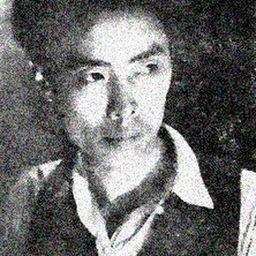
Lived 1896 – 1945 (aged 48). Yu Dafu was a Chinese writer and poet.
Yu Wen, better known by his courtesy name Yu Dafu (December 7, 1896 – September 17, 1945) was a modern Chinese short story writer and poet. He was one of the new literary group initiators, and this new literary group was named the Creation Society. His literary masterpieces include Chenlun (沈淪, Sinking), Chunfeng chenzui de wanshang (春風沈醉的晚上, Intoxicating Spring Nights), Guoqu (過去, The Past), Chuben (出奔, Flight) and so on. Yu Dafu's literary works' writing style and main themes profoundly influenced a group of young writers and formed a spectacular romantic trend in Chinese literature in the 1920s and 1930s. He died in the Japanese-occupied Dutch East Indies, likely executed.
Early years
Yu was born in Fuyang, Zhejiang province. His father died when he was three, leaving the family poverty-stricken and destitute. He received a number of scholarships through the Chinese government and went on to receive a traditional Chinese education in Hangzhou. Chronologically he studied in Jiangxing Middle School (before he came to Hangzhou), Hangzhou Middle School, Hangchow Presbyterian College (育英学堂).
In 1912, he entered Hangchow University (later its major part merged into Zhejiang University) preparatory through examination. He was there only for a short period before he was expelled for participation in a student strike.
He then moved to imperial Japan, where he studied economics at the Tokyo Imperial University between 1913 and 1922, where he met other Chinese intellectuals (namely, Guo Moruo, Zhang Ziping, and Tian Han). Together, in 1921 they founded the Chuangzao she (創造社, Creation Society), which promoted vernacular and modern literature. He published one of his earlier works, the short story Chenlun (沈淪, Sinking), his most famous, while still in Japan in 1921. "Sinking" reflects a problem, which is that both China and Japan were once powerful countries in Asia, but at that time, in contrast to Japan's successful national modernization since Meiji restoration, China has not successfully achieved national modernization. Yu Dafu was ashamed of this, and he used such a story to express a sense of national shame, but in fact, this story's background does not match the facts.
Works
Yín huīsè de sǐ 银灰色的死 (1921) (Translated into English as A Silver-Grey Death, Sunny Lou Publishing, ISBN 978-1955392433, 2023) Chenlun 沈淪 ("Sinking", 1921) (Translated into English as Drowning, Sunny Lou Publishing, ISBN 978-1-95539-217-4, 2021) Chunfeng chenzui de wanshang 春風沈醉的晚上 Intoxicating Spring Nights (1924) Nine Diaries 日記九種 (1927) Guoqu 過去 The Past (1927) Chuben 出奔 Flight (1935) Boundless Night (1922)
Writing style Yu Dafu's literary works are principally autobiographical in nature. There are many expressions with personal subjective colors in his works. He expresses his thoughts and feelings through the protagonist in the story. Moreover, the plot in the story is created based on his personal experience. Besides, his relationships with people around him are included in his works, such as his relationship with his mother and wife. It is precise because his works are derived from his own life that contemporary readers are very interested in his literary works.
Yu Dafu's sentimentalism was born in the decadent social reality of the "May 4th Movement Era". "The decadent ethos once swept through the world under the banner of aestheticism, and caring about morality was seen as something incompatible with emancipating the mind and reflecting the truth, which was 'decadent art'." Yu Dafu had an emotional resonance with this. At this time, Yu Dafu's creations were filled with gloomy and depressing "end-of-the-century emotions", but Yu Dafu's "end-of-the-century emotions" were based on the premise of resisting negative reality.
The story "Sinking" is considered one of the earliest psychological novels in modern Chinese novel history. At the same time, this story is viewed as a representative of romanticism, which satisfies one of the main literature characteristics during the May Fourth period.
Main themes Yu Dafu's work is considered by leading scholars to be iconoclastic and controversial.
Sexuality His characters, which supposedly reflect the author
Loneliness No matter whether the Chinese literature text or the Western literature text is cited in the "Sinking" short story, the same theme is expressed: loneliness. Yu Dafu believes this is a kind of thoughts and feelings that are not understood by other people.
Transnationalism
The alleged 'decadence' of Yu Dafu's works, whether in a pejorative or in an aesthetic sense (i.e. 'Decadence' as an artistic movement) has been considered by Shih to be a sign of Yu Dafu's moral corruption.
Don’t just read it —
keep it.
Full-length biographies made to live with: read them, listen on the way to work, watch them tonight.
- E-book
- Audio
- Video
Instant download · yours to keep · every purchase keeps this site free
Important facts
People in Yu Dafu's life
Named in this biography and alive at the same time


Related people
Same field, nearest in time






Contemporaries
People whose lives overlapped Yu Dafu's



Frequently asked questions
Who was Yu Dafu?
Chinese writer (1896–1945)
When was Yu Dafu born?
Yu Dafu was born on 7 December 1896 in Fuyang District.
When did Yu Dafu die?
Yu Dafu died on 17 September 1945 in Payakumbuh.
What was Yu Dafu's occupation?
Yu Dafu was a writer and poet.
What nationality was Yu Dafu?
Yu Dafu was Chinese.
Sources & further reading
Cite this page
APA: Biography.guide. (2026). Yu Dafu. https://biography.guide/yu-dafu/
MLA: "Yu Dafu." Biography.guide, https://biography.guide/yu-dafu/.
Chicago: "Yu Dafu." Biography.guide. https://biography.guide/yu-dafu/.
Data last updated: 2026-09-20 · Spot an error? Report a correction.
Page generated 2026-09-27 05:23 UTC