
About Yu Chin-san
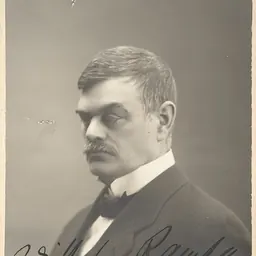
Lived 1905 – 1974 (aged 68). Yu Chin-san was a South Korean politician.
Early political activities In Shanghai in 1933, Chin-san was appointed as a liaison to the Korean Provisional Government (KPG). A year later, Chin-san was seized by Japanese authorities and repatriated to Korea two months after organizing a Korean association in Nanchang, the capital of Jiangxi Province. Back in Korea, he was imprisoned within Seodaemun Prison for four months. In 1935, he participated in the editing of the Farmer’s Reader, and led the peasant movement alongside Jeon Jin-han and Kim-san. Throughout this period, he made connections with Chough Pyung-ok, Chang Taek-sang, and .
After the restoration of Korean independence in 1945, Chin-san organized the right-wing youth group, Heungguksa, and disbanded the left-wing Youth League for the Promotion of the Founding of the Korean Nation. He also participated in an operation to deploy Youth League members to Pyongyang in order to remove Kim Il-sung and Kang Ryang-uk, and at some point became involved with the right-wing White Shirts Society. In October that year, Chin-san founded the Korean Reformation Youth League, and was installed as its chairman. Two months later, he led the Reformation Youth League to participate in the Korean National Youth Federation for the Promotion of Independence and was later installed as the Federation’s vice-chairman.
Throughout the next several years, Chin-san served in leadership roles for a variety of different youth organizations. For example, in April 1946, Chin-san founded the Korean Democratic Youth Alliance and served as its president; its Honorary Chairman was Rhee Syngman. In July 1947, he was named Chairman of the General Association of Korean Youth, and in December 1948, he became Supreme Leader of the Korean Youth League. He also served as a member of the Special Investigation Committee of Anti-National Activities in 1949, but the organization was soon disbanded.
Political career In 1950, Chin-san ran for the National Assembly in the newly established Republic of Korea but was unsuccessful. Nevertheless, he was selected as the Director of General Affairs for the Democratic National Party the next year. In June 1952, he was arrested for his participation in the Assembly for the Declaration of Constitutional Protection and National Salvation, which protested the Busan Political Turmoil of the prior month. However, this did not stop him from being elected to the National Assembly for the first just two years later, as an independent candidate in Geumsan County for the 1954 legislative election.
In 1955, following the founding of the united opposition party, the Democratic Party, Chin-san was made its first Chief of Labor. Within the party, he became affiliated with the old-school faction drawn from the former Korea Democratic Party. Three years later, in the 1958 legislative election, he was re-elected as a Democratic Party candidate in Geumsan County, and was made the floor leader of the party. In April 1960, Chin-san challenged the Chang Myon regime, which had been established following the April Revolution, and thus split the new and old factions of the Democratic Party into two conservative parties. After which, he was elected for the third time in the 1960 legislative election, again as a Democratic Party candidate in Geumsan.
At the beginning of 1961, Yu Chin-san was named Secretary General of the . The party was formed from the old-school faction that had seceded from the then-ruling Democratic Party of the Second Republic. Later that year, the May 16 coup occurred. That June, Chin-san was apprehended by the military police and imprisoned in Mapo Prison on suspicions surrounding the source of political funds for , a powerful figure behind the new faction in the Democratic Party.
In March 1962, the Supreme Council for National Reconstruction enacted the Political Purification Law, under which Yu Chin-san, along with others, was subject to a ban on political activity. That month, Chin-san spearheaded the Assembly for the Declaration of Democratic National Salvation, in opposition to Park Chung-hee’s 22 March declaration extending military rule.
The next year, in May, the Civil Rule Party was formed, and Chin-san endorsed as its party leader. In the 1963 legislative election, he was then elected for the third time, as a national candidate for the new Civil Rule Party. However, Chin-san later clashed with the party leader, Yun Po-sun, over the National Assembly’s passage of the Bill for an Ethics Committee on Speech in August 1964. On 23 August, the Civil Rule Party’s Supervisory Committee thus decided upon the expulsion of Yu Chin-san. Chin-san fought back against this decision in court, and won his reinstatement on 26 November.
Despite this, just a year later, in May 1965, Chin-san participated in the founding of the united opposition party, the , and was installed as its vice president the following year. This party was short lived, however, as in February 1967, a new united opposition party, the New Democratic Party, was founded, and Chin-san was installed as its vice president. That June, during the 1967 legislative election, Chin-san was elected for the fifth time, this time as a New Democratic Party candidate in Yeongdeungpo District.
In January 1970, Chin-san was elected as president of the New Democratic Party at the party convention. That August, he had his first one-on-one meeting with Park Chung-hee. In May the next year, Chin-san was elected to the National Assembly for his sixth term, in the 1971 legislative elections, as a national candidate for the New Democratic Party. His switch to the national constituency just before the election drove the party’s internal conflicts to the surface, prompting him to resign as the New Democratic Party’s president.
However, in September 1972, Chin-san was (again) elected as party president at the National Convention for the New Democratic Party. A year later, he was elected for the seventh and final time in the 1973 legislative election, in the of Geumsan County, Daedok District, and Yeongi County as a New Democratic Party candidate. Later that year, he had another one-on-one meeting with Park Chung-hee.
In 1974, Chin-san declared a campaign to amend the Restoration Constitution, but on 23 April that year he died of colorectal cancer.
Popular culture Portrayed by Shim Yang-hong in the 1981–82 TV series, 1st Republic. Portrayed by Lee Hyo-jung in the 2002–2003 SBS TV series Rustic Period.
Don’t just read it —
keep it.
Full-length biographies made to live with: read them, listen on the way to work, watch them tonight.
- E-book
- Audio
- Video
Instant download · yours to keep · every purchase keeps this site free
Important facts
People in Yu Chin-san's life
Named in this biography and alive at the same time



Related people
Same field, nearest in time





Contemporaries
People whose lives overlapped Yu Chin-san's




Frequently asked questions
Who was Yu Chin-san?
South Korean politician (1905-1974)
When was Yu Chin-san born?
Yu Chin-san was born on 18 October 1905.
When did Yu Chin-san die?
Yu Chin-san died on 28 April 1974 in Seoul.
What was Yu Chin-san's occupation?
Yu Chin-san was a politician.
What nationality was Yu Chin-san?
Yu Chin-san was South Korean.
Sources & further reading
Cite this page
APA: Biography.guide. (2026). Yu Chin-san. https://biography.guide/yu-chin-san/
MLA: "Yu Chin-san." Biography.guide, https://biography.guide/yu-chin-san/.
Chicago: "Yu Chin-san." Biography.guide. https://biography.guide/yu-chin-san/.
Data last updated: 2026-09-20 · Spot an error? Report a correction.
Page generated 2026-09-27 05:27 UTC