
About Yoji Ito
Lived 1901 – 1955 (aged 53–54). Yoji Ito was a Japanese physicist and engineer.
was an engineer and scientist who had a major role in the Japanese development of magnetrons and the Radio Range Finder (RRF – the code name for a radar).
Early years Yoji Ito was born and raised in Onjuku, then a fishing village in the Chiba Prefecture of Japan. His father was the primary schoolmaster and encouraged his children to achieve science and mathematics excellence. After graduating in electrical engineering from the Tokyo Imperial University, Ito was commissioned in the Imperial Navy and spent several years in assignments at sea.
Shigeru Nakajima, a younger brother of Yoji Ito and a scientist at the Japan Radio Company (JRC), was also investigating magnetrons, primarily for the medical dielectric heating (diathermy) market. An alliance was made between NTRI and JRC for further magnetron development. In early 1939, led by Yoji Ito they built a 10-cm (3-GHz), stable-frequency Mandarin-type magnetron (No. M3) that, with water cooling, could produce 500-W power.
Magnetron The configuration of the M3 magnetron was essentially the same as that used later in the device developed by Boot and Randall in early 1940, including the improvement of strapped cavities. Unlike the high-power magnetron in Great Britain, however, the initial device from the NTRI generated only a few hundred watts.
During 1940, Yoji Ito suggested that the magnetron be used in a microwave collision-avoidance system, assisting naval vessels to navigate in formation. The NTRI and JRC were funded for a demonstration, with the range (distance) to other vessels determined by frequency-modulating the magnetron. This effort was not successful, but it led to the NTRI attempting to find what the Germans were doing in this area. (Japan had joined Germany and Italy in a Tripartite Pact in 1936.)
VHF In late 1940. Commander Ito led a technical-exchange mission to Germany. Fluent in the German language and holding a doctorate from Dresden Technische Hochschule, he was well received. Staying several months, he became aware of their pulse-modulated radio equipment for detecting and ranging, and immediately sent word back to Japan that this technology should be incorporated in the NTRI-JRC effort. On August 2, 1941, even before Ito returned to Japan, funds were allocated for the initial development of a pulse-modulated Radio Range Finder (RRF – the Japanese code name for a radar).
The Germans had not yet developed a magnetron suitable for use in such systems, so their equipment operated in the VHF region. At the NTRI, they followed the Germans and built a prototype VHF set operating at 4.2 m (71 MHz) and producing about 5 kW. This was completed on a crash basis, and in early September 1941, the set detected a bomber at a range of 97 km (61 mi). The system, Japan's first full radar, was designated Mark 1 Model 1 and quickly went into production.
RRF In parallel with the VHF work, Yoji Ito also returned to the magnetron applications, resulting in Japan's first pulse-modulated microwave RRF set. It operated at 10 cm (3 GHz) and produced a peak-power of 2.0 kW. A prototype was tested in October 1941, and several versions for surface ships and submarines were soon put into production. Naval officials favored the microwave sets because with very narrow beams they were less vulnerable to interception.
WWII On December 7, 1941, Japan initiated an attack on Pearl Harbor, entering World War II. Yoji Ito was made a department head at the NTRI and was promoted to captain. In the war years, he was responsible for many developments in VHF RRF systems, but was most proud of his microwave equipment. He personally led the development of Japan's first airborne microwave RRF system. This was a 25-cm (1.2-GHz) set producing 2 kW and weighing about 70 kg (150 lb). It was designed for the Gekko night-fighter. He was also involved with Japan's countermeasures equipment, particularly receivers to warn when vessels or aircraft were being observed by American radars.
Return to magnetrons Development at the NTRI continued on magnetrons, resulting in higher and higher power. Yoji Ito and others eventually came to believe that this device might be used as a weapon, encouraged by an earlier newspaper article telling of Nikola Tesla inventing a beam that would "bring down squadrons of aircraft 250 miles away." In 1943, work began in highest secrecy on a Ku-go (Death Ray) device.
Laboratory A special laboratory was set up near Shimada, in the Shizuoka Prefecture, for developing a high-power magnetron that, if not as powerful as Tesla had boasted, might at least incapacitate an aircraft. A number of Japan's leading physicists were involved. A 20 cm magnetron producing 100 kW was achieved, and by the end of the war a 1000 kW (1 MW) unit was undergoing preliminary testing.
Disbanding of the Japanese military With the surrender of Japan on August 15, 1945, all organizations, facilities, and projects related to the military in Japan were disbanded. Scientists and engineers, as well as military technical officers, engaged in communications and radar formed the base for Japan's future electronics industry. Captain Yoji Ito was among this large group of individuals.
Koden In 1947, with the hope of making a peaceful contribution of technologies cultivated in his naval days, Dr. Ito founded the Koden Electronics Company Co., Ltd., an affiliate of JRC. Among early products that they conceived was a series of radio direction finders for use in small boat navigation, along with an electronic fish-finder that revolutionized the Japanese commercial fishing industry. Unfortunately, Ito died in 1955, but the firm continues as a worldwide supplier of marine electronic equipment.
Reference notes
Don’t just read it —
keep it.
Full-length biographies made to live with: read them, listen on the way to work, watch them tonight.
- E-book
- Audio
- Video
Instant download · yours to keep · every purchase keeps this site free
Important facts
People in Yoji Ito's life
Named in this biography and alive at the same time
Related people
Same field, nearest in time

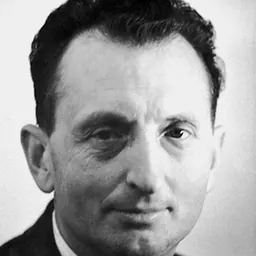
Contemporaries
People whose lives overlapped Yoji Ito's


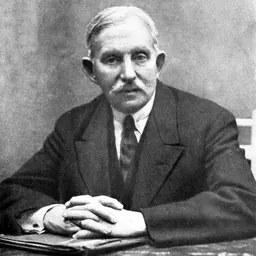

Frequently asked questions
Who was Yoji Ito?
Japanese physicist
When was Yoji Ito born?
Yoji Ito was born in 1901 in Chiba Prefecture.
When did Yoji Ito die?
Yoji Ito died on 9 May 1955 in Tokyo.
What was Yoji Ito's occupation?
Yoji Ito was a physicist and engineer.
What nationality was Yoji Ito?
Yoji Ito was Japanese.
Sources & further reading
Cite this page
APA: Biography.guide. (2026). Yoji Ito. https://biography.guide/yoji-ito/
MLA: "Yoji Ito." Biography.guide, https://biography.guide/yoji-ito/.
Chicago: "Yoji Ito." Biography.guide. https://biography.guide/yoji-ito/.
Data last updated: 2026-09-24 · Spot an error? Report a correction.
Page generated 2026-09-27 05:05 UTC