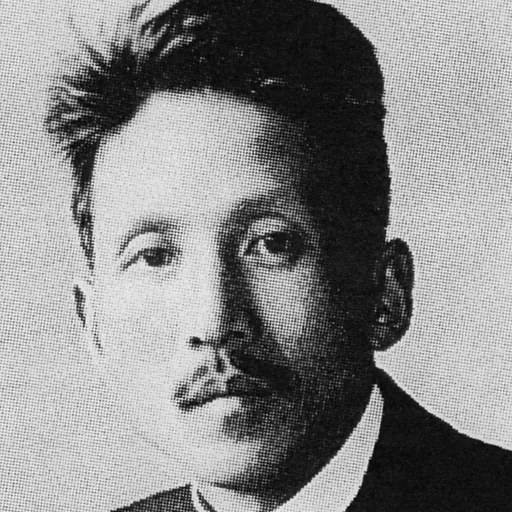
About Shigeru Nakajima
Lived 1888 – 1946 (aged 58). Shigeru Nakajima was a Japanese sociologist.
Shigeru Nakajima (Japanese: 中島 重, Hepburn: Nakajima Shigeru; May 3, 1888 – May 29, 1946) was a Japanese legal scholar, sociologist, and Christian thinker. His academic specialties were constitutional law, under the tutelage of Tatsukichi Minobe, and political sociology, with a focus on the theory of the state. He served as a professor at Doshisha University and Kwansei Gakuin University.
He graduated from former Okayama Prefectural Takahashi Junior High School (now Okayama Prefectural Takahashi High School) in 1907 and went on to the Sixth Higher School.
He later enrolled in the Faculty of Law at Tokyo Imperial University, where he studied under Tatsukichi Minobe and Sakuzō Yoshino. Through Yoshino, he became involved with Hongo Church and deepened his Christian faith under the guidance of its pastor, Danjo Ebina. In 1922, he published The Theory of the Pluralistic State, which garnered attention in academic circles of law, politics, and sociology in the Kansai region. In 1925, he met Toyohiko Kagawa when Kagawa visited Doshisha for a lecture. Their shared concerns over social inequality led them to engage in poverty alleviation efforts. Confronting the limitations of social activism, they shifted toward a spiritual movement known as the "Kingdom of God Movement." Kagawa approached it from the standpoint of evangelism by religious leaders, while Nakajima viewed it as an educational and enlightenment campaign led by scholars and students to improve society.
Nakajima developed this movement into his own concept of social Christianity and launched the journal Social Christianity at Doshisha. He also served as a leading figure in the Student Christian Movement (SCM) at the university and had a significant influence on student life.
After leaving Doshisha, Nakajima accepted a professorship at Kwansei Gakuin University. There, he became deeply involved in academic work as well as Christian activism. In 1934, he co-founded the "Kyoto Brotherhood" (Kyoto Shakai Kyoudoutai) with Toyohiko Kagawa, Shigeharu Kimura, and others, further promoting the Kingdom of God Movement. That same year, he also played a central role in establishing the Japanese Federation of Christian Students.
During this period, Nakajima introduced and popularized Western sociological theories in Japan, including those of Otto von Gierke, Léon Duguit, and Harold Laski. He translated numerous important Western texts and became a leading authority on political sociology.
However, as the Pacific War intensified, Nakajima, like many Christian intellectuals, came under scrutiny from the military regime. In 1942, he was forced to resign from Kwansei Gakuin due to his pacifist stance. He returned to his hometown in Okayama Prefecture and endured a period of internal exile. During this time, he continued to write, focusing on biblical studies and Christian ethics.
After Japan's defeat in 1945, Nakajima was appointed as a member of the Okayama Prefectural Education Council and also helped to draft postwar democratic education policies. Despite being offered reinstatement to various academic positions, he declined most, choosing instead to dedicate himself to nurturing Christian democratic ideals at the grassroots level.
Nakajima died on May 29, 1946, at the age of 58. In his final years, he emphasized the need for a society rooted in love, justice, and democracy, inspired by the teachings of Christ. His funeral was held at the Takahashi Christian Church, where he had first been baptized decades earlier.
Legacy Nakajima's concept of the pluralistic state significantly influenced postwar Japanese constitutional theory and sociology. He is remembered for synthesizing Christian theology with political thought and for promoting a form of Christianity deeply engaged with social and political issues.
His students included many who would go on to play key roles in postwar Japanese academia and civil society. Today, Nakajima is recognized as a pioneer of Christian social thought in Japan and a forerunner of Japanese civil society movements.
Selected works
Sole-authored books
Theory of the Pluralistic State (1922) Introduction to Jurisprudence (1925) Theory of the Japanese Constitution (1927) The Developing Whole (1939) Principles of the State (1941)
Co-authored works
The New Construction of Christianity (1919, co-authored with Naokatsu Kufuna and others)
Journals
Editor-in-chief of the journal Social Christianity (Shakaiteki Kirisutokyo)
Don’t just read it —
keep it.
Full-length biographies made to live with: read them, listen on the way to work, watch them tonight.
- E-book
- Audio
- Video
Instant download · yours to keep · every purchase keeps this site free
Important facts
People in Shigeru Nakajima's life
Named in this biography and alive at the same time


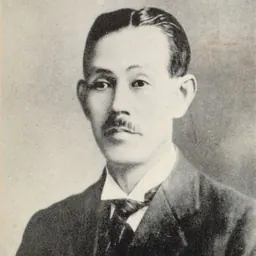

Related people
Same field, nearest in time
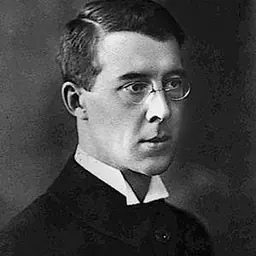

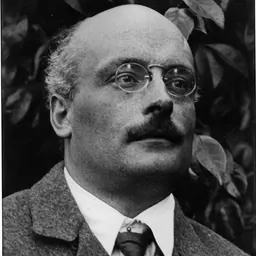
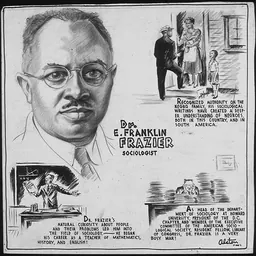

Contemporaries
People whose lives overlapped Shigeru Nakajima's




Frequently asked questions
Who was Shigeru Nakajima?
Japanese sociologist
When was Shigeru Nakajima born?
Shigeru Nakajima was born on 3 May 1888.
When did Shigeru Nakajima die?
Shigeru Nakajima died on 29 May 1946.
What was Shigeru Nakajima's occupation?
Shigeru Nakajima was a sociologist.
What nationality was Shigeru Nakajima?
Shigeru Nakajima was Japanese.
Sources & further reading
Cite this page
APA: Biography.guide. (2026). Shigeru Nakajima. https://biography.guide/shigeru-nakajima/
MLA: "Shigeru Nakajima." Biography.guide, https://biography.guide/shigeru-nakajima/.
Chicago: "Shigeru Nakajima." Biography.guide. https://biography.guide/shigeru-nakajima/.
Data last updated: 2026-09-23 · Spot an error? Report a correction.
Portrait: Wikimedia Commons · author & licence
Page generated 2026-09-27 05:07 UTC