
About Yitzhak Frenkel
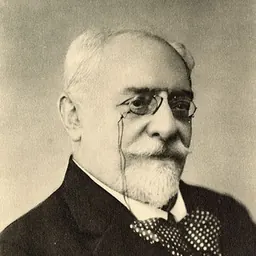
Lived 1899 – 1981 (aged 81). Yitzhak Frenkel was a French and Israeli painter, artist and sculptor.
Yitzhak Frenkel (; 1899–1981), also known as Isaac Frenkel or Alexandre Frenel, was an Israeli painter, sculptor and teacher. He was one of the leading Jewish artists of the l’École de Paris and its chief practitioner in Israel, gaining international recognition during his lifetime.
Frenkel is considered the father of modern Israeli art. He is accredited with bringing the influence of the l’École de Paris to Israel, which until then was dominated by Orientalism.
Throughout his life he lived and worked in Portugal, South Africa, France, Odessa and Israel (especially in Tel Aviv and Safed). In 1917, he studied under Aleksandra Ekster, an influential constructivist, cubist and futurist teacher and painter at the Fine Arts Academy in Odessa, one of the leading art schools in the Tsarist Russia.
Early influence on his Art Frenkel was also influenced by the paintings of the abstract musicalists shown in Odessa in 1917. Their symphonies of blue along with the musical nature of their colourful art were heavily present in Frenkel's later works. Furthermore, he opened a small artists' studio in the carpentry of the Herzliya Hebrew Gymnasium, whence he taught painting and sculpture.
The battle of Tel Hai in 1920, prompted the quick gathering of young Jews to assist Joseph Trumpeldor and his company. However, they had arrived to late. Frenkel sketched and later painted the aftermath of the battle. Due to economic hardship and dissatisfaction from the lack of appreciation toward modern art in the Yishuv, Frenkel left for France. at the studios of the sculptor Antoine Bourdelle and painter Henri Matisse. At the time his painting were abstract. Towards the end of 1920, he traveled to Egypt where he showcased his works in an exhibition before returning to Paris. Frenkel's time in Paris was crucial in the formation of the young artist. Frenkel's expressionistic style developed greatly during this period. At last he received a living stipend/scholarship from Wormser, an aid to the Baron de Rothschild
Exhibitions and recognition He exhibited at the Salon des Indépendants alongside other artists of the time such as Soutine. They were both noticed by art critic Waldermar George. Waldermar George told Frenkel during the time "Do not return to Palestine, they will eat you there" (Frenkel would return in 1925). He also exhibited at the Salon d'Automne, and the Salon des Arts Sacrés.
Revolutionary of modern art in the Jewish Yishuv
Art Pioneer Frenkel returned to Palestine in 1925, where he revolutionized the visual arts. Frenkel did not demand even one grush from his students for his teaching. On the Jewish School of Paris, he said "Like Jewish baroque, penetrating French romanticism, like Delacroix's" Furthermore, Frenkel in his rencounter with the mystical city of Safed, one of the great subjects of his art, feeling thus: "To paint here, is possible only through the direct contact with the landscape, like Russian songs attached to the Volga".
He first encountered Safed after his Aliya to Mandatory Palestine in 1919, the ancient city left a deep impression on the young artist. Frenkel was entranced and mystified by the city's colours, its shades of blue, the chants of prayer and the alleyways. Frenkel romanticized the city and its landscapes. This is evident in his portrayal of Safed, mystic and spiritual, things unseen and hidden from the naked eye which the artist attempts to reveal. Frenkel sought not to explore Safed's reality but the underlying mystery and burning emotionality of the ancient city. Frenkel made several portraits during this time, several of them his friends. These include the writer Avraham Shlonski, the actress Hanna Rubina, the poet Yehuda Karni, the painter Miriam Einsfeld, the director Moshe Halevy and more... Frenkel was also commissioned in the 1930s to decorate the Belgian Pavilion in the Levant Fair. There he presented different themes, including landscapes as well as grey sketches done in reaction to the events unfolding in Europe. He was heavily criticized by some for the latter who attested that the artist had ought to wait and understand more fully what had occurred. Whilst Frenkel was commissioned to create a monumental work (8x6 meters), which would have portrayed 150 people including the entire First Knesset, Israel's President and Prime Minister, diplomats, journalists and other dignitaries.
Isaac Frenkel Frenel, Safed, 1952, photographed by Beno RothenbergHe was the first painter chosen by the State of Israel to represent the Jewish State at the Venice Bienniale. He represented Israel once again in 1952 in the 26th Biennale. In Venice he received especially positive acclaim by Italian and Spanish art critics and positive attention by others.
Safed late 1948-1954 In 1949, he would become one of the founders of the "Artists Colony of Safed", also known as the Artists' Quarter of Safed. He distanced himself from most of the artists of the colony, leading to the colony's resentment of him.
Between France and Israel
South Africa
First having exhibited in South Africa in 1947; In 1953, Frenkel decided that before reaching his final destination (France) he would exhibit once again in South Africa. Joseph Sachs described his art as "volcanic", "religious", "musical", also saying "the artist has recapture...the mystic spirit of Safed- town steeped in Jewish lore", "Frenkel is a master in liberating the spirit imprisoned in the common object". His art was said to be of an international level when in February he exhibited in Greenacre's Exhibition Hall, Cape Town.
His art appeared on the cover of Jewish Affairs, in December 1953 and January 1954.
France 1954-1960 In 1954 he returned to France. There he de deepened his understanding of frescos; and studied glasswork, eventually received a commission of 1.5 million Francs from the Baroness Alix de Rothschild to create stained glass windows for a chapel in Normandy in the north of France. During the six-year period between 1954 and 1960 he started to sign his works as "Frenel"... This along with his windows for a Christian chapel led to rumors and negative coverage in regards to Frenel that he had abandoned Judaism, which were untrue.
Frenel continued to exhibit works concerning Safed. His work which combined the established themes of Jewish Parisian Expressionism was commended for transcending the traditional genre with his carefully established harmonious motion and synthetic power in which Frenel emanated his work. Frenel continued to offer a synthesis of Jewish spiritual traditions and French techniques, as well as incorporate into his work his attachment to Jewish mysticism. Furthermore, in reference to his June 1955 exhibition at the Marcel-Bernheim gallery, some of his art was noted to resemble 12th century vitrages and his colour choices as Byzantine. The religious nature of the art caused his subsequent comparison to Rouault by the French press. His work appeared in the cover of Masques et Visages on the 29th of June 1955.
Frenel reflected that his continued delving into Jewish subjects such as a man carrying the Torah Scroll, rabbis, wailing and more was heavily influenced by his childhood and his mother's teaching in regards to the tragedies that befell the Jewish people and the traditions of his culture and religion. Frenel's distinctive art gained him a reputation for uniqueness while still adhering to the Ecole de Paris movement. He exposed his art as part of an official French delegation in an exhibition at Galeries Lafayette in London in 1956. In 1956 he was the only Israeli painter included in the Encyclopedia of Painting: paintings and painters of the World from prehistoric times to the present day. Furthermore, Frenel participated in an exhibition of the Musée d'Art et d'Histoire du Judaïsme in 1956. Waldemar George, said the following regarding Frenel's very human and emotional art:
"Frenel's humanity does not lie in a phycological concept that constitutes only art, it resides in a component of the man, who magnifies everything he touches..."
During this time, the diversity of his art's themes grew. He painted clowns, the circus, sailors, boatmen as well as the landscapes of France, especially the coast of La Rochelle, Cote d'Azur, Bretagne and Paris. He did several series' of paintings of Venice, where he had exhibited several times. He painted more frequently still life and nature, his art, especially his coloring technique receiving acclaim in several French press journals. The art critic of Le Figaro, Raymond Coginiat described Frenel's art as musical thus: "The tonal chords are like musical tones and seem to modulate the space". In 1959, the French Government bought one of Frenel's works "Port en Méditerranée"', The Hôtel de Ville of Paris acquired a lithography for 7,500 Francs .
He showed his work in one-man shows in museums and galleries in Europe, the Americas, South Africa and Asia, returning periodically to Israel. However, being outcast due to false rumours and the antagonism the traditional artistic establishment held toward him, he would be almost unable for a time to exhibit his works in Israel. In one such case, the director of the Tel Aviv museum, Moshe Kaniok refused to answer Frenel when the latter inquired if he could hold an exhibition, not having held one there since 1949. In Paris living in La Rue Mouffetard, in the 5th arrondissement. In 1973, his house reopened as a museum, the Frenkel Frenel Museum, showcasing his work. In July 1979, Frenkel had a one-man show at the Orangerie in Paris.
In 1972, he was awarded with the Grand Prix de Paques (nude), Grand Prix de Noel (expressionism) 1972 and in 1972 with the Grand Prix de Deauville and Grand prix International de Peinture de la Côte d’Azur en France Finale. By the late 1970s it is said he had already produced more than 20,000 artworks. Some of these sculptures expressed a rather Jewish pathos. He took part in the 24th and 25th Venice Biennales, firstly a pre-independence exhibit and then represented the first time Israel participated. Dizengoff Prize (Tel Aviv) 1935;1938;1939;1940;1948 Beaux-Arts Commission prize (Paris) Honour Certificate for nude-painting (Venice Biennale) 1948 1st Prize for Litography-French pavilion-in the International Lithography Exhibition (Bruxelles Belgium) 1958 Grand prix de Paques(nude) 1972 Grand prix de Noel (expressionism) 1972 Grand prix International de Peinture de la Côte d’Azur en Frande Finale 1973 Grand prix International de Deauville 1973
Exhibitions 1950: Venice Biennale 1924: Salon des Indépendants, Paris 1924: Salon d'Automne 1924: Salon de Société des Artistes Indépendants 1925: Salon des Indépendants, Paris 1950-1964 Romanet Gallery, Paris 1954 Johannesburg - Durban - Cape Town 1957: O'Hana Gallery, London 1959 Max Bollag Gallery, Zürich 1962: Gallery of Drap d'Or, Cannes 1965 - Continental Gallery, New York City 1967 - LIM Gallery, Tel Aviv 1969: Stenziel Gallery, Munich 1970: WESTART Gallery, New York City 1972: Artistique International Gallery, Nice 1973: Aqua Vella Gallery, Caracas 1973: IBAM gallery, Rio de Janeiro 1974: Galerie de Seine 38, Paris 1974: Galerie Karsenty, Monaco 1974: GAllery ALTULIDADES, São Paulo 1975: Galerie Vendome, Paris "Hommage to Chagall" 1975: Jean Apesteguy Gallery, Deauville 1975: Museum of Art, Lima 1976: Artistes Français 1977: Israel Linke gallery, Amsterdam 1977: Gallery Galjoen, Hertogenbosch 1979: One man Show, Orangerie, Paris, inaugurated by President of French Senate
Gallery
Don’t just read it —
keep it.
Full-length biographies made to live with: read them, listen on the way to work, watch them tonight.
- E-book
- Audio
- Video
Instant download · yours to keep · every purchase keeps this site free
Important facts
People in Yitzhak Frenkel's life
Named in this biography and alive at the same time





Related people
Same field, nearest in time
Contemporaries
People whose lives overlapped Yitzhak Frenkel's



Frequently asked questions
Who was Yitzhak Frenkel?
Israeli, French artist (1899–1981)
When was Yitzhak Frenkel born?
Yitzhak Frenkel was born on 10 August 1899 in Odesa.
When did Yitzhak Frenkel die?
Yitzhak Frenkel died on 4 April 1981 in Tel Aviv.
What was Yitzhak Frenkel's occupation?
Yitzhak Frenkel was a painter, artist and sculptor.
What nationality was Yitzhak Frenkel?
Yitzhak Frenkel was French and Israeli.
Sources & further reading
Cite this page
APA: Biography.guide. (2026). Yitzhak Frenkel. https://biography.guide/yitzhak-frenkel/
MLA: "Yitzhak Frenkel." Biography.guide, https://biography.guide/yitzhak-frenkel/.
Chicago: "Yitzhak Frenkel." Biography.guide. https://biography.guide/yitzhak-frenkel/.
Data last updated: 2026-09-20 · Spot an error? Report a correction.
Page generated 2026-09-27 05:29 UTC