
About Yi Sang
Lived 1910 – 1937 (aged 26). Yi Sang was a South Korean writer, poet, prose writer, essayist, architect and novelist.
Kim Haegyŏng (; September 23, 1910 – April 17, 1937), also known by his art name Yi Sang , was a writer and poet who lived in Korea under Japanese rule. Although he was a poet, he did not receive specialized education in Korean language or creative writing, and instead majored in architecture at Gyeongseong Industrial High School , now known as Seoul National University of Science and Technology. After contracting tuberculosis in 1933, Yi Sang quit his job as a public official and ran a café, continuing his literary exchanges with the Guinhoe group . Yi Sang's work contains various scientific symbols and terms, and is structurally very difficult to understand as it contains many experimental attempts. He uses wordplay through homonyms and also uses pictures in his works. He is considered as a pivotal and revolutionary figure of modern Korean literature.
Biography Early life Kim Haegyŏng was born in Seoul, Korea (address: 4-6, Banjeong-dong, North District, Gyeongsŏng, Korea), on September 23, 1910, as the eldest of two sons and one daughter of Kim Yeun-chang and Park Se-chang. His father worked in letterpress printing for a palace before his birth, but after an accident that cut off his finger, he became a barber instead. Yi Sang was raised by his uncle Kim Yeon-Pil as an adoptive son since 1913, as Yeon-Pil and his wife had no children at the time of his birth. Later, however, Yeon-Pil took Kim Young-Sook as his concubine and the son she already had, Kim Moon-Kyung , became a legal son of Yeon-Pil. There is testimony that Yi's art name originated from the art box he received as a gift from Koo Bon-woong. Since the art box he received was made of plum wood, Yi Sang (李箱) is interpreted to mean 'plum wood box'. Additionally, in his work 'Wings', he expressed his art name as 'Ri Sang' rather than 'Yi Sang'.
In April 1929, with a recommendation from the college, he got a job as a public official in the architecture team of the Department of Domestic affairs of the Government-General of Korea. In November, he changed positions in the government to work as part of the building maintenance team of the Department of Secretariat and Accounting . In 1930, he serialized his first literature work (a medium-length novel) December 12th on the Korean version of the magazine Joseon , which was a magazine issued by the Government-General of Korea to promote their colony policies. Rough Map Under Heat No. 2 (Unfinalized draft) (; ) Diagnosis 0:1 (; ) Twenty-two years (; ) The Publication Law (; ) Departure of Mr. Cha 8 (; ) Midday—Some ESQUISSE— (; ).
In 1934, Yi joined the Guinhoe , a literary organization formed on August 26, 1933, to pursue pure literature, as opposed to the Korean Artists’ Proletarian Federation (Korea Artista Proleta Federacio; KAPF), an organization that pursued proletarian literature. The group recruited individuals associated with the cultural departments of daily newspapers, aiming for members who could withstand criticism from the KAPF. Mentioned individuals included Lee Tae-jun, Lee Moo-young, and Kim Ki-rim. To show its character as a literary circle, famous writers at the time such as Lee Hyo-seok, Jung Ji-yong, and Yoo Chi-jin joined the Guinhoe. However, although two individuals closely associated with the KAPF had established the Guinhoe to counter KAPF, the group's character gradually solidified into that of a simple social gathering. As a result, many of the early members of the group, including Kim Yoo-young, Lee Jong-myung, Lee Moo-young, and Lee Hyo-seok, withdrew. Park Tae-won and Yi Sang filled their vacancies. The Guinhoe then began to take on a direction different from its initial purpose. The increase in members with academic backgrounds, particularly those majoring in English literature, suggests that these individuals began to emerge as a force in Korean literature.
In 1935, Yi had to close the Jebi due to financial difficulties, and he broke up with Geumhong. Cafe Tsuru and Coffee Shop 69 in Insa-dong were opened and transferred, and after managing Coffee Shop Mugi in Myeong-dong, he healed in Seongcheon and Incheon right after he closed it. He then moved back to his family’s shack settlement beneath Beontigo-gae in Sindang-ri—a slum he later dubbed “the paulownia-hill ghetto”—where extreme poverty, recurring tuberculosis, and a slum fire that destroyed some thirty homes on 31 January 1936 formed the bleak backdrop for his next poems. published by Changmunsa under the aegis of Koo Bon-Woong. His "Street Exterior, Street Passage" was published in this journal. That February he also issued the five-poem cycle Ruk-Dan (易斷) in Catholic Youth, breaking his habit of publishing only in summer and recording a record −20 °C cold spell and winter haemoptysis in Gyeongseong. After partially recovering and marrying Byeon Dong-rim in June, he unveiled the twelve-poem cycle Wi-Dok (危篤) between 4 and 9 October 1936. Of roughly seventy poems he published during his lifetime, about seventy-five percent (fifty-nine) appeared in serial form, Wi-Dok being the last. Later, according to Byun, she had asked him what he wanted to eat, and he died soon after leaving the words, "Sembikiya's melon." Park Tae-won, a fellow writer and friend of Yi's, mentioned the following: "He loved girls so much, loved alcohol, loved his friends, and loved literature, but not a half of that love went for his body. His death is named as death from illness, but isn't the essence of this death suicide? Such suspicions become intense."
Literary relationships
Jeong Ji-yong (鄭芝溶) Jeong Ji-yong is a founding member of the Guinhoe to which Yi Sang belongs. In 1933, he served as an editorial advisor to , playing a major role in promoting Yi Sang's poems. With the help of Jeong Ji-yong, Yi sang published works such as "꽃나무" and "이런시" in Korean in .
Park Tae-won (朴泰遠) Yi Sang and Park Tae-won were born around the same time and both hailed from the four gates of Gyeongseong, now known as Seoul. This shared origin is an important clue to understanding their literary worlds.
Both Park Tae-won and Yi Sang were members of the Guinhoe , which they joined in 1934. They first met at Dabang Jebi, a coffee house opened by Yi Sang in Jong-no 1(il)-ga. Their first meeting is estimated to have occurred in June or July 1933. Kim Ki-rim, another Guinhoe member, and Ko Un wrote that Jebi opened in July 1933, while Yi Sang's sister, Kim Ok-hee, mentioned June of the same year. The story of their first meeting is recounted in Park Tae-won's memoir for Yi Sang, "Yi Sang-ui Pyeonmo" (이상의 편모), written after Yi Sang's death. Park Tae-won was intrigued by Yi Sang as a poet and his poem "Movement" (운동; 運動).
Maintaining their relationship, Park Tae-won and Yi Sang collaborated with the newspaper Joseon-Jungang-ilbo to publish a series of Yi Sang's poems, Crow's Eye View (Ogam-do; ), and Park's novel, A Day in the Life of Novelist Mr. Gubo (소설가 구보씨의 일일). Yi Sang also created illustrations for Park Tae-won's novel. Despite facing harsh criticism for the abstruseness of their literature, they continued their literary endeavors. After Yi Sang's admission to Guinhoe in the fall of 1934, they focused on the publication of the bulletin "Poet and Novel" (시와 소설).
They also shared literary themes in works like Yi Sang's poem "Movement" (운동; 運動) and Park Tae-won's short story "Bangranjang Juin (방랑장 주인; 芳蘭莊 主人)", both written in a single sentence. Park Tae-won's novels often repeat similar themes and patterns, one of which is A Novel Report on Yi Sang's Private Life, including works such as Aeyog (애욕, 1934), Bogo (보고, 1936), Yi Sang-ui Bilyeon (이상의 비련, 1936), Yeomcheon (염천, 1938), and Jebi (제비, 1939).
The main character of the novel Aeyog (1934) is believed to be modeled after Yi Sang, hinted by Yi Sang's pen name "Hae-yung," who drew an illustration for A Day in the Life of Novelist Mr. Gubo. Jebi (1939) is a novel based on the tea house 'Jebi' run by Yi Sang, illustrated by Park Tae-won.
Park Tae-won and Yi Sang were inseparable, sharing not only their literary endeavors but also their indulgences, depressions, and moments of decadence. Park Tae-won's house in Da-dong was a refuge for Yi Sang whenever he was beaten by Geum-Hong, who lived with him. However, their close relationship ended with Yi Sang's death in Tokyo.
Kim Ki-rim (金起林) Kim Ki-rim, a poet and a newspaper reporter at the Chosun Ilbo, was one of the founding members of Guinhoe. Yi Sang was initially introduced to Kim by Park Tae-won. During their first encounter, they discussed Jules Renard, Salvador Dalí, and René Clair. Kim became interested in Yi because of their shared aesthetic affinity for surrealism. Yi Sang designed the cover of Kim Ki-rim's poetry collection, "Gisangdo" (기상도).
Between 1936 and 1937, Yi Sang sent seven letters to Kim Ki-rim, which are still preserved today under the title 'To Kim Ki-rim'. During this period, Yi moved to mainland Japan and was close to death due to tuberculosis. These letters reflect Yi's everyday thoughts and experiences. For instance, in the fourth letter, Yi mentions René Clair, the French filmmaker, and criticizes his movie, "The Ghost Goes West." The letters also highlight their close relationship. Yi frequently discussed the progress of his works, such as "The Wings" (날개) and "Diary Before Death" (Jongsaenggi; 종생기; 終生記), requesting Kim's opinions on them. Additionally, Yi commented on a paper by Choi Jae-seo, a Korean literature critic, who criticized works like "The Wings (날개)".
After Yi Sang's death, Kim Ki-rim wrote a tribute titled "Memories of the Late Yi Sang" (고 이상의 추억). In this tribute, he recognized Yi's death as a "tragedy of a reduced-printed era", placing Yi's death within a historical context. In 1949, Kim Ki-rim collected Yi Sang's works and published the first collected works, "Yi Sang Seon-jip" (이상선집; 李箱選集).
Koo Bon-Woong (具本雄) Koo Bon-Woong was a painter and art critic who graduated from the Taiheiyo Art School(太平洋美術 學校). He first met Yi Sang at Sinmyeong School. Koo, who had a hunchback, attended school intermittently due to health problems and ended up graduating alongside Yi Sang, who was four years younger. Teased because of his hunchback, Koo developed a keen interest in art. Similarly, Yi Sang, who also had a strong interest in art, became friends with Koo, supporting and respecting him. This marked the beginning of their relationship, which continued into adulthood.
In 1933, to care for Yi Sang, who had quit his job as a public official due to illness, Koo Bon-Woong took him to Baechon Hot Springs in Hwanghae Province. Baechon Hot Springs is also known as the place where Yi Sang first met Geum-Hong. After Yi Sang's health slightly improved, he and Geum-Hong returned to Seoul (Koo returned before them) and opened a coffee shop called "Jebi". It is said that Koo Bon-Woong's painting, "Still Object with a Doll" (인형이 있는 정물, 71.4 cm x 89.4 cm), was displayed in this café.
After Jebi closed down, Yi Sang had no means of livelihood. He eventually found work as a proofreader at Koo Bon-Woong's printing press. There, with Koo's assistance, Yi Sang founded a literary magazine called "Poetry and Novel" (시와 소설), featuring works from members of Guinhoe. Although only the inaugural issue was produced due to a lack of active participation from the members, Yi Sang's postscript in the magazine shows that Koo Bon-Woong was a fervent supporter of Yi Sang's artistic activities.
Furthermore, Yi Sang's last lover, Byun Dong-Rim, was the younger sister of Koo Bon-Woong's stepmother. This somewhat unusual relationship was due to the fact that Koo's stepmother was not significantly older than Koo. Yi Sang and Koo were close, often spending time together at 'Ugodang,' Koo's studio and office, as coworkers. Yi Sang frequently drew pictures there. When Yi Sang was struggling with a series of business failures, Koo got him a job at a publishing company, Changmunsa, founded by his father in 1935. Koo Bon-Woong painted his friend Yi Sang in a well-known work called "Portrait of a Friend" (우인상).
Relationships with women In Yi Sang's poetry, women appear in various forms, but they commonly exhibit behaviors of fleeing from or becoming disconnected from the poetic speaker. This reflects Yi Sang's feelings of anxiety and alienation in his relationships with women. In his poems, women are always drifting away, leaving the speaker with a sense of loss and loneliness. This portrayal poetically expresses the complex relationships and inner conflicts Yi Sang experienced. The motifs of women in Yi Sang's poetry can be largely identified as three figures: Geum-Hong, Kwon Soon-ok, and Byeon Dong-lim. Particularly, women modeled after Geum-Hong tend to flee from the poetic speaker. Ultimately, the women depicted by Yi Sang can be interpreted as symbols of his deep-seated loneliness and sense of disconnection.
Geum-Hong (錦紅) In 1933, 23-year-old Yi Sang first encountered Geum-Hong, who was a kisaeng (기생; 妓生), during a trip to Baechon Hot Springs (배천온천; 白川温泉) to recuperate from tuberculosis. They developed a romantic relationship and managed a coffee house called 'Jebi' on Jong-no 1st Street, Gyeongseong. Yi Sang designated Geum-Hong as the manager of the coffee house, and they lived together for an estimated two years. However, their relationship was tumultuous due to financial difficulties. Geum-Hong frequently stayed out, and Yi Sang would lash out at her by mentioning her previous life as a kisaeng. As a result, she would physically beat him and often run away from home, leading to their eventual breakup. Consequently, in September 1935, the coffee house Jebi closed down.
Their love story is depicted in Yi Sang's novel, 'Bongbyeolgi' (봉별기; 逢別記), which means 'A Story of Meeting and Parting'. Geum-Hong is also implicitly portrayed in his short story 'The Wings' (날개) under the name Yeon-shim-i (연심이), her real name. Furthermore, Yi Sang's poems reveal the dynamics between him and Geum-Hong. In the poems "危篤:追求" and "明鏡", Geum-Hong is always trying to escape from Yi Sang, which fills him with sorrow each time. However, in the poem "ㆍ素ㆍ榮ㆍ爲ㆍ題ㆍ" and the novel "The Wings", despite his sadness, Yi Sang does not deeply dwell on Geum-Hong's acts of infidelity and prostitution. These aspects highlight the unique nature of their relationship.
Gwon Sun-ok After the failure of the coffeehouse Jebi, Yi Sang took over the café 'Tsuru' (Hangul: 쓰루, Kanji: 鶴) by mortgaging his parents' house. He recruited Kwon Soon-ok, who had worked as a waitress at another café, 'Angel'. Kwon Soon-ok was highly educated and had broad interactions with other writers, such as Jeong In-taek. While Yi Sang fell for her, their romantic relationship never fully developed. Jeong In-taek had a secret crush on her, leading to a love triangle. Jeong In-taek even attempted suicide to win her favor, and after this incident, Kwon Soon-ok and Jeong In-taek married. Ironically, Yi Sang presided over their wedding ceremony. Following Jeong In-taek's death, Kwon Soon-ok remarried Park Tae-won. Direct references to Western literature are rare in his writings, but in "Three-Dimensional Angle Blueprint (三次角設計図)", there is a notable mention that suggests such influence. The inclusion of Faust and Mephisto in this piece has been interpreted by some as being inspired by Faust, the famous work by German writer Goethe. Yi's background in architecture also influenced his work, often incorporating the languages of mathematics and architecture, including lines, dots, number systems, equations, and diagrams. His most famous short story is "The Wings" ("Nalgae", ), and his poem "Crow's Eye View" is also well-known.
In 1960, a previously unpublished manuscript written in Japanese by Yi Sang was discovered and introduced by literary critic Jo Yeon-hyeon through the magazines Literary Thought (Munhak Sasang) and Contemporary Literature (Hyundae Munhak). The manuscript, written in vertical Japanese script across 64 pages of grid-lined paper the size of a university notebook, was composed with remarkable precision. It was written on graph paper typically used for architectural design, evoking the geometric structure of blueprints. However, significant portions of the text are difficult to decipher due to heavy graffiti and markings left by a third party.
Yi Sang's works are complex and often use ambiguous expressions, sometimes employing words that do not conform to conventional grammar. Most of his early poems (including those published in "Joseon and Architecture" (朝鮮と建築), believed to be written until 1932) and parts of his Posthumous Note were written in Japanese. The translations may not fully capture the intended meaning of Yi Sang's original works. Yi Sang’s Japanese poems were first translated into Korean in 1956 by Yoo Jung and Im Jong-guk. In fact, their translations involved liberal interpretation and were not cross-checked, resulting in inconsistencies in how words were translated. Therefore, to analyze his works accurately, it is preferable to understand them through the original texts rather than translations.
Yi Sang’s works are closely connected to mathematics and science. He adopted numbers and mathematical symbols as poetic language, distinguishing his literary imagination through these elements. In his first published poem, “異常ナ可逆反應”, geometric concepts such as “a circle of arbitrary radius” and “a line connecting a point inside and a point outside the circle” appear. Furthermore, in “Three-Dimensional Angle Blueprint(三次角設計図)”, mathematical expressions like and names of mathematicians such as Euclid are mentioned. Scientific knowledge from physics—such as spectrum, atom, and electron—also makes appearances in his work. His poetry also contains expressions that reflect concepts related to the theory of relativity. "Three-Dimensional Angle Blueprint(三次角設計図)", there is a line that poses the question, "If a person runs faster than light, can they see the light". Some interpret this as the writer's contemplation on the theory of relativity.
Gwangju Institute of Science and Technology(GIST) has a 'Yi Sang's Literature and Science' course, which specializes in the analysis of Yi Sang's literary works from the perspective of science and various languages. Four papers on Yi Sang were published from the course.
Published works After his death, from 1937 to 1939, 16 of his posthumous works were released, including poems, essays, and novels. In 1956, nine more Japanese poems were found and their Korean translations were released. In the following years, more draft notes in Japanese, which are almost certainly thought to be Yi Sang's for several reasons, were found, and they were translated into Korean and introduced from 1960 to 1976. Regarding the discovery process, Jo Yeon-hyeon explained, "Some time ago, a student named Lee Yeon-bok from the night school at Hanyang University brought an old notebook to me. Although it was my first time meeting him, it was immediately evident that he was a literary enthusiast and particularly fond of Yi Sang. The notebook he presented was a draft book of Yi Sang's Japanese poems. Lee had found this notebook while visiting the house of his friend, Kim Jong-sun, who runs a furniture store. Kim's older brother had acquired the notebook, which had been used as waste paper, from an acquaintance who owned an antiquarian bookstore. About 90% of the roughly 100-page notebook was already damaged, with only about 10% remaining intact. Although Lee Yeon-bok was not proficient in Japanese, he was intrigued by the characters written in the notebook. He obtained the notebook and, after comparing it with various sources, including <李箱全集>, he surmised that it was an unpublished manuscript by Yi Sang and brought it to me."
Works in Korean + PoemsYearSeriesTitleTranslated TitlePublisher1933 -꽃나무 A Flower Tree가톨닉靑年 이런시This Kind of Poem一九三三, 六, 一1933, 6, 1거울Mirror보통기념월간매신 1934Crow's Eye View (烏瞰圖)詩題一號Poem No. 1朝鮮中央日報詩題二號Poem No. 2詩題三號Poem No. 3詩題四號Poem No. 4詩題五號Poem No. 5詩題六號Poem No. 6詩題七號Poem No. 7詩題八號 解剖Poem No. 8 Dissection詩題九號 銃口Poem No. 9 Muzzle詩題十號 나비Poem No. 10 Butterfly詩題十一號Poem No. 11詩題十二號Poem No. 12詩題十三號Poem No. 13詩題十四號Poem No. 14詩題十五號Poem No. 15 -素榮爲題中央 1935 -정식가톨닉靑年 紙碑朝鮮中央日報 1936 -紙碑-어디갔는지모르는안해中央 易斷火爐(charcoal) brazier가톨닉靑年 아츰morning家庭family易斷reverse one's fate行路path in life -街外街傳詩와小說明鏡女聲 危篤禁制prohibitionChosun Ilbo追求pursuit沈歿sinking絶壁cliff白晝broad daylight門閥family faction位置location買春生涯life內部internal肉親blood relative自傷self-injury -I WED A TOY BRIDE三四文學 1937 -破帖Torn Notebook子午線 October1938 -(無題)(Untitled)貘(第3號) October(無題) (기이)(Untitled)貘(第4號) October
+ Long novelsYearTitle Translated TitleYearPublisher1930十二月 十二日 December 121930朝鮮
Works in Japanese +PoemsYearSeries TitleTranslated TitlePublisher1931 異常ナ可逆反應 (A Strange Reversible Reaction)異常ナ可逆反應A Strange Reversible Reaction朝鮮と建築 July破片ノ景色ㅡThe Scenery of Broken Parts現代文學 November一九三一年 作品 第一番 Year 1931 Work No. 11961구두 Shoes新東亞 January어리석은 석반現代文學 January1966(無題)(Untitled)現代文學 July애야1976회한의 장文學思想 June단장文學思想 July與田準一Jun'ichi Yoda月原橙一郞
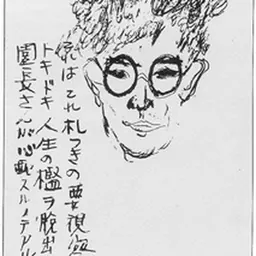
+Letter, Magazine, etc.YearTitleTranslated TitlePublisher Remarks1932巻頭言1朝鮮と建築 JunePresumed to be Yi Sang's work while participating in the magazine's editing巻頭言2朝鮮と建築 July巻頭言3朝鮮と建築 August巻頭言4朝鮮と建築 September巻頭言5朝鮮と建築 October巻頭言6朝鮮と建築 November巻頭言7朝鮮と建築 December1933巻頭言8朝鮮と建築 May巻頭言9朝鮮と建築 June巻頭言10朝鮮と建築 July巻頭言11朝鮮と建築 August巻頭言12朝鮮と建築 October巻頭言13朝鮮と建築 November巻頭言14朝鮮と建築 December1978낙서 Scribble李箱詩全作集 Art bookIt is in the pictorial of the 全集(2). It reads, "Yi Sang's scribbles on the wall of Nakrang(낙랑). He soothes his anger here by drinking a drink." 'Nakrang(낙랑)' means a cafe called 'Nakrang Para(낙랑파라).' It also appears in the essay "The Newness of Nakrang Para(낙랑파라의 새로움)."1976낙서 Scribble讀書生活 NovemberIt is carried with Yi Sang's self-portrait on the inner cover of Jules Renard's 「The Power Notebook」. It was introduced by Im Jong-guk(임종국).
Works translated into English Yi Sang: Selected Works (translated by Don Mee Choi, Jack Jung, Joyelle McSweeney, and Sawako Nakayasu), Seattle and New York: Wave Books, 2020. . The Wings, Seoul: Jimoondang Publishing, 2001. . Three Poets of Modern Korea: Yi Sang, Hahm Dong-seon, and Choi Young-mi, Louisville: Sarabande Books, 2002. Yi Sang, "Wings," translated by Walter K. Lew, in Modern Korean Fiction: An Anthology, eds. Bruce Fulton and Youngmin Kwon. NY: Columbia University Press, 2005. Yi Sang, 20 poems, translated from the Korean by Walter K. Lew, from the Japanese by Edward Mark, in The Columbia Anthology of Modern Korean Poetry, ed. David R. McCann. NY: Columbia University Press, 2004. Meetings and farewells : Modern Korean stories, Chong-wha Chung St Lucia QLD: University of Queensland Press, 1980. The Wings : eBook I-AHN CREATIVE, 2015. .
In popular culture
Yi Sang inspired numerous contemporary cultural works including video games, musicals, music and movies.
Films and TV shows The Mystery of the Cube (, 1999). Directed by Yoo Sang-wook. The Wings of Lee Sang (, 1968). A 59-minute romance short film produced by the Korea Art Film Company. The film was directed by Choi In-hyeon and features actors Shin Sung-il, Nam Jeong-im, Moon hee and Choi Bul-am. My dear KeumHong (금홍아 금홍아, 1995). A 96-minute feature film produced by Taeheung Film Company. Directed by Kim Yoo-jin, the film stars Kim Kap-soo, Kim Soo-chul, Lee Ji-eun, and Yoon Jeong-bin. Yi Sang and more (, 2013). is the eighth installment of the 70-minute MBC drama festival season 1, which aired on MBC from Nov. 28, 2013. The director is Choi Jung-kyu, actor Cho Seung-woo plays Yi Sang, and other actors such as Park Ha-sun, Jung Kyung-ho, and Han Sang-jin appear.
Musicals Smoke(스모크, 2017). Produced by Double K Entertainment, draws inspiration from Yi Sang's "Crow's Eye View." It explores the lives of three characters who represent different facets of Yi Sang's persona. The musical's narrative and lyrics include direct references to Yi Sang's literary works, and it delves into the psychological and existential struggles depicted in his writings. Fan Letter(팬레터, 2016). First released in 2016, is a 160-minute musical produced by Live. The song was written by Han Jae-eun and composed by Park Hyun-sook. Based on the 1930s-era anecdotes of "Yi Sang," "Kim Yoo-jung(김유정)," and the "Guinhoe(구인회, 九人會)". L'art reste(라흐헤스트, 2022). First released on September 6, 2022, is a 110-minute musical produced by the Hong Company. The musical was directed by Kim Eun-young. The lyrics were written by Kim Han-sol, and Moon Hye-sung and Jung Hye-ji composed the song. "L'art reste" means "art remains" in French. It is based on a true story about a Western painter, Byeon Dong-rim, her first husband Yi Sang, and her second husband, Kim Hwan-ki. Kkood bye, Yi Sang (꾿빠이, 이상, 2017). Organized by the Seoul Arts Center, is based on the 2016 original novel of the same name.
Other The character Yi Sang, who is based on a real person, appears in Project Moon's role-playing game Limbus Company. In the game, Yi Sang is portrayed as a talented scientist, mirroring the author's real-life career as an architectural engineer during the colonial period. The character's dialogues often reference Yi Sang's poems, such as "The Wings" and "Mirror," reflecting the profound themes of time and existence found in his works. Shin Hae Gyeong, a contemporary musician, frequently draws on Yi Sang's literary themes in his music. His stage name and several album titles are direct references to Yi Sang's works. For instance, his name is taken from Yi Sang's real name, Kim Hae-kyung. His album My Reversible Reaction is inspired by Yi Sang's poem "A Strange Reversible Reaction." At the end of the music video "And then", a phrase from Yi Sang's novel Bonbyeolgi, "속아도 꿈결, 속여도 꿈결" appears directly. His music often captures the melancholic and introspective tone of Yi Sang's poetry, creating a modern dialogue with the poet's legacy.
Footnotes
Don’t just read it —
keep it.
Full-length biographies made to live with: read them, listen on the way to work, watch them tonight.
- E-book
- Audio
- Video
Instant download · yours to keep · every purchase keeps this site free
Important facts
People in Yi Sang's life
Named in this biography and alive at the same time





Related people
Same field, nearest in time


Contemporaries
People whose lives overlapped Yi Sang's





Frequently asked questions
Who was Yi Sang?
Korean writer (1910–1937)
When was Yi Sang born?
Yi Sang was born on 20 August 1910 in Jong-ro.
When did Yi Sang die?
Yi Sang died on 17 April 1937 in Tokyo.
What was Yi Sang's occupation?
Yi Sang was a writer, poet, prose writer, essayist, architect and novelist.
What nationality was Yi Sang?
Yi Sang was South Korean.
Sources & further reading
Cite this page
APA: Biography.guide. (2026). Yi Sang. https://biography.guide/yi-sang/
MLA: "Yi Sang." Biography.guide, https://biography.guide/yi-sang/.
Chicago: "Yi Sang." Biography.guide. https://biography.guide/yi-sang/.
Data last updated: 2026-09-20 · Spot an error? Report a correction.
Page generated 2026-09-27 05:25 UTC